Please note that this page is designed
to be scrolled; there are no confusing links.
BELOW, YOU WILL FIND A FREE GRAMMAR BOOK
TO READ AND LEARN.
to be scrolled; there are no confusing links.
BELOW, YOU WILL FIND A FREE GRAMMAR BOOK
TO READ AND LEARN.
..........WELCOME TO THIS PAGE..........
FEATURING CUSTOM ARTWORK AND EBOOKS ON KINDLE
LET'S START WITH SOME
"POEMETTES"
quickies........
"The Enemy"
We cannot guarantee we will win.
We can guarantee they will lose.
"At a Certain Age"
At a certain age, we cannot get away from the medicine.
"Evermore"
Evermore comes after, 'They lived happily ever after'.
"Furthermore"
Furthermore comes after everything else.
"Poemettes"
Poemettes can be one word or less.
'Give me Time"
Give me time, and I will give you me.
"Pizza"
Pizza is always flat, unless it isn't.
"Love Blanks Hate"
When Love is applied, there is no room for Hate.
"God and Son"
Jesus is the Son of the Father and so are we.
Stick-on pubic hair by the bunch.
Put the nasal tickle back in lunch.
More to come.................
eBOOKS from Greg Taylor
There is no AI in my work; it is all done by hands and mind.
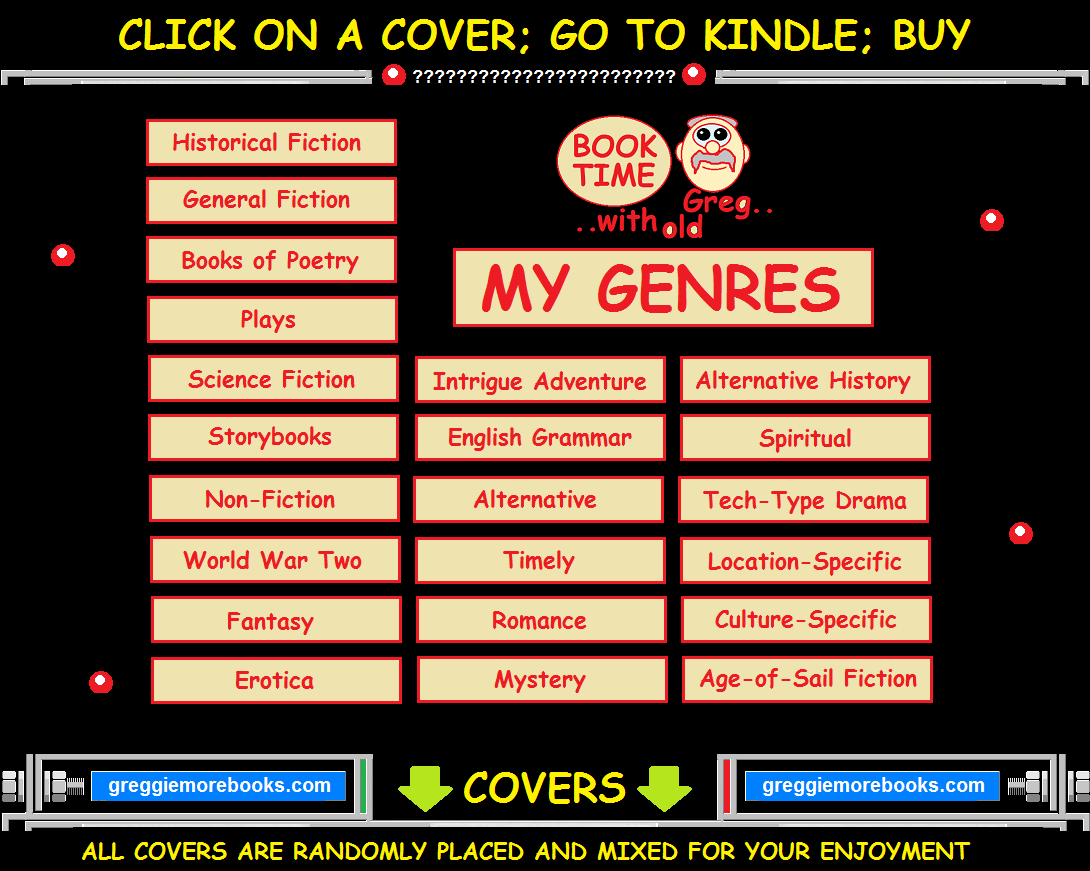
Meet who else we are. Enjoy the list.
"ALL COVERS BELOW ARE LIVE AND ARE LINKED TO KINDLE"
4 featured books for 2027

|
|

|
|





|








|







|




|








|





|
PLEASE BE AWARE THAT THE SIX EBOOKS IN THE JUNIPER STREET SERIES
PRESENTED ABOVE
CONTAIN HIGH LEVELS OF SEXUAL SPOOFING
NARRATED BY BAKER LANE
PRESENTED ABOVE
CONTAIN HIGH LEVELS OF SEXUAL SPOOFING
NARRATED BY BAKER LANE
PARTIAL LIST OF MY CREATIVE WORKS
Here is a partial listing of my creative works (most are standalone, but others are included in storybooks). To review my selection, and purchase any, go to either and put my full name, Gregory S. Taylor, or Greggie Morebooks into the search field of Kindle; select by publishing date (to get full listing). I am well-represented on Google, if you choose to “Google me.”
100% FAT FREE, general interest story
2 KIDS AND A DOG, science fiction humor; a circus in space
2 TIMMONS, general interest, flash fiction
22TANGO, historical fiction epic, WWII, romance; part of the Partners in War series
A KNIGHT IN PHILLY, fun, frolic novelette in Main Line Philadelphia
ALTOONA ON, historical fiction novel; the early years of Intelligence gathering and related romance
ARTFUN, sensual story of what gets painted
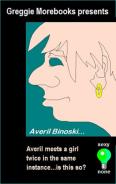
AVERIL BINOSKI, ethereal, alternative fiction mystery story
BARNABY CAVE, 1-act, general interest stage play
BEING GRISHA, historical fiction novel; the author’s story
BLIFFEL AND THE AMORPHO BEAM, science fiction humorous story
BLOW UP JACK, alternative fiction; enterprise action story
BOAT LIFE, acknowledged ghosted novel; gift to author’s wife
BOAT PAINTER, sensual fiction, enterprise novelette
BOB JONES, general fiction, short story, spy stuff
BOTTLEFACE, acknowledged ghosted novel; funny first year baby
CATS EYE MARBLE, acknowledged ghosted novel; cats in charge
CATTLE CAR BAR, historical fiction novel involving bar in old Chicago
CLOSED DOOR GOLD, historical fiction, ocean voyage; part of the Partners in War series
CONTINENTAL 1, website photo poetry with digital music on www.muzaicsound.com
CONTINENTAL 2, website photo poetry with digital music on www.muzaicsound.com
CORN COB BOB, general interest story
DANN THE DRUID, general interest story, Riplikin
DEAD END, general interest, flash fiction story
DOVE LOVE, sensual novel on the water novelette
ELLITOE’S EGG, science fiction classic (family favorite)
EVMIN’S YELIO, epic, science fiction novel
FAT FEATURE, general interest, cultural, novelette
FRATBACK, fraternity fun 1962-64; 1970-71 story
FULL-MOON CHRISTMAS, acknowledged ghosted novel, Santa
FUNKSHINS, general interest humorous story
FURNACE, sensual story, young girl
GAVIN’S DREAM, acknowledged ghosted novel about food and restaurant
GET RICH LADIES, enterprise novel featuring a lady of West Chester, PA
GLITTER, 1-act play produced and presented at Penn State in 1971
GREEN LIGHT, science fiction humor on the planet Templay
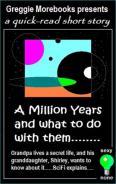
HOW TO LIVE A MILLION YEARS, warm and entertaining grand daughter and grandfather, science fiction work
HUNLEY’S DIXON, epic poem about the confederate submarine, Hunley
IMPLICIT DESIGN, fun, general interest, short novelette
I-SHIP, science fiction story in space, a mother
JACK & BLAYLIS, THE EMPRESSES OF CADIZ, historical Atlantean science fiction spanning a period from 10,000 BC to the present, included as part of epic, Evmin’s Yelio
JAMMER, technical adventure novel involving sharks
JOHNNY AND THE REAL CHURCH, general interest story
JOSEPHUS, JOSEPHINIAN, JOSEPH, science fiction, short story, humor
JOURNEY TO ORCHAMPS, general interest, flash fiction story
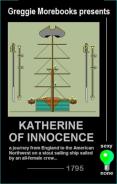
KATHERINE OF INNOCENCE, historical fiction novel at sea involving a British sailing ship of the late 1790s, manned by all women, involving the fur industry in the Pacific northwest USA
LIBBY’S LIFE, 1-act, general fiction stage play
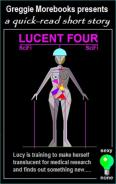
LUCENT 4, science fiction, sensual, short story
MANASQUAN, general interest, enterprise story, Manasquan, New Jersey
MECHANICS, sensual, romantic story
MICKEY’S GATOR, historical novel, WWII, Pacific Theater; part of the Partners in War series
MOIST, selection of original poems
OLD HOUSE, general interest, enterprise book, Washington State
OLDY OLDERS, general interest, short story
ON THE OCCASION OF NEARO RHOMES 7TH WEDDING, contemporary Shakespearean play in the music industry (personal favorite)
OPEN WIDE, sensual story
OUT OF THE DARKNESS AND INTO THE LIGHT, part of The Talking Sea series, part of the Valiant Scatter series
OZZY THE POOFLE, general interest, fun science fiction story (our pet)
PALACE HUSTON, HER FATHER’S DAUGHTER, Regency Romance and adventure, part of the Partners in War series, first written and presented by Elizabeth Lesse Taylor; modified later by Greg
PERPETUAL LIFE, 2023, channeling and soul definition and explanation
PLAY HUMAN, selection of original poems
POLO, general interest, humor sports novelette (from author’s experiences)
POOCH’S ONE, general interest, flash fiction story
PORTRAIT, general interest, flash fiction story
PRESIDENTS AND THINGS, unique, composite, enterprise story
PRIZE MARY AND FAWN, historical fiction, copyrighted Free-Read story, website novel at www.shoppolisislands.com
RIBBONS & MEDALS, general interest, flash fiction story
RIPLIKIN’S 300, a compilation of 300 original poems
ROBI, science fiction story here on Earth
SAILING, general interest humor sports novelette
SAVE STALIN, historical fiction, WWII and beyond; part of the Partners in War series
SEA WARRIOR, ethereal, historical fiction, short story
SEX IS OVERRATED, amusing sensual story
SHOPPOLIS ISLANDS, historical fiction, copyrighted, free-read, website novel at www.shoppolisislands.com
SILVERWORLD AND THE WEATHER WARS, science fiction enterprise novelette presenting a prototype, industry habitat under attack as a computer game
SIMON’S TABLE, general interest, flash fiction story
SINGERS, general interest, short fiction story
SINJON’S EYE, ribald, wordplay classic, alternative fiction, philosophical adventures of an angel (assumed to be Greg himself); work evolved since first put to paper in 1970 and revamped many times since; includes added portions involving the events of the Towers falling in NY
SQUARE DANCING, general interest, flash fiction story
SS KHEDIVE ISMAIL, Black & White, Men & Women, Die The Same Way, part of The Talking Sea series, part of the Valiant Scatter series
SUICIDE RUN BY YAMATO, part of The Talking Sea series, part of the Valiant Scatter series
SUPERMARKET, general interest, flash fiction story
TECHTICLES, science fiction, short fiction story
THE SIMPLEST GRAMMAR BOOK EVER, grammar the old way; a detailed, exemplified, comprehensive grammar book
THE BURNING SKY, selection of original poems
THE CHAMPEEN, general interest, flash fiction story
THE CLASSICAL DOORWAY, copyrighted, free-read, website novel at www.classicaldoorway.com
THE COTTAGES OF LOVELADIES, copyrighted, free-read, online novel at www.shoppolisislands.com
THE CUBE, first of the Wilton Pine mystery series
THE EIFFEL COMPLEX, sensual short novel story
THE FISHERMEN OF KRONDAR, science fiction, adventure novel
THE GALLOPING COW, general interest, short story
THE GENERIC TECH MANUAL, copyrighted, free-read, online textbook at www.duospecialties.com
THE GREAT SWOOPY DAY ROBBERY, fun, frolic, novelette
THE INCIDENT, science fiction novelette
THE KING’S DESTROYERS, expressions of 123 WWII ships, part of the Valiant Scatter Series
THE LAST BUBBLE, USS THRESHER, part of The Talking Sea series, part of the Valiant Scatter Series
THE MAJOR, historical fiction: Hitler’s best friend; part of the Partners in War series
THE MAN IN THE SMOKE, selection of original poems
THE NICHE, sensual short story
THE PETTWEEPEE POND GOOD GUYS, fantasy novelette
THE PREGNINGS OF MINNEAPOLIS, general interest; two brothers story
THE PRINCE OF PLAUEN, U-156, part of The Talking Sea series, part of the Valiant Scatter series
THE PROCESS, selection of original poems
THE QUALITY MANUAL, copyrighted, free-read, online textbook at www.duospecialties.com
THE REDEMPTION OF SLAMAT BY HMS WRYNECK, part of The Talking Sea series, part of the Valiant Scatter series
THE SCRAMBLED EGGHEADS, EGG, fun facts & fiction presentation supported by wholly owned website www.scrambledeggheads.com
THE SCRAMBLED EGGHEADS, BOATS, fun facts & fiction presentation
THE SCRAMBLED EGGHEADS, AIRCRAFT, fun facts & fiction presentation
THE SCRAMBLED EGGHEADS, AUTOS, fun facts & fiction presentation
THE SCRAMBLED EGGHEADS, WINE, fun facts & fiction presentation
THE SHE, dark, sensual short story; vampires
THE SUMMER OF THE DINER, general interest, flash fiction story
THE TEMP, a family, 3-act, general fiction, humorous play
THE THUMB IN THE BROWN SUIT, enterprise novelette, West Chester, PA
THE TRIAL OF SIR STACCATO FENIMAN, fun, sexy, humorous novelette
THE VADYAN RING, 3 act, science fiction stage play
THE VENUS BUTTON, sensual story
THE WATER LILLY, 6 vignettes, a PA Greenway book
THE WHISKERS OF CARMARTHENSHIRE, historical fiction; part of the Partners in War series
THE WIZARD’S DAY OFF, fantasy science fiction novella, ribald humor
THE WRONG PLANET, amusing science fiction story
THE YOUNG EXECUTIVES GUIDE TO PERFECTION, fun business piece
THIMPLE THEMES, science fiction short fiction story
TIMERS, science fiction, short fiction story
TOLLY’S BALL, science fiction novelette
TOP HAT DREAMS, general interest, flash fiction story
TRACTOR LOVE, general interest, short fiction story
TROJANA, science fiction, Trojan horse, novelette
TWIN DITZES, general interest, flash fiction story
WESTERN SHAPES, selection of original poems; Greg’s first
WHEATIE ROSE, 2-act, general interest stage play
WHO IS GREG TAYLOR? FIND OUT, autobiographical book available in condensed version on Internet marketing channels; available at the same price as a heavily illustrated pdf on www.enterprisenovels.com; co-authored with his Guardian Angel, HMS Glowworm H92
WIESBADEN SID, humorous fiction from Germany
ZEKE’S FAIRLEE, dramatic, antebellum novel involving issue of slavery
ZETABAKER, science fiction short story
PARTIAL LIST OF MY CREATIVE WORKS
Here is a partial listing of my creative works (most are standalone, but others are included in storybooks). To review my selection, and purchase any, go to either and put my full name, Gregory S. Taylor, or Greggie Morebooks into the search field of Kindle; select by publishing date (to get full listing). I am well-represented on Google, if you choose to “Google me.”
100% FAT FREE, general interest story
2 KIDS AND A DOG, science fiction humor; a circus in space
2 TIMMONS, general interest, flash fiction
22TANGO, historical fiction epic, WWII, romance; part of the Partners in War series
A KNIGHT IN PHILLY, fun, frolic novelette in Main Line Philadelphia
ALTOONA ON, historical fiction novel; the early years of Intelligence gathering and related romance
ARTFUN, sensual story of what gets painted
AVERIL BINOSKI, ethereal, alternative fiction mystery story
BARNABY CAVE, 1-act, general interest stage play
BEING GRISHA, historical fiction novel; the author’s story
BLIFFEL AND THE AMORPHO BEAM, science fiction humorous story
BLOW UP JACK, alternative fiction; enterprise action story
BOAT LIFE, acknowledged ghosted novel; gift to author’s wife
BOAT PAINTER, sensual fiction, enterprise novelette
BOB JONES, general fiction, short story, spy stuff
BOTTLEFACE, acknowledged ghosted novel; funny first year baby
CATS EYE MARBLE, acknowledged ghosted novel; cats in charge
CATTLE CAR BAR, historical fiction novel involving bar in old Chicago
CLOSED DOOR GOLD, historical fiction, ocean voyage; part of the Partners in War series
CONTINENTAL 1, website photo poetry with digital music on www.muzaicsound.com
CONTINENTAL 2, website photo poetry with digital music on www.muzaicsound.com
CORN COB BOB, general interest story
DANN THE DRUID, general interest story, Riplikin
DEAD END, general interest, flash fiction story
DOVE LOVE, sensual novel on the water novelette
ELLITOE’S EGG, science fiction classic (family favorite)
EVMIN’S YELIO, epic, science fiction novel
FAT FEATURE, general interest, cultural, novelette
FRATBACK, fraternity fun 1962-64; 1970-71 story
FULL-MOON CHRISTMAS, acknowledged ghosted novel, Santa
FUNKSHINS, general interest humorous story
FURNACE, sensual story, young girl
GAVIN’S DREAM, acknowledged ghosted novel about food and restaurant
GET RICH LADIES, enterprise novel featuring a lady of West Chester, PA
GLITTER, 1-act play produced and presented at Penn State in 1971
GREEN LIGHT, science fiction humor on the planet Templay
HOW TO LIVE A MILLION YEARS, warm and entertaining grand daughter and grandfather, science fiction work
HUNLEY’S DIXON, epic poem about the confederate submarine, Hunley
IMPLICIT DESIGN, fun, general interest, short novelette
I-SHIP, science fiction story in space, a mother
JACK & BLAYLIS, THE EMPRESSES OF CADIZ, historical Atlantean science fiction spanning a period from 10,000 BC to the present, included as part of epic, Evmin’s Yelio
JAMMER, technical adventure novel involving sharks
JOHNNY AND THE REAL CHURCH, general interest story
JOSEPHUS, JOSEPHINIAN, JOSEPH, science fiction, short story, humor
JOURNEY TO ORCHAMPS, general interest, flash fiction story
KATHERINE OF INNOCENCE, historical fiction novel at sea involving a British sailing ship of the late 1790s, manned by all women, involving the fur industry in the Pacific northwest USA
LIBBY’S LIFE, 1-act, general fiction stage play
LUCENT 4, science fiction, sensual, short story
MANASQUAN, general interest, enterprise story, Manasquan, New Jersey
MECHANICS, sensual, romantic story
MICKEY’S GATOR, historical novel, WWII, Pacific Theater; part of the Partners in War series
MOIST, selection of original poems
OLD HOUSE, general interest, enterprise book, Washington State
OLDY OLDERS, general interest, short story
ON THE OCCASION OF NEARO RHOMES 7TH WEDDING, contemporary Shakespearean play in the music industry (personal favorite)
OPEN WIDE, sensual story
OUT OF THE DARKNESS AND INTO THE LIGHT, part of The Talking Sea series, part of the Valiant Scatter series
OZZY THE POOFLE, general interest, fun science fiction story (our pet)
PALACE HUSTON, HER FATHER’S DAUGHTER, Regency Romance and adventure, part of the Partners in War series, first written and presented by Elizabeth Lesse Taylor; modified later by Greg
PERPETUAL LIFE, 2023, channeling and soul definition and explanation
PLAY HUMAN, selection of original poems
POLO, general interest, humor sports novelette (from author’s experiences)
POOCH’S ONE, general interest, flash fiction story
PORTRAIT, general interest, flash fiction story
PRESIDENTS AND THINGS, unique, composite, enterprise story
PRIZE MARY AND FAWN, historical fiction, copyrighted Free-Read story, website novel at www.shoppolisislands.com
RIBBONS & MEDALS, general interest, flash fiction story
RIPLIKIN’S 300, a compilation of 300 original poems
ROBI, science fiction story here on Earth
SAILING, general interest humor sports novelette
SAVE STALIN, historical fiction, WWII and beyond; part of the Partners in War series
SEA WARRIOR, ethereal, historical fiction, short story
SEX IS OVERRATED, amusing sensual story
SHOPPOLIS ISLANDS, historical fiction, copyrighted, free-read, website novel at www.shoppolisislands.com
SILVERWORLD AND THE WEATHER WARS, science fiction enterprise novelette presenting a prototype, industry habitat under attack as a computer game
SIMON’S TABLE, general interest, flash fiction story
SINGERS, general interest, short fiction story
SINJON’S EYE, ribald, wordplay classic, alternative fiction, philosophical adventures of an angel (assumed to be Greg himself); work evolved since first put to paper in 1970 and revamped many times since; includes added portions involving the events of the Towers falling in NY
SQUARE DANCING, general interest, flash fiction story
SS KHEDIVE ISMAIL, Black & White, Men & Women, Die The Same Way, part of The Talking Sea series, part of the Valiant Scatter series
SUICIDE RUN BY YAMATO, part of The Talking Sea series, part of the Valiant Scatter series
SUPERMARKET, general interest, flash fiction story
TECHTICLES, science fiction, short fiction story
THE SIMPLEST GRAMMAR BOOK EVER, grammar the old way; a detailed, exemplified, comprehensive grammar book
THE BURNING SKY, selection of original poems
THE CHAMPEEN, general interest, flash fiction story
THE CLASSICAL DOORWAY, copyrighted, free-read, website novel at www.classicaldoorway.com
THE COTTAGES OF LOVELADIES, copyrighted, free-read, online novel at www.shoppolisislands.com
THE CUBE, first of the Wilton Pine mystery series
THE EIFFEL COMPLEX, sensual short novel story
THE FISHERMEN OF KRONDAR, science fiction, adventure novel
THE GALLOPING COW, general interest, short story
THE GENERIC TECH MANUAL, copyrighted, free-read, online textbook at www.duospecialties.com
THE GREAT SWOOPY DAY ROBBERY, fun, frolic, novelette
THE INCIDENT, science fiction novelette
THE KING’S DESTROYERS, expressions of 123 WWII ships, part of the Valiant Scatter Series
THE LAST BUBBLE, USS THRESHER, part of The Talking Sea series, part of the Valiant Scatter Series
THE MAJOR, historical fiction: Hitler’s best friend; part of the Partners in War series
THE MAN IN THE SMOKE, selection of original poems
THE NICHE, sensual short story
THE PETTWEEPEE POND GOOD GUYS, fantasy novelette
THE PREGNINGS OF MINNEAPOLIS, general interest; two brothers story
THE PRINCE OF PLAUEN, U-156, part of The Talking Sea series, part of the Valiant Scatter series
THE PROCESS, selection of original poems
THE QUALITY MANUAL, copyrighted, free-read, online textbook at www.duospecialties.com
THE REDEMPTION OF SLAMAT BY HMS WRYNECK, part of The Talking Sea series, part of the Valiant Scatter series
THE SCRAMBLED EGGHEADS, EGG, fun facts & fiction presentation supported by wholly owned website www.scrambledeggheads.com
THE SCRAMBLED EGGHEADS, BOATS, fun facts & fiction presentation
THE SCRAMBLED EGGHEADS, AIRCRAFT, fun facts & fiction presentation
THE SCRAMBLED EGGHEADS, AUTOS, fun facts & fiction presentation
THE SCRAMBLED EGGHEADS, WINE, fun facts & fiction presentation
THE SHE, dark, sensual short story; vampires
THE SUMMER OF THE DINER, general interest, flash fiction story
THE TEMP, a family, 3-act, general fiction, humorous play
THE THUMB IN THE BROWN SUIT, enterprise novelette, West Chester, PA
THE TRIAL OF SIR STACCATO FENIMAN, fun, sexy, humorous novelette
THE VADYAN RING, 3 act, science fiction stage play
THE VENUS BUTTON, sensual story
THE WATER LILLY, 6 vignettes, a PA Greenway book
THE WHISKERS OF CARMARTHENSHIRE, historical fiction; part of the Partners in War series
THE WIZARD’S DAY OFF, fantasy science fiction novella, ribald humor
THE WRONG PLANET, amusing science fiction story
THE YOUNG EXECUTIVES GUIDE TO PERFECTION, fun business piece
THIMPLE THEMES, science fiction short fiction story
TIMERS, science fiction, short fiction story
TOLLY’S BALL, science fiction novelette
TOP HAT DREAMS, general interest, flash fiction story
TRACTOR LOVE, general interest, short fiction story
TROJANA, science fiction, Trojan horse, novelette
TWIN DITZES, general interest, flash fiction story
WESTERN SHAPES, selection of original poems; Greg’s first
WHEATIE ROSE, 2-act, general interest stage play
WHO IS GREG TAYLOR? FIND OUT, autobiographical book available in condensed version on Internet marketing channels; available at the same price as a heavily illustrated pdf on www.enterprisenovels.com; co-authored with his Guardian Angel, HMS Glowworm H92
WIESBADEN SID, humorous fiction from Germany
ZEKE’S FAIRLEE, dramatic, antebellum novel involving issue of slavery
ZETABAKER, science fiction short story
SAMPLE EBOOK
Greggie Morebooks Presents…
A NEW (OLD) ENGLISH GRAMMAR BOOK FOR 2026 AND BEYOND
…a new grammar book built on rules from the beginning of time to the 1970s…
ENP document control number: ENP2018-171
PRODUCED AND PUBLISHED BY:
GREGGIE MOREBOOKS PRESENTS (USA)
greggiemorebooks@gmail.com
A NEW (OLD) ENGLISH GRAMMAR BOOK FOR 2026AND BEYOND
ENP2018-171
(22,812 WORDS)
THE BEST ENGLISH
GRAMMAR BOOK EVER
English-speaking writers compose fiction and non-fiction books in the English language, for the most part, their native language. Want to learn the underpinnings of the ENGLISH language, the ones they use? You could depend upon perfectly good and well-designed software packages that “correct” grammar mistakes and/or “augment” discoveries to make valid suggestions. These software products are designed and based on the information provided in this book. They also add many “peripherals” that are based on currently accepted “other” factors.
This grammar book is designed from a model known as an “old fashioned” primer, one like the one familiar to those of us who attended American Grammar Schools in the 1940s and 1950s, 1960s and even as late as the 1970s. After this period, other methods were used to “form” bases of development, some unique and useful, and some not even close. There are no elements of translation, just English grammar facts.
Join us in our combined effort to improve domestic as well as global communications (correctness) in the realm of business and commerce. We seek to understand each other by defining our language and ourselves as well as conveying these elements to you. Regardless of whether you are American, British, or from India or China, this book will help you.
There is an interesting fact about the American language and those who teach it. We are a varied country with many languages and different dialects in each. We also have what are known as ethnic (esoteric) languages and variations of each. Respecting free will is a key note of Americanism, but it creates a situation wherein nothing is really correct or wrong. This book tries to even the road, make it straight, put a line in the middle.
The object here is to start somewhere, where you are from another country and want to speak American English, not necessarily English English. We, as members of the human race are dialectic by nature; we modify and adjust every language to our own specifications. Study these basics and see what you like and don’t like. Accept what you want to for whatever reason you give yourself or others. Be the same, or be different…just know what you are doing, what you are choosing and why you are doing so.
BEFORE WE SPEAK, LET’S LEARN FIRST
Note: This is a little book with big rules.
oOo
INTRODUCTION
Consider this Grammar Poem
Accept this book
for what it is,
namely, a tool.
With that in mind,
let it rule.
Let’s start with this…It really doesn't matter precisely who uses this book; what matters is that you become able to apply its fullest potential. You will thank yourself if you do, and those who follow you will benefit from the experience. Some say that speaking your own language in its simplest form is enough, but is it?
This document is simple, but not too simple. It assumes you already know how to speak English, and that you are trying to speak it correctly and in accordance with the rules of the language. It does not talk down to you or anyone else. It is presented in the language you would speak when considering yourself literate in English.
This is of particular importance if you are American, in that you must speak your own language to those around the world who use your language. If you have another language as your native language, and want to speak both your own and English, this information and details will help. For the most part, if you use English, and it is not your native language, these details will help.
This book is relatively short and does not claim to take the place of a formal English grammar and composition textbook nor the formal instruction that ordinarily accompanies it. It does not contain ALL the rules, but it does say a lot in a small space. It is proposed in a straightforward, somewhat school-like manner and may even resemble a standard textbook in some ways. It is designed along the lines of grammar books of the 1940s, 1950s and 1960s, and not so much now. We have computers, and AI is alive and well (artificial intelligence of a form). Consider that your computer with a grammar software uses, and knows more about your language than you do (maybe…think about it)
THIS PRIMER CONTAINS ALL THE FUNDAMENTALS
YOU NEED TO KNOW FOR EVERYDAY USE.
IS THIS BOOK THE END-ALL? NOPE.
THIS BOOK CONTAINS THE BASIC BUILDING BLOCKS
ON WHICH YOU, AS A PERSON, SHOULD BUILD
YOUR ENGLISH LANGUAGE COMMUNICATIONS SYSTEM
FOR WRITING AS WELL AS SPEAKING.
If you complete this book successfully, it is suggested that you purchase a complete English textbook and read/study it. Leave this guide on your computer or reader or both and use it when you need it. Go buy a dictionary and begin learning words…any words.
ONCE YOU KNOW THE RULES,
YOU NEED WORDS TO FILL THE MODEL.
THE MORE WORDS YOU KNOW AND USE,
THE MORE WORDS YOU WILL USE TO “THINK” IN ENGLISH;
THE BETTER YOU WILL THINK OVERALL.
NICE CONCEPTS?
If you are in a business environment, and if you are in your country or this country and hoping to learn English, knowing basic speaking-level English is a good idea, even if your job description does not require moving to, or visiting America or traveling within another English-speaking country. For Americans, knowing basic speaking-level English is not a choice; it is essential. If you intend to improve your existing knowledge base and do not intend to apply it in business…fine.
Add to your overall list of words each day, perhaps, at a rate of one word per day. At the end of the year, you will have 365 more English words with which to think. In a Leap Year, imagine what can happen! If you are using a dictionary, start at A or Z; it doesn't matter. Learn a number of words per day or week, and feel yourself begin to improve your ability to communicate, improve your ability to think in the language, and raise your level of self-esteem. Become well-spoken.
Put away an instinct to apply an esoteric version of English, and use formal English as your style then vary it according to your working or social environment. Recent studies have shown that approximately 1 out of 4 of the world’s people who know how to read and write, speak or are functional in English. It is hoped reading and studying this book proves:
Interesting
Educational
Provocative
Controversial
Intriguing
Challenging
Fun
Entertaining
Amusing
oOo
ARE YOU READY?
LET'S GET TO WORK.
Here are 2 Fun Exercises – (1) Who am I? and (2) What do I know?
The following “games” are not really games. They are quizzes that you answer to determine your best starting point in the improvement of your English language and its use.
Exercise One: Decide if you are in at least one of the “attitude” groups below, and then think about this book. Which one(s) is(are) you? Note that removing a space after a word to indicate that the attached information provided within parentheses should be considered part of the word before it. This is particularly helpful when trying to be brief and to the point. Example…start….start(s).
- I don't think I make any mistakes in the way I speak OR write.
- I make mistakes, but I really don't care.
- If you don't like the way I talk or write, too bad.
- I talk like my people, and it is good enough for them, it is good enough for me.
- We have our own version of English.
- It's not my fault. I'm not to blame for our current situation; it is someone else's fault.
- I didn't realize our current situation was so bad, what can I do?
- I am too old to change.
- We can't afford to have our business documentation, hardcopy or website, edited. It already costs too much.
- They talk that way on the radio and TV, so it must be right.
- Sports announcers and players aren’t perfect, so neither am I.
- I don't have to speak and write correctly; it's not part of my job.
- I own this company, so don't tell me about our communications skills.
- I don't see any problems, therefore, there aren't any.
- So my writing sucks; I talk right.
- I can see the merits of learning basic grammar, sort of.
- Our website does not have grammar and spelling mistakes; they must be typographical errors; shoot the webmaster.
- I don't see any errors.
- We don't need perfect written material; let the help desk pick up the slack.
- Test teachers? What are you kidding?
- If I learn these rules, I can teach others.
- Rules of English Usage? No one ever taught those.
- I play football, basketball, hockey and chess; I don't need rules for talking.
- I make more money than you do; I live in a bigger house, so who's right?
- Wow, I didn't know I sounded so bad, until I watched myself on film.
- I get so angry; I can never find the right words.
- I lose so many arguments; I hate smart people; they use words to twist everything.
- I never knew exactly what spinning meant, until I learned what the power of words could do.
- Don't ask me any questions, because I don't want you to know I can't answer them.
- I can talk; I don't need any more words.
- Rules? They're for the other guy.
- If I learn the rules, I will become critical of others, and I don't want that.
- I do what I want to do, so buzz off.
- Who you callin' dumb?
- School's a waste of time; I need money.
- I talk the way the music talks; therefore, I don't know you.
- I'm cool; what are you?
- One thing you are going to have to know when you know me, and that is, I am always right, because I am me, and that automatically makes me right. See? That also makes you wrong.
- It makes sense that the more words I know, the more combinations of ideas I can form from them.
- I set the standards around here.
- I am the rules.
- You're wrong.
- What do you mean when you say that the more words I know, the better I can think?
- Who the hell do you think you are?
- You're new around here, aren't you?
So, what do you think? Are you sufficiently pleased with your current level of English Usage, your communications skills, your commitment to excellence in applying your language, your attitude and your image? Good. If you are going to read on, we think you have made the right choice. If it is true that you already know this material, then a simple review might be nice, just to make sure you haven't forgotten anything.
Note, those who want to control you, want you illiterate and stupid. Don’t make it easy for them. Know so much, that by simple comparison, they are illiterate and stupid. Make it easy for yourself.
oOo
NEXT
Exercise Two: Take the following test and see how you do. These questions will all be answered in the text of this book; therefore, you will have to find the correct answer to see how you did.
- When do you use a semicolon?
- What part of speech is the word Washington?
- Is this verb transitive or intransitive, "I shot the gun twice."
- How do you form a contraction? (assuming you are pregnant)
- Explain the difference between a dependent and an independent clause.
- Is this sentence correct? "They gave the award to Jim and I."
- Is this sentence correct? "The drink is comprised of sugar and water."
- Is the following italicized word an adverb? "He dropped the red hat quickly."
- If two words are synonymous, what are they?
- What part of speech is used in place of a noun?
- What part of a sentence is the predicate?
- If you apply the verb to be (in one of its various forms), are the subject and predicate both in the nominative case?
- What is an object of the preposition?
- Is the complement portion of a sentence the word or group of words that complete the meaning initiated by the subject and verb?
- Is this sentence correct? "Him and I went away."
- Is this sentence correct? "I am going to lay down and get some sleep."
- What is a direct object?
- What is an indirect object?
Read on. You will find the answers and develop an idea of who you are and how much you know. You may even know how you are going to approach this book. Use it to your best advantage and share the information with others. Sharing will be so much easier and fun, if you have more information. Yes? No?
oOo
RULES
As in any science, there are fundamental rules to follow, and the science of English Usage has plenty of them. Remember, that people know they need rules, but they are quick to break them...rules are always for the other guy...think of the way you drive your car...this science has three parts that require rules, because English Usage is applied, not assumed.
- THINK, when we think.
- WRITE, when we write.
- SPEAK, when we speak.
Pretty simple, right? If we had no rules, there would be chaos, and intelligent communications would cease to exist. It would be back to scrawling on cave walls and drinking from cupped hands. This book is designed to provide you with the unbreakable rules of English Usage. We can bend them at times, for the sake of humor or emphasis, but we must know that we are breaking them, why we are bending them, and then return to the rules, post-haste (or posthaste, or post haste). Languages do evolve, and that is usually a good thing.
Also, like any language, English evolves due to popular use and other reasons. An example of this is the evolving use of the word farther as opposed to the word further. Further is winning out over farther. Another is lie versus lay, and lay is winning out. There always has to be room for development, change and evolution of a language. It is life.
When saying, “It is important if John was here,” it is now acceptable to say, “It is important if John were here.” So, there are some. English is a fluid language, and contains currents for change, and many are subtle and long-term; others are immediate and short-term. Some become permanent, and some are gone in a few years or shorter.
The three parts of English Usage, thinking, writing and speaking, are intertwined. Often you will find people writing reasonably well, and speaking poorly, or find people who speak reasonably well, but writing poorly. The most interesting is thinking. Consider the following.
The worse we speak, and write and the fewer words we apply in combination, the lower the level of thinking (because we have fewer tools with which to work). The worse we speak, the higher the level of frustration we feel (when we have the tools but not the means). It is essential that more words, used the right way, increase productive thinking. To develop the proper attitude to test out this theory, you should: (We left out capital letters and used no punctuation at the end of sentences) Sorry, if you already noted this.
- develop an appreciation and a respect for your language; don't take it for granted
- increase the application of your language
- expand your horizons in thought
- become confident that you are correct when you write or speak
- use language
- add to your vocabulary, so you have more than one way to say the same thing
- expand your ability to think by adding more elements to learn with and process information
- have fun and experiment
- diversify your communications to various target persons or events
- be innovative; become an example to others
- volunteer; encourage others to follow in your footsteps
- be brave; try teaching someone else without being critical (it may take some effort and a lot of patience, but you'll be up to it)
- try mentoring
- write a book, or a report...perhaps a poem...menu items are good
- sing...something with lyrics that people can understand
- set the stage for others
oOo
THIS BOOK
This book has been written for a reason, and that is to make sure that those of you who apply English Usage, apply it correctly for educational, personal as well as professional reasons. If you make a mistake, you should know you are making a mistake and fix it. Ignorance and making excuses may work on the street or in a given culture, but not in business, particularly global business.
You must become well-spoken, so those you meet, regardless of culture, will not think less of you. As a country, we should all speak the same language well for so many reasons. That doesn’t mean that we cannot speak other languages, and those particular languages should also be spoken correctly according to their rules, out of respect, if for no other reason.
You must learn the details of the English language and their uses, in order to communicate properly and effectively, with those who look to you for leadership and guidance. Are you a good example or a poor one? It is fine to speak whatever you want at home, but when you place yourselves into the world of others, you must attempt to represent a common language and a common people. Business is business. Social is social, and so on. It is not enough to say…
"This is my world, and if you want to communicate with me, you will speak my language the way I want to speak it and write it." This self-centered "me" attitude does not help communications; in many ways it drives us all apart, and apart is not where we want to be, if we are about to conduct business or deal seriously with a situation involving others.
Those of us authoring this book, apply certain licenses, which is our prerogative as authors, but you deserve an explanation. Believe it or not, there will be those of you out there quite versed in English Usage, and you are going to take issue with some of our choices.
IT’S OUR BOOK, SO TAKE IT OR LEAVE IT!!!!!!!!!!!!!!!!!!!FUN?
hee hee
Here are a few examples. Look up a few paragraphs and notice WE ended a thought with three periods in order to introduce the next quote. It is not in the rule books, but we, at Greggie Morebooks Presents (GMP), like to use this device, and apply it liberally in GMP published books, which number over 80 at this time (11/2018), and are available on super channels, like Amazon Kindle (in over 10 genres). There are others, and we are going there too. If you go to the Kindle Store, put in our name, Greggie Morebooks and see what you get. BUY ONE (or more) – TELL A FRIEND (or someone else). Be assured that anywhere you go, the price will be the same, unless the book is put on sale, but you already know this, right? Of course.
We do not use a comma in all instances where one might be placed, because we believe that too many commas (as correct as they may be in writing) take away from the flow when read or spoken. On the other hand,we use periods as “pauses” to create emphasis or drama.
We like to use semi-colons to extend a sentence into two instead of creating a completely new sentence...we like it to flow. It is a preference.
We normally do not capitalize after a colon (more than not); some people do not, and the rules say, if the continuation of the thought is smooth, a capital is not necessary. When we do this, we only put one space in, not two. We like the way it looks, and we don't want anyone of you wonderful and intelligent people to think we forgot to capitalize the word (if you catch us at an error…ignore it). Or you could email us at greggiemorebooks@gmail.com (if you are reading this in 2026 or so, we are probably not at home…)
We do confess to breaking this rule at times, but we know we are doing it, if this matters (of course it does). English is a very flexible language and fun to write as well as to speak. Some things are assembled so rigidly they crack and break when bent; English doesn’t do this. (it has been accepted that various Martian languages, do crack went bent).
We shy away from using "that" too much, i.e., (we know that we do this, versus, we know we do this). We call the over-use of that, "that-itus." We believe speaking and reading is improved without too many "thats." (we have boxes of them here, if you need some…price is more than reasonable…not).
We put the ending quotation marks outside the ending punctuation, i.e., we like the period to go inside the closing quotation marks, because I think it looks better, namely, no dangling, disjointed period or comma hanging out there like “a bomb."
In the future, when you become familiar with the rules, you will also choose how to use punctuation and words to your best advantage without breaking the rules. Like any set of rules, they are subject to reasonable bending. If you do break them, which is your right, know that you are doing so. Whatever exceptions you choose to use, be consistent.
oOo
PRIMARY ELEMENTS
PRIMARY ELEMENTS. In order to understand English usage, there are some terms that must be memorized. They comprise the building blocks on which usage is built. Once you memorize the parts of speech, you may want to memorize more.
Parts of Speech
PARTS OF SPEECH refer to the type of words applied in speech, thinking and writing. Parts of speech are the building blocks on which our language is based, and each has a definition. Vocabulary comprises the rest of the mixture. The formal parts of speech we will be proposing to you include: noun, pronoun, verb, adjective, adverb, preposition, conjunction, interjection, numeral, article and more.
Syntax
SYNTAX deals with the structure of sentences themselves. Without sentences, words would just float about aimlessly, which might be good, if you have nothing really to say (joke). The sentence is the most interesting element to us, because it can be used alone, without any other information. Try this. "Get lost." What else does one need when confronted with this sentence? Here's another one. "NO!" See what we mean? You don't have to be fancy to get your point across, but you will have to use a sentence, even if it is one word. WHAT?
Composition
COMPOSITION is the document element that refers to the assembling of parts to form a whole, regardless of how large or small, complex or simple, the whole is what it is and no more. Here are some of the most commonly applied rules of composition.
(1) Develop a consistency in your composition to avoid a disjointed, awkward and irregular style.
(2) Set your point of view, POV, which is the perspective from which you are composing. If you are writing or speaking in the first person, then stay with it. If you are writing fiction, and the primary point of view is detached and remote (fly-on-the-wall), stick with that.
(3) Remain constant; don't dribble off into nothingness; your reader/listener will dribble off with you, and you might have to give them "attention" pills. Maintain the "tension" in your composition; keep the reader/listener involved.
(4) Give your document strong and firm character. Each subject should be quite obvious, and all detail (supporting) information, should remain dutifully and obviously subservient.
(5) Make sure all your cross-references are correct and obvious. You don't want anyone "short-circuited," because you forgot to throw the switch.
(6) Work in thirds. There is the Beginning, the Middle, and the End. The Beginning gives the reader/listener the lead-in. The Middle provides all the material (except what you want to leave out), and the End resolves the information (brings it to a successful, if not dramatic, conclusion).
(7) Make the first sentence in your work the most important sentence in the entire work. It will set the stage for the entire document. (we refrained from doing this and have no good reason why)
(8) Make the first paragraph the most important for the same reason. You do remember the reason, don’t you?
The basic rule is: say what it is, then describe it in greater detail. Do the same with the next, the next, and the next. Then conclude. (no sexual innuendo intended……………………………..maybe)
Punctuation
PUNCTUATION is the collective assembly of symbols that mark the way through any written document. They include commas, periods and other identifying markers before, between or after words, phrases and/or sentences.
Diction
DICTION refers to the words that are actually chosen to be applied when you think, speak or write. The word dictionary comes from this root word. In many ways, your choice of diction will mark you as a certain type of communicator. Whether you like it or not, you will be judged on your diction. In some cases, people are proud of their diction and will stand by it regardless of the consequences in their social or business worlds. In other cases, no.
(no sexual innuendo intended……………………..maybe)
Since we are human, and we have the luxury of choices, many of us express ourselves in different ways; therefore, we actually speak a number of languages, some of which use the same words; some of which use different words. We have languages within languages sometimes. Within the realm of diction, lie two words you should know, namely connotation and denotation. Most words have both connotation as well as denotation.
Words either connote a meaning or denote a meaning.
CONNOTATION proposes a suggested meaning that is complete.
DENOTATION is the literal meaning, which should mean the same thing to all people who use it. An example of a connotation would be the word friend, because a friend means many things to many people. An example of a denotation would be the word food even though there are many types of food. (that made sense, right?)
CONOTE and DENOTE. Also, remember the root words for each of these. The noun connotation converts to the verb connote. The noun denotation converts to the verb denote. Make sure, when you are selecting words to use, decide if you should emphasize denotation or connotation or both in a proper mixture. You have to take the ambiguity (confusion) out of your writing, unless, of course, you are trying to confuse your listeners (plays) or readers (novels) to enhance your plot or drama. (we decided not to do this in this book)
Rhetoric
RHETORIC. In simple terms, rhetoric refers to the ability to write in prose. Prose includes all writing that is prosaic, or common. What you read in typical books of fiction is considered prose. Rhetoric deals with the combination of words (diction) that you choose to assemble. It also deals with the arrangements of words (style). Rhetoric also refers to what we are saying when we are talking.
How many times have you heard someone say, in a disparaging way, "He's just spouting a bunch of rhetoric." You may have also heard someone say, "That's a rhetorical question" when referring to a question that demands a prosaic (common) answer (usually long-winded). This also includes an answer only artificial eloquence can address, or there is no answer at all and never was one even when the question was invented. (we are quite pleased that this part of the book is over with, but don’t end a sentence with a preposition)
Grammar
GRAMMAR is the discipline that deals with the parts of speech and their actions and interactions in order for us to think, speak and write. In addition, syntax is included, because all our words are presented in the form of sentences, short and long. Remember that one word can be a sentence like "Go!"
Style
STYLE. This element is the arrangement of words into a form. This could include a report, a book of fiction or a textbook. The word style also includes visual forms like the font (type of letter used in the words), paragraph structure (numbered, not numbered, indented), the format (design of the elements as well as the whole document) or more. The word also refers to the "presentation" if you are talking about something someone said. Presentation can be formal, as in a speech, or casual, as in a conversation. (we tried style…what do you think of it?)
Genre
GENRE. A genre is a particular type or variety of subject as in art or literature, i.e., science fiction, modern art. Greggie Morebooks Presents (GMP) launches works in over 10 genres…more to come.
oOo
PARTS OF SPEECH
PARTS OF SPEECH are almost self-explanatory, if you let yourself think of the words. These parts comprise our language elements, the pieces we put together to provide our communications system. Since it is assumed, in this book, that we are all here to speak a common language, we should learn the parts very well, and know how to apply them correctly. The parts of speech you will learn include (at least):
- Noun
- Pronoun
- Verb
- Adjective
- Adverb
- Preposition
- Conjunction
- Interjection
- Numeral
- Article
NOUN
NOUN. A noun is a word that refers to a person, place or thing. Examples include woman (person), country (place) or car (thing). Depending upon whether the item is formal or informal determines whether capitalization is required. If that is the case, the following examples apply: Mary (person), France (place) or Washington Monument (thing). This is probably the most important part of speech in our language. There are two types of nouns, namely, common and proper.
COMMON AND PROPER NOUNS
COMMON NOUNS include those indicating a kind or class of person, place or thing. Examples include, man (person), town (place) or boat (thing). Proper nouns identify specific persons, places or things. Examples include: George Washington (person), Washington, DC (place) or Baxter Building (thing). Common nouns are also classified into three groups, abstract, concrete and collective.
ABSTRACT NOUN
ABSTRACT NOUNS include those that identify qualities, actions or ideas. Examples include: peace (quality), excitement (action) or negotiation (idea/concept).
CONCRETE NOUN (archaic)
CONCRETE NOUNS include those of easily identified everyday items, such as, axle, tire, and hubcap.
COLLECTIVE NOUN
COLLECTIVE NOUNS include those that identify groups, such as, crowd, gathering and team.
PROPERTIES
NOUNS HAVE FOUR PROPERTIES or characteristics. They include, gender, person, number and case.
Gender
THE GENDER OF A NOUN is the same as the gender of a person. It is determined by sex or lack of sex or combination of sexes, depending upon your viewpoint. Whether we choose to consider this aspect of our language elements as "sexist" or not, we must understand this "sexual" context, because that is the way the language explanation was set up. If we choose to change this at some future time, so be it, but for now, let's follow the rules.
Masculine
MASCULINE NOUN. If we apply simple logic, certain nouns will certainly be masculine (male-like). These include nouns like, man, father, brother, son, husband, king, prince or the like. If it is obviously male-oriented (or has masculine roots in history and English usage), it is most likely, masculine.
Feminine
FEMININE NOUN. If we apply simple logic, certain nouns will certainly be feminine (female-like). These include nouns like, woman, mother, sister, daughter, wife, queen, princess or the like. If it is obviously female-oriented (or has feminine roots in history and English usage), it is most likely, feminine.
Neuter
NEUTER NOUN. If we apply simple logic, certain nouns will certainly be neuter (not male-like nor female-like). These include nouns such as, car, boat, airplane, house or the like. If it is obviously no-sex oriented (or has non-sex roots in history and English usage), it is most likely, neuter. In some cases, there are gray areas we must accept.
These include nouns like, cousin, child or friend. These could be either sex, therefore, we must think of them as a combination of sexes as opposed to lack of sexes. You might want to think of these as common-neuter nouns. This is not a time-honored category, just a concept that "catches" some noun types that should be categorized in some manner.
In an age-old context, mariners refer to their ships as “she” a compliment and an endearment of sorts. The word ship is considered neuter for the most part, but popular and historical references may apply.
Person
PERSON is a property of nouns (and also pronouns and verbs). If the noun represents the speaker in the situation, it includes the speaker only, not the person spoken to or the person addressed.
NOTE
The old Rule of Thumb is never to end a sentence with a preposition like to or of, but the Rule of Common Usage (RCU) states that the formal version is too complex and convoluted. Therefore, this book will waive that formality. Person includes first, second and third, plus, whether the person is singular or plural.
NOTE
Be aware that, in most instances, formal nouns will be switched to pronouns for the sake of simplicity.
First Person
THE FIRST PERSON includes nouns, such as John, that imply the pronoun, I. "I, John, am the best." In this case, John is a formal noun used in the first person. John is the person doing the speaking. In the formal explanation of this phenomenon, the blending of nouns and pronouns (nothing is completely black and white), the noun is considered to be the antecedent of the pronoun (the noun on which the pronoun is based, i.e., John is the antecedent of the word, I).
Singular
In the example, "I, John, am the best." the noun is singular.
Plural
In the example, "I, John, am the best." the noun is singular, but what if there were two Johns who were the best (which is, of course, unusual)? The two would stand up and say, "We, Johns, are the best." This example is an exaggeration, because I am trying to teach you the concept. We realize that no one would say this under normal circumstances, but learning rules is not always cut and dried. Therefore, we will continue to press this awkward example. Normally, you would have switched to pronouns a long time ago.
Second Person
THE SECOND PERSON. If you are applying a noun in the second person, you are assuming the vantage point of the person addressed. The second person singular (only one) example, "John, don't be late to the party" is an example in second person. Think of John as you, the second person. “You, don’t be late to the party.”
Singular
Second person singular includes only one person. "John, don't be late to the party."
Plural
Second person plural includes more than one person. "Johns, don't be late to the party" another awkward example, assuming that there are two men with the same name, John. Under normal circumstances, you would have switched to pronouns by now, or you would have gone to the "implied" and stated, "Don't be late to the party” and avoid the situation altogether.
NOTE
In many cases in English Usage, we all phrase differently in order to avoid the rules, because they are quite awkward in many situations. As long as you are playing by the rules, don't let this avoidance tactic bother you. We all do it. Our language is not perfect. Also, note that I have left off the period at the end of the samples in some cases. This is to avoid your thinking the sentence was over. No. There was more. See? (It is permissible to use “you thinking” instead of “your thinking.”) or …”your thinking”. See the period choices at the end?
Third Person
THE THIRD PERSON. If you are applying a noun in the third person, you are assuming the vantage point of the person talked “about.” The third person singular (only one) example, "John is never late to the party" is an example of third person.
Singular
The third person singular, "John is never late to the party" is obvious.
Plural
The third person plural is awkward again. "Johns are never late to the party" which implies a number of things, but the form has to be addressed to be consistent with English Usage rules and regulations. Remember, if the situation is awkward, switch to pronouns or the “implied” to avoid breaking the rules.
NOTE
When using a word as a subject, remember that there are rules that govern singular and plural. Here are some rules for singulars and plurals in the world of nouns. Most nouns simply add an S at the end to make the noun plural. Examples include: car/cars, boat/boats and so on. Others require an ES on the end, like, fox/foxes, catch/catches. Nouns ending in O require an ES, like, hero/heroes, or in some instances, an S, like, piano/pianos. Some, ending in Y, change the Y to IES, like, baby/babies. Some, ending in Y, simply add an S, like, valley/valleys. Irregular nouns can change completely, like, child/children, or like, man/men. The last category shows you that some do not change at all, like, deer/deer.
Case
THERE ARE THREE CASES FOR NOUNS, namely, nominative (the subject of the communication); objective (the object of the communications); and possessive (ownership).
Nominative Case
NOMINATIVE CASE. All actions in a sentence are initiated by the subject, which is considered to be in the nominative case. Another word for case is situation. "The car hit the wall" is an example where car is the subject and is in the nominative case. An easy way to remember this is: The nominative case usually is to the left of the verb performing the action. In this case, "The car ....” is in the nominative case.
Objective Case
OBJECTIVE CASE. Using the same example as in the nominative case, the objective case includes all the words to the right of the verb, but does not include the verb (action). “... hit the wall" is in the objective case where "... hit ..." is the verb and "... the wall." is the object. You might want to ask yourself, the object of the sentence is what?
Possessive Case
POSSESSIVE CASE. The possessive case is the "situation" where something is claimed in ownership. "The car's tire went flat." Car is the noun, and the apostrophe S renders the noun (root) possessive. Normally, you can recognize a possessive noun by the apostrophe S, but don't be fooled. There are many exceptions, and these can be confusing, particularly in the world of pronouns, which will be address in the next paragraph. Exceptions abound in this realm and include the following:
If a noun is plural and ends in S, the apostrophe is added after the S, as in, girls/girls' for example. Compound words, such as, Chairman of the Board, have an apostrophe S added after the last word in the combination, such as, "The Chairman of the Board's next meeting will be held Monday." This rule is contrary to the plural rule, which makes the first word reflect the situation, such as, "The Chairmen of the Board, all three, met at a secret meeting in Ohio."
In some cases, a word ending in S will still get an apostrophe S, as in, "Bob Davis's bat was left at the game." If the word to be possessive is followed by a word beginning in S, the apostrophe is added after the S in the first word, as in, "Bob Davis' situation is critical to our strategy."
Idioms often skew rules, and in English Usage, it is the same. If you have a situation where you want to be emphatic about possession, you may want to say, "That bat of Bob Davis's is the best around." This is called applying a double possessive.
PRONOUN
PRONOUN. A pronoun is basically used to replace a noun (instead of a noun). That noun is usually introduced early in the paragraph and replaced by an appropriate pronoun from that point on. "John is a great guy, but he can be quite annoying at times." You would find it awkward if you stated, "John is a great guy, but John can be quite annoying at times."
As in any set of rules, there are some non-specific sub-rules that apply. If you use your pronoun too far from the noun it is replacing, there is often an ambiguity that can cause confusion to those listening or reading. If you are going to use a pronoun that far from the noun, use the noun instead of the pronoun. "Sandy went to the beach with Mary, Anne, Karen and John. They had a wonderful time enjoying the surf and the sun, until the early evening rolled in. Mary wanted to go home, Karen had no opinion, but she said she wanted to stay."
Who wanted to stay ... Sandy or Anne? Even if you are relatively sure it was Sandy who wanted to stay, a part of you wonders what Anne was thinking. This confusion can be avoided by repeating Sandy's name instead of using the pronoun she.
Types
THERE ARE FIVE TYPES OF PRONOUNS that include, personal, relative, interrogative, demonstrative and indefinite. These, as in other parts of speech, need to be memorized, so they become second-nature to you.
Personal Pronoun
PERSONAL PRONOUN. A personal pronoun is, as its name implies, personal, and examples include, I, you, he/she/it, we and they. In addition, there is a derivative personal pronoun called a reflexive pronoun, and this is normally created by adding a self or selves to the root pronoun. There is also an intensive pronoun using the same self and selves.
The reflexive pronoun is normally in the predicate (second half after the verb) of a sentence and refers back to the pronoun or noun in the subject (first half before the verb). "I watched myself in the store window." "They gave themselves the thrill of their lives." In these reflexive parts of speech, there is great room for error...as in the following.
"Jerry and myself went to the store" is wrong, because myself does not refer back to any pronoun or noun. It is also to the left of the verb where it does not belong. "I gave me a gift" is wrong. "I gave myself a gift" is correct. An intensive pronoun does reside to the left of the verb and is used for emphasis. "The President himself will be there."
Relative Pronoun
RELATIVE PRONOUN. Relative pronouns, like who, what, that, which, are used frequently for emphasis. "The man that I love is over there." Normally, these relative pronouns introduce the beginning of what is known as a dependent clause, which will be described in full later in this book.
What this means is that the clause, introduced by the relative pronoun, refers back to the subject noun or pronoun and is dependent upon that subject noun or pronoun.
In our example, if we did not have "The man...." at the front of the sentence, you would be left with "...that I love is over there" which does not mean anything without the front of the sentence. You can now see why the clause is a dependent one. Who is relative to persons; what applies to things; that can refer to any antecedent (the subject, man); which applies to things and can be interchangeable with that in some cases. If you want to be specific, you would say, "There are many yachts that I sail."
You could also say, "There are many yachts which I sail." This distinction is a matter of taste and preference. I prefer that over which, if I am forced to use either. Normally, we eliminate the problem by eliminating this part of speech. We would say, "There are many yachts I sail." See?
There are compound forms that include adding ever or so ever (getting rarer each day). "Whosoever goeth cometh back." "Whoever gets the cake gets the ice cream with it."
It is important to remember that these examples are given in the nominative case and not the objective case. The idea remains the same, but the form of who changes when the objective case is used (the words above appear as objects in the right half of the sentence to the right of the verb).
"I will get whomever took my money" is an example of the objective case application. That does not change; which does not change, nor does what. You can tell which case to keep nominative when you see that the verb is a form of "to be." This form always takes the nominative case no matter where the reflexive pronoun is. When other verbs are used, either case may prevail, but normally, the objective will.
Interrogative Pronoun
INTERROGATIVE PRONOUN. Interrogative pronouns include, who, which and what. Don't confuse who and which with relative pronouns. Their differences lie in the way the words are applied, rather than the way they appear as stand-alone words. Interrogative pronouns are those applied to direct questions, i.e., "Who are you?"
If the same is applied without the question mark, and the question is indirect, the result is different. "I want to know who you are." Please note that we are using the nominative case, because the verb is a form of "to be."
Demonstrative Pronoun
DEMONSTRATIVE PRONOUN. Demonstrative pronouns comprise the words, this, that, these and those. These are forms that indicate a direct, demonstrative point. "Those are the men who did it."
Indefinite Pronoun
INDEFINITE PRONOUN. Indefinite pronouns address persons and/or things but are not as definite as demonstrative pronouns. Words include, some, several, few, any and more. "The more; the merrier." "Several (ships) left during the night on the last tide."
Properties
PROPERTIES OF PRONOUNS include gender, person, number and case.
Gender
GENDER, like nouns, includes masculine, feminine and neuter, except that there are far fewer.
Person
PERSON. In pronouns, which are replacements for the noun they represent (the antecedent), the masculine is represented by he; feminine by she; and neuter by it in the singular. In the plural, masculine, feminine and neuter are represented by they. The second person is represented by you in both singular and plural, and the first person is represented by I (singular) or we (plural).
Number
NUMBER refers simply to whether the pronoun is singular or plural. The first sentence represents the Singular, and the sentence immediately following represents the Plural.
I am the best. We are the best.
You are the best. You are the best.
He (she or it) is the best. They are the best.
In the case of demonstrative pronouns, this and that are singular, and these and those are plural. It is important to remember this information, so you won't make mistakes such as, "These ones are for me." You could say, "These are for me" or "These are the ones for me" instead, in order to be correct.
Indefinite pronouns are either singular, like, one, each or someone, or plural, like, few, many, or all. Interrogative and relative pronouns are easier to work with, because they do not change for singular or plural.
Case
THERE ARE THREE CASES APPLIED TO PRONOUNS (usage) to be applied to pronouns and they are, nominative, possessive and objective. As with nouns, we understand that nominative represents the party doing the talking; possessive is ownership and objective is the target of the action.
NOMINATIVE CASE. In the case of pronouns in the Nominative Case (subject of the sentence), the first person is represented by I in the Singular and we in the Plural. The second person is represented by you in the Singular, and you in the Plural. The third person is represented by he, she or it in the Singular, and they in the Plural.
POSSESSIVE CASE. In the case of pronouns in the Possessive Case (ownership), the first person is represented by my (mine) in the Singular and our (ours) in the Plural. The second person is represented by your (yours) in the Singular and your (yours) in the Plural. The third person is represented by his, her (hers) or its in the Singular and their (theirs) in the Plural. There are NO apostrophes used in pronoun possessives.
OBJECTIVE CASE. In the case of pronouns in the Objective Case, the first person is represented by me in the Singular and us in the Plural. The second person is represented by you in the Singular and you in the Plural. The third person is represented by him, her or it in the Singular and them in the Plural.
In the case of relative pronouns in the Nominative Case (subject), person (all inclusive) is represented by all and who, that or which applied in the Plural. Relative pronouns in the Possessive Case (ownership), person (all inclusive) is represented by all, and whose is applied in both Singular and Plural. Relative pronouns in the Objective Case (object), person (all inclusive) is represented by all and whom, that or which applied for both Singular and Plural.
In all cases, the pronoun used in the right side of the verb, in a sentence, must reflect the singularity or plurality of the noun or pronoun on the left side of the verb, in the sentence. Remember that the pronoun or noun on the left side is called the antecedent. The following list of antecedents requires a singular pronoun on the right side of the verb (or the antecedent itself).
John is another boy.
He is anything but good.
There is a kind of wine.
I’m any person you want me to be.
Everyone is here.
Nobody has gone home.
Neither of us is right.
Either of us can go today.
NOTE
The antecedent none uses either singular or plural pronouns.
NOTE
If there are two antecedents, the pronouns should agree with the second (last) antecedent. "John or his two friends will give their blessings to the project."
VERB
VERB. Verbs perform the action in a sentence. It may be a subtle action or a drastic action. Regardless, without verbs, there would be no point to the sentence. The verb is such an important part of speech; much is required to define it.
Types
TYPES OF VERBS. Verbs come in four primary forms, transitive, intransitive, principal and auxiliary. A transitive verb directs its action at a specific target (object). An intransitive verb does not have a specific target (object). A principal verb is complete in itself. An auxiliary verb is linked to the primary verb in a manner that determines a quality of the verb, i.e., purpose. Auxiliary verbs are placed before a verb to determine (show) tense, as well.
Transitive Verb
A TRANSITIVE VERB has an object at which its action is directed. "John hit the ball" is a good example. John is the subject; hit is the verb, and the object is the ball.
Intransitive Verb
AN INTRANSITIVE VERB does not have an object. "Mary feels good today." Mary is the subject, and feels is the verb. Good and today are words, but they are not the object of the action. They simply add qualities to the sentence.
Principal Verb
PRINCIPAL VERBS are those that either stand alone and perform their duties without any assistance from any other words, or they are the primary verb when an auxiliary verb is added. "I am the greatest" is an example of a principal verb, am, with no assistance from any other word. "I will be the greatest" is an example of a principal verb, be, that is supported by an auxiliary verb, will.
Auxiliary Verb
AN AUXILIARY VERB is linked to primary verbs in order to increase their emphasis or define their tense. "I will become a king among men." Will is the auxiliary verb that increases the emphasis of the primary verb, become. It also puts the action of the sentence into the future, which is the future tense... (will become). Consider the following: would, can, should, could, have, do, will, ought, may, must, would and shall.
Regular or Irregular Verb
VERBS ARE REGULAR OR IRREGULAR. When verbs are applied in a sentence, one of three forms is used. The verb is either (1) applied as a form called present; (2) one called past; or (3) a form called past participle. The process of applying a verb to these three forms is defined as determining the principal parts of a verb. All verbs can be subjected to this formulation. Once these are known, the verbs can be subjected to a process called conjugation, which will be described shortly.
Regular Verb
REGULAR VERBS can end with either a consonant or a vowel. Therefore, a regular verb ending in a vowel simply takes an ED to place it into the past form and/or the past participle form. A regular verb ending in a consonant will get an ED added to the end. In the category of Principle Parts of a Regular Verb (always includes the word to), the first word represents the Present (now); the second word represents the Past (then), and the Past Participle (also then) is the third word.
To walk: walk, walked and walked
To dive: dive, dived and dived
To talk: talk, talked and talked
Irregular Verb
IRREGULAR VERBS can be broken down into principal parts in the same manner as a regular verb, except that an irregular verb changes form as shown below.
To do: do, did and done
To be: am, was and been
To give: give, gave and given
To cry: cry, cried and cried
NOTE
All auxiliary verbs are irregular.
Properties
THERE ARE FIVE PROPERTIES TO VERBS. They are voice, mood, tense, person and number.
Voice
VOICE. When applying a verb, you must decide which voice to use. There are two to choose from, active and passive. An example of a verb used in the active voice would be, "She gave me a kiss." An example of a verb used in the passive voice would be, "A kiss was given to me by her." Obviously, active voice is more commonly used, but sometimes passive voice is the form to use, particularly when working on creative documents that have a flair to them.
Mood
MOOD. There are three moods for verbs. They are indicative, subjunctive and imperative.
INDICATIVE MOOD. The indicative mood states a fact or asks a question, "We are not smart about this" or "Are we smart about this?"
SUBJUNCTIVE MOOD. The subjunctive mood provides for something that is imagined or uncertain, "If I were you, I wouldn't step on that." It also applies the assistance of conjunctions like, if, unless, that, until, though.
IMPERATIVE MOOD. The imperative mood expresses a request or a command, "Go forth and multiply." Normally, the imperative mood has an implied subject (you) but does not actually show it. "(You) Go fly a kite!"
Tense
TENSE. Verb tense is a large subject, because it affects the time in which an action occurs. There is the present, the past, the future (which we all accept as normal), then the "perfects" which are more difficult to understand and not as commonly used. There is present perfect, past perfect and future perfect. The perfects assume that the action has been completed (as of some time). If we use the example, "She goes to the beach" and place it into each of these six categories, the following partial conjugation (of the verb, go) should be your guide:
PRESENT TENSE: She goes to the beach.
PAST TENSE: She went to the beach.
FUTURE TENSE: She will go to the beach.
PRESENT PERFECT TENSE: She has gone to the beach.
PAST PERFECT TENSE: She had gone to the beach.
FUTURE PERFECT TENSE: She will have gone to the beach.
It is important to note that in the case of future and future perfect, you can substitute shall or may, because shall, may or will only indicate the degree of emphasis for the verb. "She may go to the beach" (possible). She shall go to the beach" (demanding). She will go to the beach" (commitment).
Person
PERSON. A verb has to agree with the subject of the sentence in person, that is, first person, second person or third person. In order to substantiate this, consider the following examples.
FIRST PERSON: I sigh; we sigh.
SECOND PERSON: you sigh; you sigh
THIRD PERSON: he, she or it sighs; they sigh
This example addresses the verb/subject agreement for the verb to be.
FIRST PERSON: I am; we are
SECOND PERSON: you are; you are
THIRD PERSON: he, she, it is; they are
Number
NUMBER. The number of a verb is simply its match to the subject in the form of singular or plural.
Finite and Infinite Verbs
FINITE VERB. Finite verbs have five properties, namely, voice, mood, tense, person and number and are limited.
INFINITE VERB. An infinite verb is not limited in the properties of mood, person or number. It is important for you to apply what you learned so far in order to understand the sometimes-confusing verb forms of the infinitive, the participle and the gerund.
Infinitive
(a difficult verb concept)
INFINITIVE. An infinitive is not limited as to mood, person or number, but it is still subject to two of the finite verb's properties, namely, voice and tense. This verb form acts like a noun, which is a person, place or thing. "To know her is to love her." In this example, to know, is the infinitive, where a verb (with the word to in front of it), converts an action into a commodity, therefore, into a noun (of sorts). In this example, there are two infinitives. The other is to love.
It is important to know that the word to, normally considered a preposition, described later in this book, is not a preposition in this case but part of the infinitive form. When to is applied in this manner, it is called a sign. You can see, from this description, that this form of verb can be easily bewildering.
If this is not enough, an infinitive can be applied as a subject in a sentence, as an object in a sentence, as an adjective (a noun modifier) and as an adverb (a verb modifier). "To wander is fun" is an example of an infinitive as a subject. "They wanted to sail" is an example of one that is the object of the verb wanted. "This is a concept to be understood" is an example of one used as an adjective, and "They reached out to help him" is used as an adverb.
Participle
(another difficult verb concept)
PARTICIPLE. The participle is a verb used as an adjective. It is formed by adding ing to the present form of a regular verb when broken down into its principal parts, i.e., working, playing and flying. In order for it to act like an adjective, it needs something to modify such as a "pretty dog" where pretty is the adjective, and dog is the noun. "Sleeping dogs lie still." It can also be a form of a verb that targets an object, "Taking his leave was a good idea." When it is combined with a real adverb (modifies a verb), it is another type of verb form, "Shaking uncontrollably, she covered herself with a blanket."
Gerund
(one more difficult verb concept)
GERUND. The gerund is also a verb that acts like a noun, like the infinitive, and it also is formed by adding ing to a verb, like, sending, giving, taking. It takes the form of typical nouns and how they are used, namely, as a subject, an object, a noun in the right side of the verb, or as a verb taking an object. As a subject, an example would be, "Talking is a way of communicating.” As an object of a verb, "She taught studying to her students" is a good example. A gerund in the predicate could be shown as, "Breathing is living." As a verb form taking an object, "Playing baseball is fun" would serve as a good example.
If the gerund is used as a subject, and there is a possession issue, the possessive form is applied, as in, "His leaving caused problems" or "I don't like his leaving." In the second example, if the person did not like "him" leaving rather than making "leaving" the object, one could say, "I don't like him leaving" but this would bend the laws a bit. Using the possessive is falling out of favor, and in this example, the him is used liberally in all conversations. I use the possessive form, because I was raised with it, and like the way it sounds.
Conjugation
CONJUGATION. Conjugating a verb is the process by which a verb is broken down into its principal parts; placed into each of its "persons" (both singular and plural); subjected to the three moods; shown in each of the three alternatives (infinitive, gerund and participle) and applied in both forms (progressive and emphatic). For the following conjugation, the verb walk will be used. Note that walk is a regular verb and simply takes ED at the end in the past and past participle. The Present form is walk; the Past form is walked, and the Past Participle form is walked.
PRESENT TENSE. In the Present Tense, the first person would be: I walk, and the plural would be: we walk. The second person would be you walk, and the plural would be: you walk. The third person would be: he, she, it walks, and the plural would be: they walk.
PAST TENSE. In the Past Tense, the first person would be: I walked, and the second person would be: you walked, singular or plural, you walked. In the third person, the form would be: he, she, it walked, and the plural would be: they walked.
FUTURE TENSE. In the Future Tense, the first person would be: I will walk, and the plural would be: we will walk. The second person would be: you will walk, and the plural would be: you will walk. The third person would be: he, she, it will walk, and the plural would be: they will walk.
PRESENT PERFECT TENSE. In the Present Perfect Tense, the first person would be: I have walked, and the plural would be: we have walked. The second person would be: you have walked, and the plural would be: you have walked. The third person would be: he, she, it has walked, and the plural would be: they have walked.
PAST PERFECT TENSE. In the Past Perfect Tense, the first person would be: I had walked, and the plural would be: we had walked. The second person would be: you had walked, and the plural would be: you had walked. The third person would be: he, she, it had walked, and the plural would be: they had walked.
FUTURE PERFECT TENSE. In the Future Perfect Tense, the first person would be: I will have walked, and the plural would be: we will have walked. The second person would be: you will have walked, and the plural would be: you will have walked. The third person would be: she, she, it will have walked, and the plural would be: they will have walked.
AUXILIARY VERB. There are a number of auxiliary verbs that can be used in conjugations. They all indicate a degree of emphasis and include the words, be, can, do, have, may, must, might, could, should, would, shall and will. There should also be mention of shall, will and may, in particular, in that these three words suggest the degree of emphasis applied to the verb. Shall indicates the action is going to occur regardless of circumstances. This is almost an order. Will indicates the action is going to occur assuming nothing stops it. May indicates the action is most likely to occur, but may not. These three degrees are applied in technical manuals for our military as a means of informing the users of the equipment as to how emphatic the order actually is.
Shall - Do it!
Will - Plan to do it!
May - Use your best judgment.
Should, would and could also suggest degrees. These words indicate the degree of commitment to the action of the verb. Should indicates a sense of responsibility. Would indicates that the action is up to the subject depending upon circumstances. Could indicates the ability to perform the action with a bit of decision thrown in.
DISCOURSE
DISCOURSE. In the form of discourse, which is the telling of a story, you will be able to use direct or indirect discourse. Both are correct, but simply indicate a degree of emphasis.
Direct Discourse
DIRECT DISCOURSE quotes your authority or your subject. He told me, "John, don't you ever go into the forest alone,” and I listened. One of the ways to tell is - if there is a use of quotes indicating that you are using the exact words and phrases that were conveyed to you.
Indirect Discourse
INDIRECT DISCOURSE conveys the story or authority in a less formal manner. “John told me never to go into the forest alone, and I listened.”
ADJECTIVE
ADJECTIVE. Adjectives provide a descriptive value, quality or condition to nouns or pronouns. "I am great" is an example. Great is the adjective, and I is the object. "That is a beautiful car" is another example where beautiful is the adjective, and car is the object.
Types
THERE ARE THREE TYPES OF ADJECTIVES, namely, descriptive, limiting and proper. Also, in order to be strictly and formally correct, the numeral and the article are considered adjectives in a way. The numeral, cardinal or ordinal, provides absolutes and relative position; the article is limiting.
Descriptive Adjective
DESCRIPTIVE ADJECTIVE. A descriptive adjective provides a quality or condition. "I have a green car" or "Pete has a nice smile" are good examples, where green and nice are the descriptive adjectives.
Limiting Adjective
LIMITING ADJECTIVE. A limiting adjective provides a number or quantity or introduces limits and constraints. "The only thing I want to do is bask in the sun." Only is the limiting adjective. "The cup costs fifty dollars." Fifty is the limiting adjective.
Proper Adjective
PROPER ADJECTIVE. A proper adjective is one that is rooted in proper nouns, like American. An example would be, "I love American food, because it represents all the foods of the world...” American is the proper adjective.
Positioning
Most of the time the adjective precedes the noun it describes. "The blue car is nice." Sometimes, it goes into the predicate portion (right side of the verb) of a sentence. "The car is blue." If you apply the words everything, nothing and something, the adjective normally follows the word, as in, "Get me something blue, please." In each case, blue is the adjective.
Comparable and Non-comparable
COMPARISON in the use of adjectives is a process of three values applied to the "intensity" of the adjective. In some cases, there is a low degree of emphasis, in others, a mid-range, and in some, a high degree. The low is called the positive; the mid-range is called comparative, and the high degree is called superlative. We will use the word old as an example: old, older and oldest. When you have an adjective such as likely, you must apply an auxiliary word to assist. Consider the following: likely, more likely and most likely. Some irregular adjectives do not fit the mold and must be memorized.
many; more; most
bad; worse, worst
good, better, best
little, less, least
far, farther, farthest
far, further, furthest
In some cases, some adjectives cannot be compared, because they represent a certain value and no more or less. Examples would include, round, square, perfect, circular and any number.
ADVERB
ADVERB. Adverbs modify verbs and answer the questions, where, how, when or to what extent. Adverbs can affect verbs, other adverbs as well as whole clauses or complete sentences. If the adverb modifies a clause or sentence, it is referred to as a sentence adverb. "John performed brilliantly" is an example of an adverb where brilliantly is used to modify the verb performed.
Comparing
Adverbs are compared much like adjectives, namely, by degree of modification.
slowly; more slowly; most slowly
early; earlier; earliest
well, better; best
little; less; least
badly; worse; worst
When composing any material in which you are certain you are going to use adverbs, make sure you try to place the modifying adverb as close to the modified verb or adverb as you can to eliminate any possibility of confusion.
PREPOSITION
PREPOSITION. A preposition is called a connective, because the job it performs connects a noun or pronoun (object of the preposition) with the rest of the sentence or clause. "I am with child" is an example featuring with as the preposition, child as the object of the preposition, and with child as the prepositional phrase. Words, such as, above, beyond, on, off, of, onto, outside, over, past, with, within, under, via, without, since, through, at, to, up, down, beneath, among, between, amid, against, before, toward, during, and until are some examples.
Prepositions also include a number of participles, such as, considering, regarding, because they are used as prepositions. "I don't think you have much to say, considering your position" is a good example. A number of just-plain phrases can act as prepositions, yet not formally be called prepositional phrases, which traditionally have the preposition first, before the rest of the phrase. Examples would include: according to; owing to; due to; on account of; ahead of; apart from; in view of; in place of and contrary to.
An interesting point on prepositions is their continued misuse when applied in sentences and in speech. It is important to know that some uses have become so common, they will probably never be used correctly, but we will try. In order to placate those who would differ with me over common usage, We will call the first examples, questionable (common), and the next examples, preferred (formal).
I went in the room.
I am in the room.
I climbed on the boat.
I went into the room.
I am within the room.
I climbed onto the boat.
CONJUNCTION
CONJUNCTION. Conjunctions are words that connect words, phrases, clauses and sentences together and, in their own individual ways, show how they are related.
Types
THERE ARE THREE PRINCIPAL GROUPS OF CONJUNCTIONS, namely, coordinating, subordinating and correlative.
Coordinating Conjunction
COORDINATING CONJUNCTIONS, represented by words like, and, but, or, nor, are normally used everywhere. Yet and for can also be used. "He went to the store, and then he went to the movies" is an example using the conjunction and between two independent clauses, "He went to the store..." and "...then he went to the movies."
Subordinating Conjunction
SUBORDINATING CONJUNCTIONS, represented by words such as, after, if, so, until, act as conjunctions relating a dependent clause (usually second) to the first. This means that the second half of the sentence is dependent upon the first. "I will go to the movies, if you pay for the tickets." You can also say, "If you pay for the tickets, I will go to the movies." Either way, "... if you pay for the tickets" depends on (or upon) "I will go to the movies..." Therefore, the conjunction linking the two is subordinating.
Correlative Conjunctions
CORRELATIVE CONJUNCTIONS have two parts. These are represented by duos such as, either/or, neither/nor, both/and. "I have either this or that." "I have neither this nor that." "Both John and Phil are going." Some more combinations include, as/as, whether/or, so/as and if/then.
Variations and a Few Things to Remember
As with any part of speech, there are those cross-over types that seem to live dual lives in our sentences. There are conjunctive adverbs like: accordingly; also; besides; thus; therefore; then; however; otherwise; nevertheless, and even relative pronouns like: who, which and what. There are some formal uses that you should know. These will not necessarily spotlight you in the public eye, but it may give you a certain air of sophistication. If you are a writer, you should know them simply to give yourself as many options as possible within the realm of phraseology. As a general user, it might just make you feel smarter and just plain good. You should not use the word like as a conjunction to replace the word as or the combination as if. Common usage prefers the first of each example.
He acted like no one knew him
He acted as if no one knew him.
She performed like she should.
She performed as she should.
A Point of Interest about Conjunctions
The conjunctions like and as call for pronouns to be in the nominative case when referenced. An example would be, "I am as good as she." instead of "I am as good as her." The reason is clear, if you extend the sentence to its fullest meaning "I am as good as she is." you can see why. You would not say, "I am as good as her is." On the other hand, common usage reverses our rules at times.
If you knock on the door, and someone asks who is there, you respond, "It's me." The correct usage is "It is I." or It's I." but we are quite aware that no one says this anymore. As in any application, use logic and common sense when applying your thoughts through English Usage, but always be aware of the rules. If you break them, be smart enough to know you are.
Back in Merry Old England, in the 1780s, it was fashionable for a gentleman of position to purposely misuse the English language to be "cool." He would say, "I say; it is a beautiful day, ain't it?" All the pretty misses would blush and giggle at his audacity, and the dandy would snicker and prance about appropriately. All the old guard, hovering about, would put up their noses and pretend the rude young man was not even in the room. So much for English Usage in all cases for all reasons.
INTERJECTION
INTERJECTION. An interjection is exactly what its name suggests; it interjects! "What? You are crazy!" is a nice example, where what is the interjection; why, because it exudes emotion and clout. What is nice about an interjection, as a part of speech, is that almost all words can be used as one. "Horses! Are you crazy?" In this instance, the word horses is an interjection.
NUMERAL
NUMERAL. Numerals, actually a form of adjective, provide values in the form of numbers. One, two and three are numerals. These are called cardinal numerals. First, second and third are also numerals, but these are called ordinals.
ARTICLE
ARTICLE. Articles are also a form of adjective, because they are limiting in a way. "I want a car" is an example, and you can see that the word a, an article, is limiting the number of cars to one. If you said, "I want the car" the same would be true, in that, you want a specific car. In this case, the is the article. The word a is known as an indefinite article, and the word the is known as a definite article.
oOo
SYNTAX
SYNTAX is the science involved in the structure of sentences. In a way, only the sentence, as a unit in grammar, completes a thought. Sentences are composed of phrases and clauses, which in turn, are composed of words and combinations of words. It is important, at this point, to make sure you know a subject from a predicate. Technically, the part of the sentence that is the subject of the sentence (the word or words) is the part that initiates the action. The part of the sentence that executes the action is the predicate.
Phrase
PHRASE. A phrase is a group of related words that does not have the essential parts that define a sentence, a subject or a predicate. An example would be, "for John." Another would be, "to my house." As you can see, these tidbits provide hints, but there is no complete thought, therefore, they are phrases.
Clause
CLAUSE. A clause is a group of related words containing both a subject and a predicate that is not used as a sentence. If the clause can stand alone, it is referred to as an independent clause. If it cannot, it is referred to as a dependent clause. An example of an independent clause would include, "I will not go to the store..." An example of a dependent clause would be the rest of the sentence, "...if Mary doesn't go too." Note that an independent clause is, in itself, a sentence. If it is part of a sentence, and there is a linking word in between it and another clause (of either type), it is a clause (because it is part of something else in this instance).
Sentence
SENTENCE. A sentence is a group of words (or a single word in some instances) that makes a complete statement, asks a whole question, expresses a total value, provides a clear command, voices a dynamic exclamation or introduces an obvious interjection. Every sentence has a subject and predicate, has at least one verb and can contain either or both a subject complement and a predicate complement. Typically, in one-word sentences, the subject is implied, such as “GO!” You, or a proper noun such as a name, is the implied subject.
Elements of a Sentence
Every sentence has a subject and predicate even if not evident. There are certain elements in both the subject and predicate in order for each to expand upon their primary roles. There are modifiers and complements.
Subject
SUBJECT OF A SENTENCE. The subject of a sentence contains the nouns, pronouns, adjectives, articles and other words that initiate an action by causing it. "The fluffy, green poodles gave eleven people hives immediately" is a sentence that has "The fluffy, green poodles...." as the subject. The subject of this sentence contains the word the, the word fluffy and the word green. The is an article; fluffy and green are adjectives modifying the plural noun poodles.
Predicate
PREDICATE OF A SENTENCE. The predicate, of the sentence given above, contains the nouns, pronouns, adjectives, articles, verbs, prepositions and other parts of speech that execute the action set in motion by the subject. In the sample, "The fluffy, green poodles gave eleven people hives immediately" the predicate includes all the words to the right of poodles. This includes the words gave, eleven, people, hives and immediately. Gave is the verb; eleven is an adjective (modifying the noun people); people is a plural noun; hives is another plural noun; and immediately is an adverb (modifying the verb gave).
Most words in the predicate are called predicate words like, predicate nouns or predicate adjectives as long as they modify elements in the subject. If they do not reflect back or represent the subject element, there is no special name. "Gary is our friend" is an example where Gary is the subject, and friend (in the predicate) is unified.
Gary and friend are both one in the same, but the noun friend is in the predicate, therefore, it called a predicate noun. "Gary is blue" is an example where blue, an adjective in the predicate, modifies the proper noun Gary. Therefore, blue would be referred to as a predicate adjective.
If there is an adjective that modifies another word, also in the predicate, it has no direct association with the subject. "Jack went to the big store next to the little store" is an example where big and little are adjectives modifying respective nouns in the predicate. Also, in the predicate, you will find other interesting items like direct objects and indirect objects.
Direct objects receive direct impact from the verb, and indirect objects do not. Direct objects answer the questions, who, what, where or when. Indirect objects answer the questions, to whom, to what, to where. "Eve gave Adam an apple" is an example where Eve (the subject) gave Adam (apple to whom) an apple (what). Therefore, Adam is an indirect object (to whom), and apple is a direct object (what Eve give Adam).
Subject and Verb Agreement
The subject and verb in any sentence have to agree. If the subject is singular, the verb must match. If the subject is plural, the verb must also match. Of course, in our language, there are combinations that can be confused. "Four and four is eight" is an example of two subjects that take a singular verb. "The man on the flying trapeze, together with his fellow entertainers, puts on quite a show." In this example, the subject man is singular and so is the verb puts. Even though there are other people represented, "...together with his fellow entertainers..." the subject and verb remain singular. This is true also with other expressions like, along with, with and together with.
There are also other examples that can confuse you. "The part of the journey he hated the most was the hikes over the mountains." In this sentence, part is the subject; therefore, the verb was is also singular. Do not be confused by the plural word hikes in the predicate. If you reverse this sentence and make it, "The hikes over the mountains were the part of the journey he hated the most" the subject is now hikes, and the verb were is now plural. Got it?
The two combinations either or and neither nor also create problems. "Either he or you are going to the dance." In this case, the verb always matches the last subject, not the first. Therefore, the verb are matches the last subject you. The same is also true for neither nor.
Another situation involves a part of speech called an expletive. This includes there or it. If either of these is used as the subject, the verb matches the predicate pronoun or noun, as in, "There are fifty yachts in the marina." In this example, the subject there calls for the plural verb are, because of the predicate noun yachts, which is plural, a common mistake with the expletive there.
It is quite common to say, "There's three ways to do this" when the proper way is, "There are three ways to do this." Another is, "There's lots of ways to do this." The proper way is, "There are lots of ways to do this" because lots is plural. Therefore, the verb are must be plural. If your sentence was, "There's a lot of fun things to do there" you would be correct, because lot (collective - including others) is singular making the verb is singular.
oOo
MODIFIERS
MODIFIER. A modifier is a word or group of words that change the meaning of sentence in terms of itself. Modifiers include adjectives and adverbs. Adjectives modify nouns, and adverbs modify verbs. Also included are any phrases or other parts of speech that can be shown to act like an adjective or adverb. In these cases, the phrase or other part of speech, would be called adjectival (for adjective) and adverbial (for adverb). In the case of phrases, there are three types, namely, participial, infinitive and gerundial, which match the uses of the participle, infinitive and gerund, which we have already covered.
ERRORS
ERRORS. What is typical in any language is the range of errors that can occur. In English, the same is true; therefore, some should be addressed. Four of the most common errors are, comma splicing, fusing and dealing with dangling modifiers.
Comma Splicing
COMMA SPLICING. A common error is to link two or more separate thoughts into one sentence by splicing them together with at least one comma. "I am the greatest person in the world, women love me" is an example of two ideas that are related, but do not necessarily belong in the same sentence. If you were to combine them, you would not use a comma; you would use a semi-colon. If the ideas were too far apart, even a semi-colon will not help. The best idea is to break them into two separate sentences.
Fusing
FUSING. This error combines two ideas, just like comma splicing, that can be closely related or not, and applies no comma or other break at all. "I am the greatest person in the world, and women love me" is an example of this. A comma is not enough; a semi-colon is preferred; better yet, make them separate sentences, or just add and. Where there is usually a type of punctuation between clauses, as in the example, they are not required. This “smoothness” is often used by authors trying to avoid a hesitation in reading the sentence, clauses or not. Poetry has its own rules, and so do hybrid works of prose poetry, a combination of both disciplines, prose and poetry.
Dangling Modifiers
DANGLING MODIFIER. If a modifier is placed in the wrong position, or the information is phrased incorrectly, it is said that the modifier is dangling. An example would be, "Being the best at hunting, the bear fell prey to my knife." Obviously "Being best at hunting..." does not modify bear, therefore, the modifier is dangling. Another example would be, "While swaying at anchor, the crew prepared the yacht for bad weather." In this instance, we are certain the crew was not swaying at anchor, the yacht was.
oOo
PARAGRAPH
PARAGRAPH. A paragraph is a collection of sentences unified by subject matter. There are no fixed rules for paragraphs, just guidelines. A Rule of Thumb is that most paragraphs contain approximately 100 words. Normally, the first sentence introduces the subject of the paragraph; the middle ones provide pertinent information, and the last one summarizes and/or closes the subject. In many cases, the last sentence will introduce the information of the next by inference.
oOo
PUNCTUATION
PUNCTUATION marks lead us in the right direction when we read or recite. They are dependent upon the rules of grammar that are applied. Without the grammar information, punctuation would just be a set of unrelated blotches. Within the framework of grammar, these sign posts and mile markers give us the signals we need to thread our way through the information being conveyed.
Types
The types of punctuation include the comma, semicolon, colon, period, question mark, exclamation point, dash, hyphen, apostrophe, quotation marks, parentheses and brackets.
Comma
COMMA. The comma is used in a compound sentence to separate clauses joined by coordinating conjunction as in, "I went to the store, and then I went to the shore." It is used in any sentence to set off an introductory modifier as in, "I wanted to go to the movies, a great place to waste time, while I am waiting for my job to start" or "Hey, what are you doing?" which can also be, "Hey. What are you doing?" It is also applied in any sentence to separate items in a series of three or more items as in, "I gave Pete a plate, a fork and a spoon."
There are two schools of thought when it comes to the third item that is linked by an article. One school insists that writer places a comma before the article, for example "...a fork, and a spoon." The other school insists that this is not necessary for the clarity of the sentence, and the word and will do alone, for example “….a fork and a spoon.”
We personally do not like to put a comma before the article (and), but we bow to the reasons given on the other side. It does remove any of the possibility that the last two items would be combined. A good way to remember the use of commas is to think of the word and. If it fits, you have the option of using a comma, but remember, too much of a good thing is not a great idea. Use commas sparingly and try some semicolons in various instances.
A comma is basically a delimiting device and can be used almost anywhere to isolate a word, phrase or clause from another. Therefore, be careful with using and not using commas; place them strategically.
Semicolon
SEMICOLON. A semicolon is actually an upgraded comma. It is especially used when replacing the word and. An example would be, "She loves dogs; dogs love her." This is a nice, tight sentence that the word and would interrupt. When a sentence is long, semicolons can be used between clauses to "soften" the rhythm.
If there are commas already applied within the sentence, and you find you must separate a higher order in the sentence, insert a semicolon. An example would be, "I bought three cucumbers, two tomatoes, one banana; then I bought six apples, two pears and a peach."
The DO-NOTS include not using a semicolon between an independent and dependent clause. As an example, the semicolon use is incorrect in the following sentence. “They got into the boat; was afloat and that was good.”
Colon
COLON. A colon indicates that something is designed to follow it, like a listing or a figure or a table. "Comply with the information as follows: item 1, item two and so on.” It can also be applied between two independent clauses in a compound sentence as follows: "I went to the docks: I bought a boat.” It can also be used before a quote, as in: “Sherlock moved to the table: ‘Aha!’ he blurted as he sat.” Note that if there is a quote within a quote, use an apostrophe, which is half of a quotation mark.
A colon is used in stating the time, "It is 3:30, Jake." It is also used in the salutation (greeting) in a letter, "Dear Mr. Benson:" A colon may appear after the word, but it is optional. "John had three friends: Mary, Fred and Lou. If the part of the sentence, after the colon, is closely related to the first part, to the left, you need not put a double space or capitalize the first word. If it an emphatic division, place two spaces after the colon and capitalize the next word, the beginning of the next thought.
Period
PERIOD. A period is used at the end of a sentence to indicate that the thought is over. When you abbreviate, a period is often used, as in, P.O. Box for post office box. If you are going to leave out a portion of a sentence, you may put, "Give me a break...now is not a good time." (No more than three periods is considered normal). It is assumed that we left something out. We did. I left out a person's name. "Give me a break, Joe. Now is not a good time."
As an aside: if you are justifying (boxing) your paragraphs when producing your work, you may want to apply the three periods, add a space, then continue your thoughts. If you don’t do this, some composing programs will think of the first word, the three periods as well as the next word, as one word. This may work out, if the elements just happen to fit on your line, if not, there will an unacceptable blank.
In many of our books, we will use the three periods at the end of a sentence in the first paragraph to indicate there is more, particularly a quote, as in…
John walked over to me and said…
“Hello,” which was very nice of him.
Question Mark
QUESTION MARK. The question mark needs no explanation. It simply sits at the end of a sentence and indicates that the sentence is a question. "What?" For emphasis, sometimes a writer will just add question marks, such as: ?????, which indicate bewilderment or confusion.
Exclamation Point
EXCLAMATION POINT. The exclamation point is just like the question mark. It needs no great explanation, other than to say, that an exclamation point indicates that the sentence is exclamatory. "Damn!" The same holds true for the exclamation point as for the question mark: !!!!!, indicating more emotion or emphasis, rather than bewilderment or confusion.
Dash
DASH. The dash (or double-dash, if your dash is short) indicates that there has been a change of some sort. It indicates the interruption of a sentence in order to drop something in. "Mary and Jean ate well--peas, corn and beef--before Eddie came home." It is used after a date, assuming there is no subsequent date, as in a birth date (1944-- ).
If, for effect, you choose not to end a sentence, so you can heighten the drama, a dash works. "Bett left nothing out, but she--" (We prefer to use three periods for this “Bett left nothing out, but she…”)
It also can be used to indicate a level of uncertainty, "She is--she isn't!" When using justified text (blocked), the same holds true for word processing software as in periods. The program might think of the entire element as one element and will wreak havoc on the appearance of your text.
Hyphen
HYPHEN. The hyphen is a short dash used to join parts of compound words or expressions together. It is also used at the end of a sentence when a word is separated, so it ends up residing on two lines of your manuscript at the same time. If you are going to "break" a word, it must be between syllables (obvious parts of a word, assuming the word is not one syllable like, car).
An example would be the word gopher. It would be hyphenated between gopher's first syllable, go-, and its second syllable, -pher. It would appear, go-pher, except that go would be at the end of the first line, and pher would be at the beginning of the second line; the hyphen, itself, would remain on the first line with go (go-).
A hyphen is also used when describing something by using two or more words. "I have a hard-to-find book by Thorne Smith." Sometimes a word is put together in a way that would be too confusing if a hyphen is not used. Antiwarfare is a bit much, therefore, a hyphen helps; anti-warfare is better. These are called compound words.
Another place a hyphen is useful is in a compound number like twenty-six or fifty-two.
Apostrophe
APOSTROPHE. The apostrophe is a mark that resides between letters to indicate possession and/or a missing character or characters. If you said that a particular car belonged to Bob, you would say "That's Bob's car." The (apostrophe) (s) indicates ownership. The first word in the example That's is a contraction for That is.
In this case, the (i) is missing, therefore, an apostrophe has taken its place. Note that a contraction is a purposeful shortening of words for convenience or as a result of common usage.
In the event a word ends in s, as in a plural noun, i.e., parties, and you wish to make this word possessive, you would simply add an apostrophe (no s). The word would now be parties'. Note that we have placed (i), in between parentheses otherwise, the letter could be lost among the words.
Also note that an apostrophe is used to indicate a quote within a quote and serves as half of a quotation mark. “I heard him say ‘you should not do that’, and I didn’t.” If the quote within the quote ends with the sentence itself, you would put both down. “I heard him say ‘you should not do that.’” You could also put both indicators inside the period to make a clean end. “I heard him say ‘you should not do that’”.
You could also add a comma to isolate the quote altogether. “I heard him say, ‘you should not do that.’” If you want to take liberties, do what I might do. “I hear him say, ‘You should not do that.’” Note we capitalized the Y in you, because, in reality, when it was spoken, it was the start of a new sentence, and the first word is always capitalized. Being correct is not always possible when so many judge you.
Do your best and hope for the best response. If not, just shrug and walk politely away. “Sometimes, it works; sometimes, it doesn’t.” “Sometimes it works, and sometimes it doesn’t.” See what we mean?
Quotation Marks
QUOTATION MARKS. Quotation marks are used primarily to indicate spoken words. "John left the room then went to the kitchen," she said. When writing dialogue, which most of you will not do, you must obey certain rules that involve quotation marks, so there is no confusion on the part of the reader. The following is an example of dialogue (dialogue can be spelled, dialog and still be correct - the same is true for the word catalogue/catalog). Here is an example paragraph portion…
MOM AND BOB, start…
Mom left the room, and then returned a moment later. She glared at her son Bob, and gave him a look.
"I think you are being obstinate," she offered firmly. Bob ignored her on purpose just to see her reaction.
"Aren't you going to say something?" she asked matter-of-factly.
"I have nothing to say," he mumbled just loud enough to believe she could hear him. It was not enough for Mom, so she pressed on.
"Nothing?" she asked, forcing her glare to remain prominent; it was not easy to do so, but Bob was her son, and that made her persist.
"Nothing," he stated flatly and began to pout knowing this always worked, but this time, it didn’t.
"Alright," she mumbled.
"We will leave it at that," he responded reluctantly. Without further words, she returned to the kitchen. Bob began to cry certain that this would not work either.
…MOM AND BOB, over.
There is a situation in writing dialogue that is often very confusing to writers, particularly those without much experience. If you have a character that is going to give a long speech, a series, you may end up with many paragraphs. If you do, remember that you will start out with opening quotation marks (those at the beginning), in front of the first word of the first paragraph AND at the first word in every additional paragraph, in the same speech, PLUS a set of closing quotation marks at the end of the last sentence of the series to close out the speech. Let the paragraphs flow from opening to closing quotation marks regardless of how many paragraphs fall between.
Note that some writers do not use opening quotes at the beginning of each interior paragraph. They just use initial, opening quotes and final, ending quotes. We think it is a good idea to place opening quotes at the beginning of each interior paragraph in order to refresh your knowledge that there has been no change in speaker to maintain a consistent Point of View (POV).
Parentheses
PARENTHESES are used to isolate words, phrases and even sentences from a parent sentence. These "snippets" can lie within the sentence or reside outside the sentence. We prefer to place them inside (for ease of punctuation). There are no rules for what you can place within parentheses, but a Rule of Thumb would dictate...make the snippet as short as possible.
Some are so short, they only contain numbers or letters, for instance, "I have two (2) games for sale. One has two parts, (a) spinning on the board, and (b) moving the piece, and the other only has one part, pushing the button." We like to use parentheses in this way …(?)… to anchor a question or element of doubt in a thought.
Brackets
BRACKETS are used when adding information to quoted material (whether it really has quotation marks or not). If you are quoting someone, you may write, “John told me that his friend [Bob] gave him the idea.”
oOo
CAPITALIZATION AND MORE
CAPITALIZATION is an important process by which an emphasis is provided to a word. It may be the first letter (as in a word beginning a sentence), or it could be volume (he said, HELP), or it could be an acronym, i.e., using the first letter of each word in a title, U.S.A. for United States of America. Note that in listing ship names, many times there are periods in order to not have a full list of dots, USS Thresher.
If you are referring to someone by name, his/her name would be capitalized (called initial capitalization), as in Johnson. If you are referring to any other proper noun, the same is true, i.e., Washington Monument.
When it comes to capitalization, it is just as important to know when NOT to use it. If you have a parenthetical sentence, phrase or word within another sentence, do not capitalize (unless the first word follows the rules in the first paragraph above). Remember that you capitalize the first word after a colon, if there is great emphasis, or there is a stretch in the combination. If you are going to apply a double space after the colon, the first word of the next portion of your sentence would automatically be capitalized, otherwise, it may be caught as a typing or compositional error.
If you are quoting someone and you want a point of emphasis, you may write, “John told me that his friend BOB gave him the idea.”
ABBREVIATIONS
ABBREVIATIONS are simply shortened words. There are rules for abbreviation, but the best is not to abbreviate unless convention dictates. You will always abbreviate days of the week (usually to get them to fit into a box or slot or field). You will always abbreviate peoples' titles, i.e., Ms. Smith or Rev. Johns. Normally, it is best not to abbreviate.
CONTRACTIONS
CONTRACTIONS are words that, when combined, lose some letters. If you take the words do not, and wish to contract them, you would push do and not together, drop the second o, and place an apostrophe in its place to get the contraction don't. The same is true (except for the components) for contractions like can't (can not or cannot), wouldn't (would not) or won't (will not). Others include, I'll (I will), it's (it is), you're (you are) and I've (I have).
There are two schools of thought when it comes to the written word. One school states that contractions should not be used or should be scarcely used in text. Another says, it's fine. We blend them. If you are quoting someone, or if the message is offered within quotes, it is important to evaluate its use on whether the character would contract or not. If the character, by his or her nature, would contract, then use it. If the opposite is true, then remain formal, and do not contract.
Remember that one of the most important aspects of quotations in prose is their personality value. How a person talks (aloud) and how a person talks (in print) must be the same, if you are composing a work that has personality within it. If you writing a report or a book of knowledge, you should not use contractions, but this is optional. You may be forgiven; maybe not.
NUMERALS
NUMERALS are numbers of various types. There are Arabic numerals like 1, 2 and 3, then there are Roman numerals like III or IV, and then there are spelled-out versions, such as, twenty or twenty-one. It is important to know Roman numerals for the simple reason that much copyright information is presented this way. The other good reason to know Roman Numerals is because it is the way the Super Bowls are classified, Super Bowl IV.
SYLLABLES
SYLLABLES are the sounds within a word. Every sound emitted is considered to be a syllable. Mi-Gra-Shun would be the sound breakdown for the word migration. Poosh would be the sound for push. Den-I-Gra-Shun would be denigration. If you applied sounds (syllables) to the longest word in the English language, you would get:
An-Ti-Dis-Es-Tab-Lish-Men-Tar-I-An-Is-Em
for antidestablishmentarianism
Cul-Cher-Al-Eth-No-Cen-Tris-Em
for culturalethnocentrism (also spelled cultural ethnocentrism)
Many times, using this form of phonetic breakdown, by syllable, allows you to find proper spelling in the dictionary as well as learning how to pronounce words, in general. Phonetic spelling is taught in many schools, but it should be taught in ALL schools.
ITALICS
ITALICS are applied to book titles, foreign words (in text), names of works of art, ship names and the like. If part of sentence is supposed to be emphasized, for instance, actually becomes the subject of the sentence, i.e.:
"The making of a ship is a complex array of tasks."
If you are quoting one sentence within another, the example would be italicized. (Was and were are interchangeable, in this case.)
"If we heed the warning, watch out for falling pianos, we will, most likely, not get hit by a piano."
DICTION
DICTION is the name given to the process of selecting words to use in various instances, particularly in general presentation. Diction does not exist without a list of accepted words, which is called a vocabulary (words to be spoken and/or written). If we accumulate words into a document, the listing, which includes words, definitions, roots, pronunciation, applications, and other aspects, will be called a dictionary...for obvious reasons.
If we go further, we can say that a Thesaurus, a compilation of words with the same meanings (particularly good for doing crossword puzzles) is a form of dictionary. Listings of synonyms (words with similar meanings) and antonyms (words with opposite meanings) also help us decide which words to use. The Rule of Thumb is... the more words you know, the better you can think and communicate.
VOCABULARY
VOCABULARY is up to you. How many words you know plus the number of ways you know how to use them result in an increase in your thinking, writing and speaking and may be enhanced in direct proportion. Vocabulary is normally built on a basic common-everyday list plus whatever you learn automatically by attending school, plus whatever you add by choice, plus whatever esoteric vocabulary you develop. Combined, they comprise the sum-total of the parts of the whole you can use. We suggest that you never stop learning words...ever.
THE EVER-CHANGING LANGUAGE
CHANGING LANGUAGE. There are typical problems in any language, and these problems can sometimes multiply, work on one another and even destroy a language altogether. The current situation involving English Usage is not critical YET, but if we want to formalize ourselves again, now is a good time. There are a number of reasons why languages change; some are good, and some are not.
Each one of the types described below is a sensitive subject to someone, because each one is somewhat personal to someone, and there is often a bit of pride or ownership involved. This makes for hard feelings when someone implies that the person's expression is WRONG. In the world of communications, nothing is really wrong; it may be incorrect though, if applied within a system using rules to govern common conversation and writing.
FOREIGN INFLUENCES
FOREIGN INFLUENCES will always affect our language, but not in ways you may think. Remember why this primer is being written. It is, in part, because we do not look very responsible in the eyes of those who see us from afar. We must put our own house in order and re-establish the rules governing our own language.
In more conventional ways, we become accustomed with the ways of another nation. We also become enchanted. An old example is the English Punk Movement, complete with its dress and splendor, its violence and its language. It affected English Usage in a great way creatively, but it had a negative influence on the youth and their method of communicating. Rock and Roll has had a profound influence in the way we talk, both positive and negative. The choice is yours to make. The Hip-Hop brand of music has had a remarkable influence on gesture as well as grammar. Remember that foreign infusion is what develops a language and rarely destroys it.
Understand this...he/she who "dresses the part" need not "talk the part." In this manner, appearance says it all, therefore, less needs be said. The more we represent a standpoint through the use of our bodies, the less we need to say about it with our mouths, hence, a lesser need for words, hence, a lesser need to be expressive or thoughtful (full of thought).
Joining a group has always reduced the need to think as an individual, because it reduces the need for the person to speak as an individual. Individualistic people very rarely do well in groups unless they establish them (gangs) or represent them (fan clubs, etc.).
There are also positive influences, namely, the polite and controlled manner in which traditional Japanese business is conducted. It has changed a bit, and the western influence has not particularly improved its perpetuation, but Japanese business people have a tendency to be more accommodating, polite, unhurried and organized.
On the other hand, if you look at the British and the Japanese congresses, you get a different opinion. Why? This influence has affected the West, in a way, but the West also continues to be more rude, crude and unsophisticated (how the West was won). The good old-fashioned, brutish American cowboy attitude...yeehah!
As in any society, it is the youth that are particularly affected in any situation. The youth fight the wars, create the music, set the trends and the fashions, but, unfortunately, it is the adult community who takes advantage of this. In this manner, it appears that the adults set the trends, but we don't believe it. Business used to start trends; now they respond to them; take advantage of the market that already exists. Music and fashion are two.
English Usage is not one of them. Look at the T-shirts and tattoos (why talk when you can display the part). Look at the posters (use pictures - worth 1,000 words). Look at the textbooks. Look at the technical manuals (now so friendly, they don't provide the task-intensive leadership users require...but they do not demand, because the marketing folks don't encourage that).
BENIGN ETHNICISMS
BENIGN ETHNICISMS. This category is our personal favorite, because it is controversial and holds terrific dynamics. Benign means "not harmful or deadly." Ethnicism is a noun standing for the whole of effect based on ethnic background. We at Greggie Morebooks Presents (GMP), as you might know, a Human Interest Writer, so ethnicism is an integral of our work, locally, regionally, nationally and internationally. Benign Ethnicism is the process by which the simple influx of new citizens from foreign lands infuses the new land with ethnic influences, positive and negative. The everyday process of citizenship brings cause and effect.
Look how the Latin community has changed America for the better without making it a Latin Empire. The important thing to remember is that these ethnic foundations will change our English Usage whether we like it or not. America is a melting pot, and our language will reflect this process, and we should be proud of it, because there is no such thing as an ethnic American (unless you are referring to Indians)...there is only an American.
Benign Ethnicism is a fact, and those of us in the business of maintaining order, discipline and reliability in our language, must encourage this type of input, but we must allow also moderate these effects and make sure we integrate them properly and document them. If we are going to say, "Que pasa," when we see someone, and then make sure it is not only correct in the Spanish language, but it is grammatically correct in English.
If you say, "Sayonara" to say good-bye, or if you say, "Gesundheit" if someone sneezes, you, again, must consider these English Usage elements. You are not speaking Japanese or German; you are, in reality, using a Japanese word and a German word to convey an English Usage message.
This category also includes all the words, whether written or spoken, that have become words in common English Usage. Words like the following are good examples; amour; kibitz; Bikini; clogs; egg roll; croissant; cuisine; beer; sauna; moccasin; mukluk; wigwam; gremlin; guano; manna; expresso; pasta; chauffeur; creole; bonanza; pajama; outback; fresco and spiel.
The Hip-Hop brand of music and a subgenre like Gangsta Rap, have both had a remarkable influence on gesture as well as grammar. Remember that foreign infusion is what develops a language and rarely destroys it, yo; Bro.
It is always assumed that you will not see or hear this grammar applied in business, but this is far from the truth, because, mainly, it depends upon which industry you work in. As is typical, it is best to understand the language your subject is speaking or hearing to make sure you are understood completely.
If uncertain, don’t try to be “cool.” Admit that you do not know the ins and outs of the language, and usually someone will help you, or at least understand. Remember, if you are in another person’s world, or on another person’s turf, show respect. If you expect respect, then give it.
DIALECTS
DIALECTS are forms of speech that vary from region to region as well as variations within any one group. The clipped nature of the London English dialect is an interesting element when compared to the French dialect. The dialect in Florida is different from the dialect evident in Louisiana, even though both states are considered in the South. These differences influence the manner in which people speak and can include the way they write, if the dialect is proposing itself as an expression (combination of words).
COLLOQUIALISMS
COLLOQUIALISMS are informal forms of more-formal expressions. An example would be calling a toilet a "john." These types of elements have a great effect on English Usage, because these colloquialisms often come from the people speaking and writing the language itself. Another example would include, "Get it on, Baby!"
Needless to say, you could, on purpose, or inadvertently insult someone named John and someone named Baby. See?
BUZZWORDS
BUZZWORDS. These words don't need much explanation. You do realize how much these words affect English Usage. The interesting thing about buzzwords is their lifetime, or should we say ‘life-expectancy’. Buzzwords are often short-lived, because the "buzz" is only clever and unique for a short time, then they are replaced with newer, more "in-type" buzzwords.
A buzzword is supposed to be only understood by those in the "in-crowd" within a certain society, business or group. It is also designed to be exclusionary and can be quite disconcerting to someone when trying to conduct business or communicate on a common level. Sometimes, buzzword people are actually rude. Some say, “We are talking in the vernacular.”
IMAGES
IMAGES, regardless of where they originate, will always affect English Usage, because they are mental. If an image is placed into the brain by way of a film or a picture or a piece of art or even something perceived or witnessed, the expression that results from that image may be formulated and presented to the basic public in terms of the person processing the information. Think of our getting used to the idea that everyone, from top to bottom, seems to be applying some form of Psychological Operations (Psych Ops) on us whether it is political, social, or business (advertising and marketing).
If someone saw Humphrey Bogart and decided to imitate him, he or she might say, "I am going to Bogart this scene," and exit his/her present situation in a dramatic manner, perhaps, formulated after having seen the parting portion of "Casablanca."
Another example is a person who sees something that has a negative effect on him or her. He or she may never refer to it again, and will, every time, find another way to express the feeling. "I saw the girl and the guy doing something in the bushes," may be the expression of conveying the image of a couple making love in the bushes, or otherwise.
IDIOMS
IDIOMS are expressions that do not translate literally into another language. This can be from French to English or from Cincinnati to Fort Worth or from Philadelphia to Baton Rouge. Idioms are also expressions peculiar to a language and one that is accepted even though it appears to violate the very laws of usage in place. Here are some.
Don't rock the boat.
Give me five.
You are hot.
I am gay.
You are leading me around Robin Hood's barn.
I have been around the block a few times, myself.
You're a nut.
Will you be my baby?
Let's beat the rug.
You're cool.
You are gilding the lily.
I am pie in the sky.
It's me.
I am me and no one else.
Give me a break.
VULGARITIES
VUGARITIES. This subject will not be described too closely, but let it be noted that four-letter words and vulgar expressions are threaded inextricably into all our literature, speech, TV and videos and even our thinking. In some ways vulgarity is used to show that we are above having to be self-conscious about it; we are who we are.
Note how many happenings have been attributed to vulgar sources. You might even want to think of vulgar speech, writing and thinking as a sub-language that has its own Rules of Usage, like pornography, on-screen or on-page. We might not like it; but it is a fact.
As, most of you know, if you use crude references incorrectly, you are often laughed out of the situation. As a leading comedian once stated, slam your finger in the door and say, "darn." Many times, the vulgar expression is a spontaneous expression of outrage or pain. (also damn and damned or dang or darn and so on)
For those who write and provide us with movies and other entertainment, to be "real" is very important. You won't find an inner-city drug dealer speaking the way an English teacher in Spokane would speak, but neither would the opposite be true.
Therefore, many of our movies "tell is like it is," and we have to accept this if we want to be a fly on the wall and become a part of a drug deal in Miami (or Spokane, for that matter).
Unfortunately, since you have accepted the fact that words and phrases influence thought, you can see what happens when vulgar terminology and phraseology become part of the thinking process. The results may be sorely influenced by the choice of expressions applied.
There is also a subset of vulgarities, which are called vulgarisms, only because they are normally spoken by those who don't know better. A person, who has had the misfortune of having been excluded from formal education for one reason or another, should not be made the brunt of jokes simply, because he or she or they don't know the proper way to present a thought, vulgar or otherwise. That does not mean that this type of person is not often characterized in shows and movies and in books. When this is the case, vulgarisms are often used. They include:
Where you at?
That there boy is no good.
Him and I went to the store.
Gimme that.
You shouldn't oughta done that.
He done it.
Ain't he cute?
Don't give me no grief, now.
I don't got none.
Them are nice.
“I don’t got none,” is a particularly interesting vulgarism, because the words mean exactly the opposite of what the writer/speaker probably meant. If the owner "don't got none," then he/she does not have "none," which means he/she has "some" or "any." The correct way to be incorrect is to say, "I don't got some" or "I don't got any." You can now see how convoluted our own language can be, and what an interesting job it is to straighten it out.
Another subset is bastardizing, or combining perfectly good expressions into those considered outside the perimeter of proper English Usage. These are not vulgarisms nor vulgar. Here are some. Consider the word “like” from the Valley Girl era (still alive and in use today). It could be an upscale replacement for “uh.”
She is, like, my best friend.
like, you know, to go to the movies alone.
She is powerful good.
It is also important to remember how influential vulgar expressions really are. People who use them all the time, find it difficult to avoid saying them, and it is quite apparent when putting people used to using vulgar words into situations where they can't use them. Some use them anyway, and others pause and grunt trying to remember other ways to say the same thing.
Also, it is interesting that one of the words considered most-vulgar is actually composed of letters in the form of an acronym. The four letters were the first letters placed on the stocks in Salem. "For Using Carnal Knowledge." We will leave the rest of the explanation up to you.
Even though that word is considered the "worst" word, it was, is not now, nor ever was intended to be a "cuss word." We, the people, decided it was, so therefore, it is.
MANNERISMS
MANNERISMS are a powerful influence over English Usage, because it is implied that if you use a certain person or a certain group as a model, you will copy that person or group. This is very true among "music or movie-motivated" individuals, whose complete character and way of talking becomes a mini-model of a rock group or a movie star, for instance. If this influence has a positive effect, the follower will most likely follow suit. If it is negative, the same is true. A good visual example that we see in people of all ages, is to pretend to play a guitar like a rock star, when a certain song comes on the radio.
Mannerisms can also be artificially built and launched, and this is done all the time by those professionals tasked to do so, like professional teachers, coaches, members of the clergy, captains of ships, advertising experts and marketing professionals. These individuals know that part or all of their job is to "teach" or create mannerisms that are purposefully presented to those to be influenced, be they students or deckhands. The same is true in English Usage. The same is also true for sneakers or shirts.
SLANG EXPRESSIONS
SLANG expressions are just plain fun, but they do influence what we say, write and do. Slang is often annoying to those who don't understand it...such as Pig Latin in the 40s. Slang is usually harmless, if not taken too far, and some of it does not go away; it stays a long time or reappears after so many generations go by. The following examples provide you with some food for thought. How many of you recognize phrases or words used in more than one generation? This exercise calls for some people of age or avid classic movie-watchers.
American Ghetto Slang has had a profound impact on the English language, knuckle up, one love. Like any language insert, you can ultimately “date yourself” by the words, phrases and sentences you “speak.”
It is always assumed that you will not see or hear this grammar applied in business, but this is far from the truth, because, mainly, it depends upon which industry you work in. As is typical, it is best to understand the language your subject is speaking or hearing to make sure you are understood completely. Try these…why not?
I'm hip.
You're funky.
I used to be the bee's knees.
Groovy.
That's happenin' everywhere, Dude.
Bodacious!
Say, what?
That car's cherry.
She has a classy chassis.
It is so cool.
TRITE WORDS
TRITE WORDS are words that are not used in their proper place as a part of speech. This would include a noun used as a verb, a verb used as a noun, and an adjective used as an adverb. Samples would include:
The Wrong Way - Noun as a Verb
I sure do.
I had better doctor that wound.
Can you loan me a dollar?
The Right Way
I surely do.
I had better see to that wound.
Can you lend me a dollar?
oOo
NOW WHAT?
Well, now that the basics in grammar have been covered, it is time to move on, but to where? Obviously, the time has come to apply what you learned. In the event you have not learned what has been presented so far, we suggest you read it again. You may have to actually “study” the contents of this book.
Everyone knows that you will have a certain resistance to study as well as change. Perhaps, you already know all this, and this reading has been just an exercise. That's fine. Teach someone else.
When applying this knowledge, you might want consider the style you will exhibit, the composition skills you will develop, your spelling level, applying and implementing English Usage in your everyday life and even trying some new words and sentences.
oOo
STYLE AND COMPOSITION
These two elements deserve at least one book each. We have seen them combined, and they work nicely together. We are only going to give them token treatment, because there is so much to say about them. Here goes.
STYLE. Do you have style? You probably look good. You probably own the right things, and live in the right place... or do you? When you speak, how do you want to be perceived? You might want to fit into your local culture and adopt all its rules and regulations. Ok. You might find it odd and uncomfortable to learn a new language, the English language and its usage.
Style is up to you. You may be poetic or prosaic. You may be instructional or commanding. You could have a gentle style and be quietly assertive. Perhaps, you’re a person of few words and are direct and straight-to-the-point. Regardless of your presentation, your command of your language will give you the tools you need to be successful in the world of business and enterprise. Wouldn't it be awful, if you lost an account because of a misunderstanding that no one understood?
If you are developing styles, study the styles you think best represent your expression. If you want to write novels, read some. If you want to be a poet, read some poetry. If you want to write cohesive and comprehensive reports that are clear, concise, courteous and correct, read some that are. If you want to be on the air, study those who best represent your views.
If you want to think with more marbles, study the dictionary and other related books like the Thesaurus. Develop the style you want in accordance with the approved and accepted rules of English Usage, then when you are an expert with a sound vocabulary and a flair for expression, modify and build on it with your own personality and all the cultural and personal elements that made you the person you are. Try it.
COMPOSITION. In composition, you must decide which avenue to take. There is composition in everything from letter writing to speech writing. Each is different, and each has particular characteristics. If you are going to write technical manuals, learn how...don't guess. If you are going to write reports, look around for the best style for your needs. When you are talking composition, there are no patents on it...only copyrights on content (what's in it and who wrote it).
Compose in accordance with the particular rules and regulations, specifications and standards, policies and procedures and accepted practices prevalent in each type. If you feel inventive, modify what you find, but if you do, accompany your end-product with a set of rules for it. Then, you will not be considered a rogue with no purpose other than offering something new for new sake. Be an inventor and document your invention, so others can follow.
Above all, remember to EDIT after you are done. Find a qualified editor and have that person review your material. You will be surprised at what they may find. You will be particularly surprised and pleased, if that person finds no mistakes. Either way, you got your money's worth.
Composition implies content in some order and magnitude. Composition includes varying proportions, ingredients and treatment. If I asked you what the composition of Jello was, what would you tell us?
If I asked you what the composition of your boss's last memo was, could you answer me? Do you know the "4Cs" of letter writing. Remember, you still have to compose memos and e-mails, or did you think they were different.
Better take another look. Appearing barbaric on screen is not complimentary to you or the one to whom the email is directed. CC your email, and if it is decomposed, you could manage, through your own means and clever ways, to embarrass yourselves in front of thousands at the same time. The "4Cs" for writing a letter (correspondence) are:
- clear
- concise
- courteous
- correct
Do you "compose" your correspondence in compliance with these four qualities, or do you march to your own drummer? We wonder why?...individualism? Some individuals are perpetually alone, so consider that when choosing a lifestyle. How about a hermit? How about a recluse? Greggie Morebooks is made up of hermits and recluses. We are “ouside” the mainstream, which makes our books a bit off-center, but always works of human-interest.
Composition is a must science for anyone "composing" a literary work, even if it is to be spoken, like a written script for a speech. Composing words, like composing music, either produces a screeching mass of noise or a symphony of sound. Know your audience. Know the rules. Know yourself. Know where you stand in the scheme of things. If you are in doubt, ask someone you trust, and prepare yourself for the answer. Composition and style are married for life.
oOo
SPELLING, A BRIEF LOOK
SPELLING comprises a distinct stratum of our communications system, because it determines how we process information in the written word at the letter level. Secondarily, it affects our pronunciation of the written words, because each word is composed of letters we have accepted as part of our alphabet, and each (and each combination) has a given sound. It is also what we ‘see.’
If a word is continually spelled incorrectly, it becomes normal to us, and we begin to accept this "as the way we do it." It also changes the sound many times. This is fine as long as we all accept it as so. Otherwise, we have to have a separate set of rules for each one of us, and that is not how to encourage world communications. It is bad enough that we have as many languages as we do. At least each language has a set of rules we can all study if we choose to speak that language.
Sometimes, our words are simplified through natural change. That change usually comes from both extremes: the few and the many. If you assume the many is the mass of people in our society, the following takes place. If you take two words like do and not and put them into a sentence, you get, "I do not want to go." If you decide, through pronunciation that you want to shorten this, you might decide to combine the two words into a third word, don't.
Now, you have to decide whether this is an anomaly or if you are going to accept this as "the way we do it." If you accept it, you may say we will have formal and informal version of this in order to satisfy all parties... normally this is just a compromise for a given period of time, until change wins. If it is formal, we will say, do not. If it is informal, we will say, don't. Fine. Now, how are we going to spell it?
Well, someone suggests that we have to find a way to put this on paper. We will contract it, he or she says, which means shorten it, but how are we going to indicate this? Let's put an apostrophe in where we eliminated a letter or some letters. When everyone agrees, we decide to shorten do not to don't.
We all agree to accept this, and it ends up in our written and spoken word. If a person from another country comes here, and we don't tell them anything, they will accept both forms and move on to another subject without any questions as to what we did or why we did it.
How do you improve your spelling? You get a spelling book, a dictionary and a pad of paper. You study... that's how. If we took the time to add spelling to this short book, I would double it. Our spelling system has a number of awkward twists and turns, and a dedicated book does much better than some hybrid classic that is hundreds of pages. There are a few spelling principles worth mentioning here, though.
- a, e, i, o, u (and sometimes, y) are vowels; the rest of the letters in our alphabet our called consonants
- when using i and e, i comes before e except after c, as in received
- add s or es to most words to make them plural
- add d or ed to most verbs to make them past tense spellings
- if a word ends in y, and you want to make it plural, change the y to i and add es (ies)
- capitalize proper words like John
Remember that spelling has a dramatic effect on pronunciation, and vice versa. It is so dramatic that, many times, it shows the lack of education of the person writing immediately. The main reason for having a secretary, in the old days, was not for pretty legs answering the phone; it was to keep the boss from proposing himself, in print, as an idiot who didn't know better and wasn't interested in trying.
Of course, he was recognized for being the genius, because he was smart enough to hire her in the first place. In addition, considering legs, original secretaries were men not women, just like in school bus drivers. Now they are almost all women, and legs are used to reach the pedals.
Times change, and so do people and the roles we play in our various societies.
You want to make sure that when someone chastises another for making a negative remark about you, that the other person does not respond by saying, "I don't have to make a fool out of Joe (Jo Ann), he (she) is doing a great job of it him(her)self."
SUMMARY AND CLOSING
It is our fervent hope that this book, as short and modest as it is, is just what you wanted (and needed). It is designed to be a quick reference and a short read. Use it in good health and good spirit. Keep a hardcopy in your desk drawer, car or at home, as a quick reference; your kid might just ask you something about grammar, and you might just be able to answer it. Keep a copy readily available on your phone or your laptop. When you need it, you need it.
“See, Ya, around!” Ya? Y’all?
oOo
PRODUCED AND PUBLISHED BY:
GREGGIE MOREBOOKS PRESENTS (USA)
greggiemorebooks@gmail.com
part of DUO Publications & Documentation R&D
The Greggie Morebooks Presents Series
Featuring multi-genre, human-interest entertainment applying self-defined, self-determining characters performing within a naturalistic environment presented as slices of life in streams-of-consciousness in a distinct journalistic fashion by inspired storytellers.
Copyright 2012, Gregory St. John Taylor, All Rights Reserved
ENP document control number: ENP2018-171
oOo
Greggie Morebooks Presents…
A NEW (OLD) ENGLISH GRAMMAR BOOK FOR 2026 AND BEYOND
…a new grammar book built on rules from the beginning of time to the 1970s…
ENP document control number: ENP2018-171
PRODUCED AND PUBLISHED BY:
GREGGIE MOREBOOKS PRESENTS (USA)
greggiemorebooks@gmail.com
A NEW (OLD) ENGLISH GRAMMAR BOOK FOR 2026AND BEYOND
ENP2018-171
(22,812 WORDS)
THE BEST ENGLISH
GRAMMAR BOOK EVER
English-speaking writers compose fiction and non-fiction books in the English language, for the most part, their native language. Want to learn the underpinnings of the ENGLISH language, the ones they use? You could depend upon perfectly good and well-designed software packages that “correct” grammar mistakes and/or “augment” discoveries to make valid suggestions. These software products are designed and based on the information provided in this book. They also add many “peripherals” that are based on currently accepted “other” factors.
This grammar book is designed from a model known as an “old fashioned” primer, one like the one familiar to those of us who attended American Grammar Schools in the 1940s and 1950s, 1960s and even as late as the 1970s. After this period, other methods were used to “form” bases of development, some unique and useful, and some not even close. There are no elements of translation, just English grammar facts.
Join us in our combined effort to improve domestic as well as global communications (correctness) in the realm of business and commerce. We seek to understand each other by defining our language and ourselves as well as conveying these elements to you. Regardless of whether you are American, British, or from India or China, this book will help you.
There is an interesting fact about the American language and those who teach it. We are a varied country with many languages and different dialects in each. We also have what are known as ethnic (esoteric) languages and variations of each. Respecting free will is a key note of Americanism, but it creates a situation wherein nothing is really correct or wrong. This book tries to even the road, make it straight, put a line in the middle.
The object here is to start somewhere, where you are from another country and want to speak American English, not necessarily English English. We, as members of the human race are dialectic by nature; we modify and adjust every language to our own specifications. Study these basics and see what you like and don’t like. Accept what you want to for whatever reason you give yourself or others. Be the same, or be different…just know what you are doing, what you are choosing and why you are doing so.
BEFORE WE SPEAK, LET’S LEARN FIRST
Note: This is a little book with big rules.
oOo
INTRODUCTION
Consider this Grammar Poem
Accept this book
for what it is,
namely, a tool.
With that in mind,
let it rule.
Let’s start with this…It really doesn't matter precisely who uses this book; what matters is that you become able to apply its fullest potential. You will thank yourself if you do, and those who follow you will benefit from the experience. Some say that speaking your own language in its simplest form is enough, but is it?
This document is simple, but not too simple. It assumes you already know how to speak English, and that you are trying to speak it correctly and in accordance with the rules of the language. It does not talk down to you or anyone else. It is presented in the language you would speak when considering yourself literate in English.
This is of particular importance if you are American, in that you must speak your own language to those around the world who use your language. If you have another language as your native language, and want to speak both your own and English, this information and details will help. For the most part, if you use English, and it is not your native language, these details will help.
This book is relatively short and does not claim to take the place of a formal English grammar and composition textbook nor the formal instruction that ordinarily accompanies it. It does not contain ALL the rules, but it does say a lot in a small space. It is proposed in a straightforward, somewhat school-like manner and may even resemble a standard textbook in some ways. It is designed along the lines of grammar books of the 1940s, 1950s and 1960s, and not so much now. We have computers, and AI is alive and well (artificial intelligence of a form). Consider that your computer with a grammar software uses, and knows more about your language than you do (maybe…think about it)
THIS PRIMER CONTAINS ALL THE FUNDAMENTALS
YOU NEED TO KNOW FOR EVERYDAY USE.
IS THIS BOOK THE END-ALL? NOPE.
THIS BOOK CONTAINS THE BASIC BUILDING BLOCKS
ON WHICH YOU, AS A PERSON, SHOULD BUILD
YOUR ENGLISH LANGUAGE COMMUNICATIONS SYSTEM
FOR WRITING AS WELL AS SPEAKING.
If you complete this book successfully, it is suggested that you purchase a complete English textbook and read/study it. Leave this guide on your computer or reader or both and use it when you need it. Go buy a dictionary and begin learning words…any words.
ONCE YOU KNOW THE RULES,
YOU NEED WORDS TO FILL THE MODEL.
THE MORE WORDS YOU KNOW AND USE,
THE MORE WORDS YOU WILL USE TO “THINK” IN ENGLISH;
THE BETTER YOU WILL THINK OVERALL.
NICE CONCEPTS?
If you are in a business environment, and if you are in your country or this country and hoping to learn English, knowing basic speaking-level English is a good idea, even if your job description does not require moving to, or visiting America or traveling within another English-speaking country. For Americans, knowing basic speaking-level English is not a choice; it is essential. If you intend to improve your existing knowledge base and do not intend to apply it in business…fine.
Add to your overall list of words each day, perhaps, at a rate of one word per day. At the end of the year, you will have 365 more English words with which to think. In a Leap Year, imagine what can happen! If you are using a dictionary, start at A or Z; it doesn't matter. Learn a number of words per day or week, and feel yourself begin to improve your ability to communicate, improve your ability to think in the language, and raise your level of self-esteem. Become well-spoken.
Put away an instinct to apply an esoteric version of English, and use formal English as your style then vary it according to your working or social environment. Recent studies have shown that approximately 1 out of 4 of the world’s people who know how to read and write, speak or are functional in English. It is hoped reading and studying this book proves:
Interesting
Educational
Provocative
Controversial
Intriguing
Challenging
Fun
Entertaining
Amusing
oOo
ARE YOU READY?
LET'S GET TO WORK.
Here are 2 Fun Exercises – (1) Who am I? and (2) What do I know?
The following “games” are not really games. They are quizzes that you answer to determine your best starting point in the improvement of your English language and its use.
Exercise One: Decide if you are in at least one of the “attitude” groups below, and then think about this book. Which one(s) is(are) you? Note that removing a space after a word to indicate that the attached information provided within parentheses should be considered part of the word before it. This is particularly helpful when trying to be brief and to the point. Example…start….start(s).
- I don't think I make any mistakes in the way I speak OR write.
- I make mistakes, but I really don't care.
- If you don't like the way I talk or write, too bad.
- I talk like my people, and it is good enough for them, it is good enough for me.
- We have our own version of English.
- It's not my fault. I'm not to blame for our current situation; it is someone else's fault.
- I didn't realize our current situation was so bad, what can I do?
- I am too old to change.
- We can't afford to have our business documentation, hardcopy or website, edited. It already costs too much.
- They talk that way on the radio and TV, so it must be right.
- Sports announcers and players aren’t perfect, so neither am I.
- I don't have to speak and write correctly; it's not part of my job.
- I own this company, so don't tell me about our communications skills.
- I don't see any problems, therefore, there aren't any.
- So my writing sucks; I talk right.
- I can see the merits of learning basic grammar, sort of.
- Our website does not have grammar and spelling mistakes; they must be typographical errors; shoot the webmaster.
- I don't see any errors.
- We don't need perfect written material; let the help desk pick up the slack.
- Test teachers? What are you kidding?
- If I learn these rules, I can teach others.
- Rules of English Usage? No one ever taught those.
- I play football, basketball, hockey and chess; I don't need rules for talking.
- I make more money than you do; I live in a bigger house, so who's right?
- Wow, I didn't know I sounded so bad, until I watched myself on film.
- I get so angry; I can never find the right words.
- I lose so many arguments; I hate smart people; they use words to twist everything.
- I never knew exactly what spinning meant, until I learned what the power of words could do.
- Don't ask me any questions, because I don't want you to know I can't answer them.
- I can talk; I don't need any more words.
- Rules? They're for the other guy.
- If I learn the rules, I will become critical of others, and I don't want that.
- I do what I want to do, so buzz off.
- Who you callin' dumb?
- School's a waste of time; I need money.
- I talk the way the music talks; therefore, I don't know you.
- I'm cool; what are you?
- One thing you are going to have to know when you know me, and that is, I am always right, because I am me, and that automatically makes me right. See? That also makes you wrong.
- It makes sense that the more words I know, the more combinations of ideas I can form from them.
- I set the standards around here.
- I am the rules.
- You're wrong.
- What do you mean when you say that the more words I know, the better I can think?
- Who the hell do you think you are?
- You're new around here, aren't you?
So, what do you think? Are you sufficiently pleased with your current level of English Usage, your communications skills, your commitment to excellence in applying your language, your attitude and your image? Good. If you are going to read on, we think you have made the right choice. If it is true that you already know this material, then a simple review might be nice, just to make sure you haven't forgotten anything.
Note, those who want to control you, want you illiterate and stupid. Don’t make it easy for them. Know so much, that by simple comparison, they are illiterate and stupid. Make it easy for yourself.
oOo
NEXT
Exercise Two: Take the following test and see how you do. These questions will all be answered in the text of this book; therefore, you will have to find the correct answer to see how you did.
- When do you use a semicolon?
- What part of speech is the word Washington?
- Is this verb transitive or intransitive, "I shot the gun twice."
- How do you form a contraction? (assuming you are pregnant)
- Explain the difference between a dependent and an independent clause.
- Is this sentence correct? "They gave the award to Jim and I."
- Is this sentence correct? "The drink is comprised of sugar and water."
- Is the following italicized word an adverb? "He dropped the red hat quickly."
- If two words are synonymous, what are they?
- What part of speech is used in place of a noun?
- What part of a sentence is the predicate?
- If you apply the verb to be (in one of its various forms), are the subject and predicate both in the nominative case?
- What is an object of the preposition?
- Is the complement portion of a sentence the word or group of words that complete the meaning initiated by the subject and verb?
- Is this sentence correct? "Him and I went away."
- Is this sentence correct? "I am going to lay down and get some sleep."
- What is a direct object?
- What is an indirect object?
Read on. You will find the answers and develop an idea of who you are and how much you know. You may even know how you are going to approach this book. Use it to your best advantage and share the information with others. Sharing will be so much easier and fun, if you have more information. Yes? No?
oOo
RULES
As in any science, there are fundamental rules to follow, and the science of English Usage has plenty of them. Remember, that people know they need rules, but they are quick to break them...rules are always for the other guy...think of the way you drive your car...this science has three parts that require rules, because English Usage is applied, not assumed.
- THINK, when we think.
- WRITE, when we write.
- SPEAK, when we speak.
Pretty simple, right? If we had no rules, there would be chaos, and intelligent communications would cease to exist. It would be back to scrawling on cave walls and drinking from cupped hands. This book is designed to provide you with the unbreakable rules of English Usage. We can bend them at times, for the sake of humor or emphasis, but we must know that we are breaking them, why we are bending them, and then return to the rules, post-haste (or posthaste, or post haste). Languages do evolve, and that is usually a good thing.
Also, like any language, English evolves due to popular use and other reasons. An example of this is the evolving use of the word farther as opposed to the word further. Further is winning out over farther. Another is lie versus lay, and lay is winning out. There always has to be room for development, change and evolution of a language. It is life.
When saying, “It is important if John was here,” it is now acceptable to say, “It is important if John were here.” So, there are some. English is a fluid language, and contains currents for change, and many are subtle and long-term; others are immediate and short-term. Some become permanent, and some are gone in a few years or shorter.
The three parts of English Usage, thinking, writing and speaking, are intertwined. Often you will find people writing reasonably well, and speaking poorly, or find people who speak reasonably well, but writing poorly. The most interesting is thinking. Consider the following.
The worse we speak, and write and the fewer words we apply in combination, the lower the level of thinking (because we have fewer tools with which to work). The worse we speak, the higher the level of frustration we feel (when we have the tools but not the means). It is essential that more words, used the right way, increase productive thinking. To develop the proper attitude to test out this theory, you should: (We left out capital letters and used no punctuation at the end of sentences) Sorry, if you already noted this.
- develop an appreciation and a respect for your language; don't take it for granted
- increase the application of your language
- expand your horizons in thought
- become confident that you are correct when you write or speak
- use language
- add to your vocabulary, so you have more than one way to say the same thing
- expand your ability to think by adding more elements to learn with and process information
- have fun and experiment
- diversify your communications to various target persons or events
- be innovative; become an example to others
- volunteer; encourage others to follow in your footsteps
- be brave; try teaching someone else without being critical (it may take some effort and a lot of patience, but you'll be up to it)
- try mentoring
- write a book, or a report...perhaps a poem...menu items are good
- sing...something with lyrics that people can understand
- set the stage for others
oOo
THIS BOOK
This book has been written for a reason, and that is to make sure that those of you who apply English Usage, apply it correctly for educational, personal as well as professional reasons. If you make a mistake, you should know you are making a mistake and fix it. Ignorance and making excuses may work on the street or in a given culture, but not in business, particularly global business.
You must become well-spoken, so those you meet, regardless of culture, will not think less of you. As a country, we should all speak the same language well for so many reasons. That doesn’t mean that we cannot speak other languages, and those particular languages should also be spoken correctly according to their rules, out of respect, if for no other reason.
You must learn the details of the English language and their uses, in order to communicate properly and effectively, with those who look to you for leadership and guidance. Are you a good example or a poor one? It is fine to speak whatever you want at home, but when you place yourselves into the world of others, you must attempt to represent a common language and a common people. Business is business. Social is social, and so on. It is not enough to say…
"This is my world, and if you want to communicate with me, you will speak my language the way I want to speak it and write it." This self-centered "me" attitude does not help communications; in many ways it drives us all apart, and apart is not where we want to be, if we are about to conduct business or deal seriously with a situation involving others.
Those of us authoring this book, apply certain licenses, which is our prerogative as authors, but you deserve an explanation. Believe it or not, there will be those of you out there quite versed in English Usage, and you are going to take issue with some of our choices.
IT’S OUR BOOK, SO TAKE IT OR LEAVE IT!!!!!!!!!!!!!!!!!!!FUN?
hee hee
Here are a few examples. Look up a few paragraphs and notice WE ended a thought with three periods in order to introduce the next quote. It is not in the rule books, but we, at Greggie Morebooks Presents (GMP), like to use this device, and apply it liberally in GMP published books, which number over 80 at this time (11/2018), and are available on super channels, like Amazon Kindle (in over 10 genres). There are others, and we are going there too. If you go to the Kindle Store, put in our name, Greggie Morebooks and see what you get. BUY ONE (or more) – TELL A FRIEND (or someone else). Be assured that anywhere you go, the price will be the same, unless the book is put on sale, but you already know this, right? Of course.
We do not use a comma in all instances where one might be placed, because we believe that too many commas (as correct as they may be in writing) take away from the flow when read or spoken. On the other hand,we use periods as “pauses” to create emphasis or drama.
We like to use semi-colons to extend a sentence into two instead of creating a completely new sentence...we like it to flow. It is a preference.
We normally do not capitalize after a colon (more than not); some people do not, and the rules say, if the continuation of the thought is smooth, a capital is not necessary. When we do this, we only put one space in, not two. We like the way it looks, and we don't want anyone of you wonderful and intelligent people to think we forgot to capitalize the word (if you catch us at an error…ignore it). Or you could email us at greggiemorebooks@gmail.com (if you are reading this in 2026 or so, we are probably not at home…)
We do confess to breaking this rule at times, but we know we are doing it, if this matters (of course it does). English is a very flexible language and fun to write as well as to speak. Some things are assembled so rigidly they crack and break when bent; English doesn’t do this. (it has been accepted that various Martian languages, do crack went bent).
We shy away from using "that" too much, i.e., (we know that we do this, versus, we know we do this). We call the over-use of that, "that-itus." We believe speaking and reading is improved without too many "thats." (we have boxes of them here, if you need some…price is more than reasonable…not).
We put the ending quotation marks outside the ending punctuation, i.e., we like the period to go inside the closing quotation marks, because I think it looks better, namely, no dangling, disjointed period or comma hanging out there like “a bomb."
In the future, when you become familiar with the rules, you will also choose how to use punctuation and words to your best advantage without breaking the rules. Like any set of rules, they are subject to reasonable bending. If you do break them, which is your right, know that you are doing so. Whatever exceptions you choose to use, be consistent.
oOo
PRIMARY ELEMENTS
PRIMARY ELEMENTS. In order to understand English usage, there are some terms that must be memorized. They comprise the building blocks on which usage is built. Once you memorize the parts of speech, you may want to memorize more.
Parts of Speech
PARTS OF SPEECH refer to the type of words applied in speech, thinking and writing. Parts of speech are the building blocks on which our language is based, and each has a definition. Vocabulary comprises the rest of the mixture. The formal parts of speech we will be proposing to you include: noun, pronoun, verb, adjective, adverb, preposition, conjunction, interjection, numeral, article and more.
Syntax
SYNTAX deals with the structure of sentences themselves. Without sentences, words would just float about aimlessly, which might be good, if you have nothing really to say (joke). The sentence is the most interesting element to us, because it can be used alone, without any other information. Try this. "Get lost." What else does one need when confronted with this sentence? Here's another one. "NO!" See what we mean? You don't have to be fancy to get your point across, but you will have to use a sentence, even if it is one word. WHAT?
Composition
COMPOSITION is the document element that refers to the assembling of parts to form a whole, regardless of how large or small, complex or simple, the whole is what it is and no more. Here are some of the most commonly applied rules of composition.
(1) Develop a consistency in your composition to avoid a disjointed, awkward and irregular style.
(2) Set your point of view, POV, which is the perspective from which you are composing. If you are writing or speaking in the first person, then stay with it. If you are writing fiction, and the primary point of view is detached and remote (fly-on-the-wall), stick with that.
(3) Remain constant; don't dribble off into nothingness; your reader/listener will dribble off with you, and you might have to give them "attention" pills. Maintain the "tension" in your composition; keep the reader/listener involved.
(4) Give your document strong and firm character. Each subject should be quite obvious, and all detail (supporting) information, should remain dutifully and obviously subservient.
(5) Make sure all your cross-references are correct and obvious. You don't want anyone "short-circuited," because you forgot to throw the switch.
(6) Work in thirds. There is the Beginning, the Middle, and the End. The Beginning gives the reader/listener the lead-in. The Middle provides all the material (except what you want to leave out), and the End resolves the information (brings it to a successful, if not dramatic, conclusion).
(7) Make the first sentence in your work the most important sentence in the entire work. It will set the stage for the entire document. (we refrained from doing this and have no good reason why)
(8) Make the first paragraph the most important for the same reason. You do remember the reason, don’t you?
The basic rule is: say what it is, then describe it in greater detail. Do the same with the next, the next, and the next. Then conclude. (no sexual innuendo intended……………………………..maybe)
Punctuation
PUNCTUATION is the collective assembly of symbols that mark the way through any written document. They include commas, periods and other identifying markers before, between or after words, phrases and/or sentences.
Diction
DICTION refers to the words that are actually chosen to be applied when you think, speak or write. The word dictionary comes from this root word. In many ways, your choice of diction will mark you as a certain type of communicator. Whether you like it or not, you will be judged on your diction. In some cases, people are proud of their diction and will stand by it regardless of the consequences in their social or business worlds. In other cases, no.
(no sexual innuendo intended……………………..maybe)
Since we are human, and we have the luxury of choices, many of us express ourselves in different ways; therefore, we actually speak a number of languages, some of which use the same words; some of which use different words. We have languages within languages sometimes. Within the realm of diction, lie two words you should know, namely connotation and denotation. Most words have both connotation as well as denotation.
Words either connote a meaning or denote a meaning.
CONNOTATION proposes a suggested meaning that is complete.
DENOTATION is the literal meaning, which should mean the same thing to all people who use it. An example of a connotation would be the word friend, because a friend means many things to many people. An example of a denotation would be the word food even though there are many types of food. (that made sense, right?)
CONOTE and DENOTE. Also, remember the root words for each of these. The noun connotation converts to the verb connote. The noun denotation converts to the verb denote. Make sure, when you are selecting words to use, decide if you should emphasize denotation or connotation or both in a proper mixture. You have to take the ambiguity (confusion) out of your writing, unless, of course, you are trying to confuse your listeners (plays) or readers (novels) to enhance your plot or drama. (we decided not to do this in this book)
Rhetoric
RHETORIC. In simple terms, rhetoric refers to the ability to write in prose. Prose includes all writing that is prosaic, or common. What you read in typical books of fiction is considered prose. Rhetoric deals with the combination of words (diction) that you choose to assemble. It also deals with the arrangements of words (style). Rhetoric also refers to what we are saying when we are talking.
How many times have you heard someone say, in a disparaging way, "He's just spouting a bunch of rhetoric." You may have also heard someone say, "That's a rhetorical question" when referring to a question that demands a prosaic (common) answer (usually long-winded). This also includes an answer only artificial eloquence can address, or there is no answer at all and never was one even when the question was invented. (we are quite pleased that this part of the book is over with, but don’t end a sentence with a preposition)
Grammar
GRAMMAR is the discipline that deals with the parts of speech and their actions and interactions in order for us to think, speak and write. In addition, syntax is included, because all our words are presented in the form of sentences, short and long. Remember that one word can be a sentence like "Go!"
Style
STYLE. This element is the arrangement of words into a form. This could include a report, a book of fiction or a textbook. The word style also includes visual forms like the font (type of letter used in the words), paragraph structure (numbered, not numbered, indented), the format (design of the elements as well as the whole document) or more. The word also refers to the "presentation" if you are talking about something someone said. Presentation can be formal, as in a speech, or casual, as in a conversation. (we tried style…what do you think of it?)
Genre
GENRE. A genre is a particular type or variety of subject as in art or literature, i.e., science fiction, modern art. Greggie Morebooks Presents (GMP) launches works in over 10 genres…more to come.
oOo
PARTS OF SPEECH
PARTS OF SPEECH are almost self-explanatory, if you let yourself think of the words. These parts comprise our language elements, the pieces we put together to provide our communications system. Since it is assumed, in this book, that we are all here to speak a common language, we should learn the parts very well, and know how to apply them correctly. The parts of speech you will learn include (at least):
- Noun
- Pronoun
- Verb
- Adjective
- Adverb
- Preposition
- Conjunction
- Interjection
- Numeral
- Article
NOUN
NOUN. A noun is a word that refers to a person, place or thing. Examples include woman (person), country (place) or car (thing). Depending upon whether the item is formal or informal determines whether capitalization is required. If that is the case, the following examples apply: Mary (person), France (place) or Washington Monument (thing). This is probably the most important part of speech in our language. There are two types of nouns, namely, common and proper.
COMMON AND PROPER NOUNS
COMMON NOUNS include those indicating a kind or class of person, place or thing. Examples include, man (person), town (place) or boat (thing). Proper nouns identify specific persons, places or things. Examples include: George Washington (person), Washington, DC (place) or Baxter Building (thing). Common nouns are also classified into three groups, abstract, concrete and collective.
ABSTRACT NOUN
ABSTRACT NOUNS include those that identify qualities, actions or ideas. Examples include: peace (quality), excitement (action) or negotiation (idea/concept).
CONCRETE NOUN (archaic)
CONCRETE NOUNS include those of easily identified everyday items, such as, axle, tire, and hubcap.
COLLECTIVE NOUN
COLLECTIVE NOUNS include those that identify groups, such as, crowd, gathering and team.
PROPERTIES
NOUNS HAVE FOUR PROPERTIES or characteristics. They include, gender, person, number and case.
Gender
THE GENDER OF A NOUN is the same as the gender of a person. It is determined by sex or lack of sex or combination of sexes, depending upon your viewpoint. Whether we choose to consider this aspect of our language elements as "sexist" or not, we must understand this "sexual" context, because that is the way the language explanation was set up. If we choose to change this at some future time, so be it, but for now, let's follow the rules.
Masculine
MASCULINE NOUN. If we apply simple logic, certain nouns will certainly be masculine (male-like). These include nouns like, man, father, brother, son, husband, king, prince or the like. If it is obviously male-oriented (or has masculine roots in history and English usage), it is most likely, masculine.
Feminine
FEMININE NOUN. If we apply simple logic, certain nouns will certainly be feminine (female-like). These include nouns like, woman, mother, sister, daughter, wife, queen, princess or the like. If it is obviously female-oriented (or has feminine roots in history and English usage), it is most likely, feminine.
Neuter
NEUTER NOUN. If we apply simple logic, certain nouns will certainly be neuter (not male-like nor female-like). These include nouns such as, car, boat, airplane, house or the like. If it is obviously no-sex oriented (or has non-sex roots in history and English usage), it is most likely, neuter. In some cases, there are gray areas we must accept.
These include nouns like, cousin, child or friend. These could be either sex, therefore, we must think of them as a combination of sexes as opposed to lack of sexes. You might want to think of these as common-neuter nouns. This is not a time-honored category, just a concept that "catches" some noun types that should be categorized in some manner.
In an age-old context, mariners refer to their ships as “she” a compliment and an endearment of sorts. The word ship is considered neuter for the most part, but popular and historical references may apply.
Person
PERSON is a property of nouns (and also pronouns and verbs). If the noun represents the speaker in the situation, it includes the speaker only, not the person spoken to or the person addressed.
NOTE
The old Rule of Thumb is never to end a sentence with a preposition like to or of, but the Rule of Common Usage (RCU) states that the formal version is too complex and convoluted. Therefore, this book will waive that formality. Person includes first, second and third, plus, whether the person is singular or plural.
NOTE
Be aware that, in most instances, formal nouns will be switched to pronouns for the sake of simplicity.
First Person
THE FIRST PERSON includes nouns, such as John, that imply the pronoun, I. "I, John, am the best." In this case, John is a formal noun used in the first person. John is the person doing the speaking. In the formal explanation of this phenomenon, the blending of nouns and pronouns (nothing is completely black and white), the noun is considered to be the antecedent of the pronoun (the noun on which the pronoun is based, i.e., John is the antecedent of the word, I).
Singular
In the example, "I, John, am the best." the noun is singular.
Plural
In the example, "I, John, am the best." the noun is singular, but what if there were two Johns who were the best (which is, of course, unusual)? The two would stand up and say, "We, Johns, are the best." This example is an exaggeration, because I am trying to teach you the concept. We realize that no one would say this under normal circumstances, but learning rules is not always cut and dried. Therefore, we will continue to press this awkward example. Normally, you would have switched to pronouns a long time ago.
Second Person
THE SECOND PERSON. If you are applying a noun in the second person, you are assuming the vantage point of the person addressed. The second person singular (only one) example, "John, don't be late to the party" is an example in second person. Think of John as you, the second person. “You, don’t be late to the party.”
Singular
Second person singular includes only one person. "John, don't be late to the party."
Plural
Second person plural includes more than one person. "Johns, don't be late to the party" another awkward example, assuming that there are two men with the same name, John. Under normal circumstances, you would have switched to pronouns by now, or you would have gone to the "implied" and stated, "Don't be late to the party” and avoid the situation altogether.
NOTE
In many cases in English Usage, we all phrase differently in order to avoid the rules, because they are quite awkward in many situations. As long as you are playing by the rules, don't let this avoidance tactic bother you. We all do it. Our language is not perfect. Also, note that I have left off the period at the end of the samples in some cases. This is to avoid your thinking the sentence was over. No. There was more. See? (It is permissible to use “you thinking” instead of “your thinking.”) or …”your thinking”. See the period choices at the end?
Third Person
THE THIRD PERSON. If you are applying a noun in the third person, you are assuming the vantage point of the person talked “about.” The third person singular (only one) example, "John is never late to the party" is an example of third person.
Singular
The third person singular, "John is never late to the party" is obvious.
Plural
The third person plural is awkward again. "Johns are never late to the party" which implies a number of things, but the form has to be addressed to be consistent with English Usage rules and regulations. Remember, if the situation is awkward, switch to pronouns or the “implied” to avoid breaking the rules.
NOTE
When using a word as a subject, remember that there are rules that govern singular and plural. Here are some rules for singulars and plurals in the world of nouns. Most nouns simply add an S at the end to make the noun plural. Examples include: car/cars, boat/boats and so on. Others require an ES on the end, like, fox/foxes, catch/catches. Nouns ending in O require an ES, like, hero/heroes, or in some instances, an S, like, piano/pianos. Some, ending in Y, change the Y to IES, like, baby/babies. Some, ending in Y, simply add an S, like, valley/valleys. Irregular nouns can change completely, like, child/children, or like, man/men. The last category shows you that some do not change at all, like, deer/deer.
Case
THERE ARE THREE CASES FOR NOUNS, namely, nominative (the subject of the communication); objective (the object of the communications); and possessive (ownership).
Nominative Case
NOMINATIVE CASE. All actions in a sentence are initiated by the subject, which is considered to be in the nominative case. Another word for case is situation. "The car hit the wall" is an example where car is the subject and is in the nominative case. An easy way to remember this is: The nominative case usually is to the left of the verb performing the action. In this case, "The car ....” is in the nominative case.
Objective Case
OBJECTIVE CASE. Using the same example as in the nominative case, the objective case includes all the words to the right of the verb, but does not include the verb (action). “... hit the wall" is in the objective case where "... hit ..." is the verb and "... the wall." is the object. You might want to ask yourself, the object of the sentence is what?
Possessive Case
POSSESSIVE CASE. The possessive case is the "situation" where something is claimed in ownership. "The car's tire went flat." Car is the noun, and the apostrophe S renders the noun (root) possessive. Normally, you can recognize a possessive noun by the apostrophe S, but don't be fooled. There are many exceptions, and these can be confusing, particularly in the world of pronouns, which will be address in the next paragraph. Exceptions abound in this realm and include the following:
If a noun is plural and ends in S, the apostrophe is added after the S, as in, girls/girls' for example. Compound words, such as, Chairman of the Board, have an apostrophe S added after the last word in the combination, such as, "The Chairman of the Board's next meeting will be held Monday." This rule is contrary to the plural rule, which makes the first word reflect the situation, such as, "The Chairmen of the Board, all three, met at a secret meeting in Ohio."
In some cases, a word ending in S will still get an apostrophe S, as in, "Bob Davis's bat was left at the game." If the word to be possessive is followed by a word beginning in S, the apostrophe is added after the S in the first word, as in, "Bob Davis' situation is critical to our strategy."
Idioms often skew rules, and in English Usage, it is the same. If you have a situation where you want to be emphatic about possession, you may want to say, "That bat of Bob Davis's is the best around." This is called applying a double possessive.
PRONOUN
PRONOUN. A pronoun is basically used to replace a noun (instead of a noun). That noun is usually introduced early in the paragraph and replaced by an appropriate pronoun from that point on. "John is a great guy, but he can be quite annoying at times." You would find it awkward if you stated, "John is a great guy, but John can be quite annoying at times."
As in any set of rules, there are some non-specific sub-rules that apply. If you use your pronoun too far from the noun it is replacing, there is often an ambiguity that can cause confusion to those listening or reading. If you are going to use a pronoun that far from the noun, use the noun instead of the pronoun. "Sandy went to the beach with Mary, Anne, Karen and John. They had a wonderful time enjoying the surf and the sun, until the early evening rolled in. Mary wanted to go home, Karen had no opinion, but she said she wanted to stay."
Who wanted to stay ... Sandy or Anne? Even if you are relatively sure it was Sandy who wanted to stay, a part of you wonders what Anne was thinking. This confusion can be avoided by repeating Sandy's name instead of using the pronoun she.
Types
THERE ARE FIVE TYPES OF PRONOUNS that include, personal, relative, interrogative, demonstrative and indefinite. These, as in other parts of speech, need to be memorized, so they become second-nature to you.
Personal Pronoun
PERSONAL PRONOUN. A personal pronoun is, as its name implies, personal, and examples include, I, you, he/she/it, we and they. In addition, there is a derivative personal pronoun called a reflexive pronoun, and this is normally created by adding a self or selves to the root pronoun. There is also an intensive pronoun using the same self and selves.
The reflexive pronoun is normally in the predicate (second half after the verb) of a sentence and refers back to the pronoun or noun in the subject (first half before the verb). "I watched myself in the store window." "They gave themselves the thrill of their lives." In these reflexive parts of speech, there is great room for error...as in the following.
"Jerry and myself went to the store" is wrong, because myself does not refer back to any pronoun or noun. It is also to the left of the verb where it does not belong. "I gave me a gift" is wrong. "I gave myself a gift" is correct. An intensive pronoun does reside to the left of the verb and is used for emphasis. "The President himself will be there."
Relative Pronoun
RELATIVE PRONOUN. Relative pronouns, like who, what, that, which, are used frequently for emphasis. "The man that I love is over there." Normally, these relative pronouns introduce the beginning of what is known as a dependent clause, which will be described in full later in this book.
What this means is that the clause, introduced by the relative pronoun, refers back to the subject noun or pronoun and is dependent upon that subject noun or pronoun.
In our example, if we did not have "The man...." at the front of the sentence, you would be left with "...that I love is over there" which does not mean anything without the front of the sentence. You can now see why the clause is a dependent one. Who is relative to persons; what applies to things; that can refer to any antecedent (the subject, man); which applies to things and can be interchangeable with that in some cases. If you want to be specific, you would say, "There are many yachts that I sail."
You could also say, "There are many yachts which I sail." This distinction is a matter of taste and preference. I prefer that over which, if I am forced to use either. Normally, we eliminate the problem by eliminating this part of speech. We would say, "There are many yachts I sail." See?
There are compound forms that include adding ever or so ever (getting rarer each day). "Whosoever goeth cometh back." "Whoever gets the cake gets the ice cream with it."
It is important to remember that these examples are given in the nominative case and not the objective case. The idea remains the same, but the form of who changes when the objective case is used (the words above appear as objects in the right half of the sentence to the right of the verb).
"I will get whomever took my money" is an example of the objective case application. That does not change; which does not change, nor does what. You can tell which case to keep nominative when you see that the verb is a form of "to be." This form always takes the nominative case no matter where the reflexive pronoun is. When other verbs are used, either case may prevail, but normally, the objective will.
Interrogative Pronoun
INTERROGATIVE PRONOUN. Interrogative pronouns include, who, which and what. Don't confuse who and which with relative pronouns. Their differences lie in the way the words are applied, rather than the way they appear as stand-alone words. Interrogative pronouns are those applied to direct questions, i.e., "Who are you?"
If the same is applied without the question mark, and the question is indirect, the result is different. "I want to know who you are." Please note that we are using the nominative case, because the verb is a form of "to be."
Demonstrative Pronoun
DEMONSTRATIVE PRONOUN. Demonstrative pronouns comprise the words, this, that, these and those. These are forms that indicate a direct, demonstrative point. "Those are the men who did it."
Indefinite Pronoun
INDEFINITE PRONOUN. Indefinite pronouns address persons and/or things but are not as definite as demonstrative pronouns. Words include, some, several, few, any and more. "The more; the merrier." "Several (ships) left during the night on the last tide."
Properties
PROPERTIES OF PRONOUNS include gender, person, number and case.
Gender
GENDER, like nouns, includes masculine, feminine and neuter, except that there are far fewer.
Person
PERSON. In pronouns, which are replacements for the noun they represent (the antecedent), the masculine is represented by he; feminine by she; and neuter by it in the singular. In the plural, masculine, feminine and neuter are represented by they. The second person is represented by you in both singular and plural, and the first person is represented by I (singular) or we (plural).
Number
NUMBER refers simply to whether the pronoun is singular or plural. The first sentence represents the Singular, and the sentence immediately following represents the Plural.
I am the best. We are the best.
You are the best. You are the best.
He (she or it) is the best. They are the best.
In the case of demonstrative pronouns, this and that are singular, and these and those are plural. It is important to remember this information, so you won't make mistakes such as, "These ones are for me." You could say, "These are for me" or "These are the ones for me" instead, in order to be correct.
Indefinite pronouns are either singular, like, one, each or someone, or plural, like, few, many, or all. Interrogative and relative pronouns are easier to work with, because they do not change for singular or plural.
Case
THERE ARE THREE CASES APPLIED TO PRONOUNS (usage) to be applied to pronouns and they are, nominative, possessive and objective. As with nouns, we understand that nominative represents the party doing the talking; possessive is ownership and objective is the target of the action.
NOMINATIVE CASE. In the case of pronouns in the Nominative Case (subject of the sentence), the first person is represented by I in the Singular and we in the Plural. The second person is represented by you in the Singular, and you in the Plural. The third person is represented by he, she or it in the Singular, and they in the Plural.
POSSESSIVE CASE. In the case of pronouns in the Possessive Case (ownership), the first person is represented by my (mine) in the Singular and our (ours) in the Plural. The second person is represented by your (yours) in the Singular and your (yours) in the Plural. The third person is represented by his, her (hers) or its in the Singular and their (theirs) in the Plural. There are NO apostrophes used in pronoun possessives.
OBJECTIVE CASE. In the case of pronouns in the Objective Case, the first person is represented by me in the Singular and us in the Plural. The second person is represented by you in the Singular and you in the Plural. The third person is represented by him, her or it in the Singular and them in the Plural.
In the case of relative pronouns in the Nominative Case (subject), person (all inclusive) is represented by all and who, that or which applied in the Plural. Relative pronouns in the Possessive Case (ownership), person (all inclusive) is represented by all, and whose is applied in both Singular and Plural. Relative pronouns in the Objective Case (object), person (all inclusive) is represented by all and whom, that or which applied for both Singular and Plural.
In all cases, the pronoun used in the right side of the verb, in a sentence, must reflect the singularity or plurality of the noun or pronoun on the left side of the verb, in the sentence. Remember that the pronoun or noun on the left side is called the antecedent. The following list of antecedents requires a singular pronoun on the right side of the verb (or the antecedent itself).
John is another boy.
He is anything but good.
There is a kind of wine.
I’m any person you want me to be.
Everyone is here.
Nobody has gone home.
Neither of us is right.
Either of us can go today.
NOTE
The antecedent none uses either singular or plural pronouns.
NOTE
If there are two antecedents, the pronouns should agree with the second (last) antecedent. "John or his two friends will give their blessings to the project."
VERB
VERB. Verbs perform the action in a sentence. It may be a subtle action or a drastic action. Regardless, without verbs, there would be no point to the sentence. The verb is such an important part of speech; much is required to define it.
Types
TYPES OF VERBS. Verbs come in four primary forms, transitive, intransitive, principal and auxiliary. A transitive verb directs its action at a specific target (object). An intransitive verb does not have a specific target (object). A principal verb is complete in itself. An auxiliary verb is linked to the primary verb in a manner that determines a quality of the verb, i.e., purpose. Auxiliary verbs are placed before a verb to determine (show) tense, as well.
Transitive Verb
A TRANSITIVE VERB has an object at which its action is directed. "John hit the ball" is a good example. John is the subject; hit is the verb, and the object is the ball.
Intransitive Verb
AN INTRANSITIVE VERB does not have an object. "Mary feels good today." Mary is the subject, and feels is the verb. Good and today are words, but they are not the object of the action. They simply add qualities to the sentence.
Principal Verb
PRINCIPAL VERBS are those that either stand alone and perform their duties without any assistance from any other words, or they are the primary verb when an auxiliary verb is added. "I am the greatest" is an example of a principal verb, am, with no assistance from any other word. "I will be the greatest" is an example of a principal verb, be, that is supported by an auxiliary verb, will.
Auxiliary Verb
AN AUXILIARY VERB is linked to primary verbs in order to increase their emphasis or define their tense. "I will become a king among men." Will is the auxiliary verb that increases the emphasis of the primary verb, become. It also puts the action of the sentence into the future, which is the future tense... (will become). Consider the following: would, can, should, could, have, do, will, ought, may, must, would and shall.
Regular or Irregular Verb
VERBS ARE REGULAR OR IRREGULAR. When verbs are applied in a sentence, one of three forms is used. The verb is either (1) applied as a form called present; (2) one called past; or (3) a form called past participle. The process of applying a verb to these three forms is defined as determining the principal parts of a verb. All verbs can be subjected to this formulation. Once these are known, the verbs can be subjected to a process called conjugation, which will be described shortly.
Regular Verb
REGULAR VERBS can end with either a consonant or a vowel. Therefore, a regular verb ending in a vowel simply takes an ED to place it into the past form and/or the past participle form. A regular verb ending in a consonant will get an ED added to the end. In the category of Principle Parts of a Regular Verb (always includes the word to), the first word represents the Present (now); the second word represents the Past (then), and the Past Participle (also then) is the third word.
To walk: walk, walked and walked
To dive: dive, dived and dived
To talk: talk, talked and talked
Irregular Verb
IRREGULAR VERBS can be broken down into principal parts in the same manner as a regular verb, except that an irregular verb changes form as shown below.
To do: do, did and done
To be: am, was and been
To give: give, gave and given
To cry: cry, cried and cried
NOTE
All auxiliary verbs are irregular.
Properties
THERE ARE FIVE PROPERTIES TO VERBS. They are voice, mood, tense, person and number.
Voice
VOICE. When applying a verb, you must decide which voice to use. There are two to choose from, active and passive. An example of a verb used in the active voice would be, "She gave me a kiss." An example of a verb used in the passive voice would be, "A kiss was given to me by her." Obviously, active voice is more commonly used, but sometimes passive voice is the form to use, particularly when working on creative documents that have a flair to them.
Mood
MOOD. There are three moods for verbs. They are indicative, subjunctive and imperative.
INDICATIVE MOOD. The indicative mood states a fact or asks a question, "We are not smart about this" or "Are we smart about this?"
SUBJUNCTIVE MOOD. The subjunctive mood provides for something that is imagined or uncertain, "If I were you, I wouldn't step on that." It also applies the assistance of conjunctions like, if, unless, that, until, though.
IMPERATIVE MOOD. The imperative mood expresses a request or a command, "Go forth and multiply." Normally, the imperative mood has an implied subject (you) but does not actually show it. "(You) Go fly a kite!"
Tense
TENSE. Verb tense is a large subject, because it affects the time in which an action occurs. There is the present, the past, the future (which we all accept as normal), then the "perfects" which are more difficult to understand and not as commonly used. There is present perfect, past perfect and future perfect. The perfects assume that the action has been completed (as of some time). If we use the example, "She goes to the beach" and place it into each of these six categories, the following partial conjugation (of the verb, go) should be your guide:
PRESENT TENSE: She goes to the beach.
PAST TENSE: She went to the beach.
FUTURE TENSE: She will go to the beach.
PRESENT PERFECT TENSE: She has gone to the beach.
PAST PERFECT TENSE: She had gone to the beach.
FUTURE PERFECT TENSE: She will have gone to the beach.
It is important to note that in the case of future and future perfect, you can substitute shall or may, because shall, may or will only indicate the degree of emphasis for the verb. "She may go to the beach" (possible). She shall go to the beach" (demanding). She will go to the beach" (commitment).
Person
PERSON. A verb has to agree with the subject of the sentence in person, that is, first person, second person or third person. In order to substantiate this, consider the following examples.
FIRST PERSON: I sigh; we sigh.
SECOND PERSON: you sigh; you sigh
THIRD PERSON: he, she or it sighs; they sigh
This example addresses the verb/subject agreement for the verb to be.
FIRST PERSON: I am; we are
SECOND PERSON: you are; you are
THIRD PERSON: he, she, it is; they are
Number
NUMBER. The number of a verb is simply its match to the subject in the form of singular or plural.
Finite and Infinite Verbs
FINITE VERB. Finite verbs have five properties, namely, voice, mood, tense, person and number and are limited.
INFINITE VERB. An infinite verb is not limited in the properties of mood, person or number. It is important for you to apply what you learned so far in order to understand the sometimes-confusing verb forms of the infinitive, the participle and the gerund.
Infinitive
(a difficult verb concept)
INFINITIVE. An infinitive is not limited as to mood, person or number, but it is still subject to two of the finite verb's properties, namely, voice and tense. This verb form acts like a noun, which is a person, place or thing. "To know her is to love her." In this example, to know, is the infinitive, where a verb (with the word to in front of it), converts an action into a commodity, therefore, into a noun (of sorts). In this example, there are two infinitives. The other is to love.
It is important to know that the word to, normally considered a preposition, described later in this book, is not a preposition in this case but part of the infinitive form. When to is applied in this manner, it is called a sign. You can see, from this description, that this form of verb can be easily bewildering.
If this is not enough, an infinitive can be applied as a subject in a sentence, as an object in a sentence, as an adjective (a noun modifier) and as an adverb (a verb modifier). "To wander is fun" is an example of an infinitive as a subject. "They wanted to sail" is an example of one that is the object of the verb wanted. "This is a concept to be understood" is an example of one used as an adjective, and "They reached out to help him" is used as an adverb.
Participle
(another difficult verb concept)
PARTICIPLE. The participle is a verb used as an adjective. It is formed by adding ing to the present form of a regular verb when broken down into its principal parts, i.e., working, playing and flying. In order for it to act like an adjective, it needs something to modify such as a "pretty dog" where pretty is the adjective, and dog is the noun. "Sleeping dogs lie still." It can also be a form of a verb that targets an object, "Taking his leave was a good idea." When it is combined with a real adverb (modifies a verb), it is another type of verb form, "Shaking uncontrollably, she covered herself with a blanket."
Gerund
(one more difficult verb concept)
GERUND. The gerund is also a verb that acts like a noun, like the infinitive, and it also is formed by adding ing to a verb, like, sending, giving, taking. It takes the form of typical nouns and how they are used, namely, as a subject, an object, a noun in the right side of the verb, or as a verb taking an object. As a subject, an example would be, "Talking is a way of communicating.” As an object of a verb, "She taught studying to her students" is a good example. A gerund in the predicate could be shown as, "Breathing is living." As a verb form taking an object, "Playing baseball is fun" would serve as a good example.
If the gerund is used as a subject, and there is a possession issue, the possessive form is applied, as in, "His leaving caused problems" or "I don't like his leaving." In the second example, if the person did not like "him" leaving rather than making "leaving" the object, one could say, "I don't like him leaving" but this would bend the laws a bit. Using the possessive is falling out of favor, and in this example, the him is used liberally in all conversations. I use the possessive form, because I was raised with it, and like the way it sounds.
Conjugation
CONJUGATION. Conjugating a verb is the process by which a verb is broken down into its principal parts; placed into each of its "persons" (both singular and plural); subjected to the three moods; shown in each of the three alternatives (infinitive, gerund and participle) and applied in both forms (progressive and emphatic). For the following conjugation, the verb walk will be used. Note that walk is a regular verb and simply takes ED at the end in the past and past participle. The Present form is walk; the Past form is walked, and the Past Participle form is walked.
PRESENT TENSE. In the Present Tense, the first person would be: I walk, and the plural would be: we walk. The second person would be you walk, and the plural would be: you walk. The third person would be: he, she, it walks, and the plural would be: they walk.
PAST TENSE. In the Past Tense, the first person would be: I walked, and the second person would be: you walked, singular or plural, you walked. In the third person, the form would be: he, she, it walked, and the plural would be: they walked.
FUTURE TENSE. In the Future Tense, the first person would be: I will walk, and the plural would be: we will walk. The second person would be: you will walk, and the plural would be: you will walk. The third person would be: he, she, it will walk, and the plural would be: they will walk.
PRESENT PERFECT TENSE. In the Present Perfect Tense, the first person would be: I have walked, and the plural would be: we have walked. The second person would be: you have walked, and the plural would be: you have walked. The third person would be: he, she, it has walked, and the plural would be: they have walked.
PAST PERFECT TENSE. In the Past Perfect Tense, the first person would be: I had walked, and the plural would be: we had walked. The second person would be: you had walked, and the plural would be: you had walked. The third person would be: he, she, it had walked, and the plural would be: they had walked.
FUTURE PERFECT TENSE. In the Future Perfect Tense, the first person would be: I will have walked, and the plural would be: we will have walked. The second person would be: you will have walked, and the plural would be: you will have walked. The third person would be: she, she, it will have walked, and the plural would be: they will have walked.
AUXILIARY VERB. There are a number of auxiliary verbs that can be used in conjugations. They all indicate a degree of emphasis and include the words, be, can, do, have, may, must, might, could, should, would, shall and will. There should also be mention of shall, will and may, in particular, in that these three words suggest the degree of emphasis applied to the verb. Shall indicates the action is going to occur regardless of circumstances. This is almost an order. Will indicates the action is going to occur assuming nothing stops it. May indicates the action is most likely to occur, but may not. These three degrees are applied in technical manuals for our military as a means of informing the users of the equipment as to how emphatic the order actually is.
Shall - Do it!
Will - Plan to do it!
May - Use your best judgment.
Should, would and could also suggest degrees. These words indicate the degree of commitment to the action of the verb. Should indicates a sense of responsibility. Would indicates that the action is up to the subject depending upon circumstances. Could indicates the ability to perform the action with a bit of decision thrown in.
DISCOURSE
DISCOURSE. In the form of discourse, which is the telling of a story, you will be able to use direct or indirect discourse. Both are correct, but simply indicate a degree of emphasis.
Direct Discourse
DIRECT DISCOURSE quotes your authority or your subject. He told me, "John, don't you ever go into the forest alone,” and I listened. One of the ways to tell is - if there is a use of quotes indicating that you are using the exact words and phrases that were conveyed to you.
Indirect Discourse
INDIRECT DISCOURSE conveys the story or authority in a less formal manner. “John told me never to go into the forest alone, and I listened.”
ADJECTIVE
ADJECTIVE. Adjectives provide a descriptive value, quality or condition to nouns or pronouns. "I am great" is an example. Great is the adjective, and I is the object. "That is a beautiful car" is another example where beautiful is the adjective, and car is the object.
Types
THERE ARE THREE TYPES OF ADJECTIVES, namely, descriptive, limiting and proper. Also, in order to be strictly and formally correct, the numeral and the article are considered adjectives in a way. The numeral, cardinal or ordinal, provides absolutes and relative position; the article is limiting.
Descriptive Adjective
DESCRIPTIVE ADJECTIVE. A descriptive adjective provides a quality or condition. "I have a green car" or "Pete has a nice smile" are good examples, where green and nice are the descriptive adjectives.
Limiting Adjective
LIMITING ADJECTIVE. A limiting adjective provides a number or quantity or introduces limits and constraints. "The only thing I want to do is bask in the sun." Only is the limiting adjective. "The cup costs fifty dollars." Fifty is the limiting adjective.
Proper Adjective
PROPER ADJECTIVE. A proper adjective is one that is rooted in proper nouns, like American. An example would be, "I love American food, because it represents all the foods of the world...” American is the proper adjective.
Positioning
Most of the time the adjective precedes the noun it describes. "The blue car is nice." Sometimes, it goes into the predicate portion (right side of the verb) of a sentence. "The car is blue." If you apply the words everything, nothing and something, the adjective normally follows the word, as in, "Get me something blue, please." In each case, blue is the adjective.
Comparable and Non-comparable
COMPARISON in the use of adjectives is a process of three values applied to the "intensity" of the adjective. In some cases, there is a low degree of emphasis, in others, a mid-range, and in some, a high degree. The low is called the positive; the mid-range is called comparative, and the high degree is called superlative. We will use the word old as an example: old, older and oldest. When you have an adjective such as likely, you must apply an auxiliary word to assist. Consider the following: likely, more likely and most likely. Some irregular adjectives do not fit the mold and must be memorized.
many; more; most
bad; worse, worst
good, better, best
little, less, least
far, farther, farthest
far, further, furthest
In some cases, some adjectives cannot be compared, because they represent a certain value and no more or less. Examples would include, round, square, perfect, circular and any number.
ADVERB
ADVERB. Adverbs modify verbs and answer the questions, where, how, when or to what extent. Adverbs can affect verbs, other adverbs as well as whole clauses or complete sentences. If the adverb modifies a clause or sentence, it is referred to as a sentence adverb. "John performed brilliantly" is an example of an adverb where brilliantly is used to modify the verb performed.
Comparing
Adverbs are compared much like adjectives, namely, by degree of modification.
slowly; more slowly; most slowly
early; earlier; earliest
well, better; best
little; less; least
badly; worse; worst
When composing any material in which you are certain you are going to use adverbs, make sure you try to place the modifying adverb as close to the modified verb or adverb as you can to eliminate any possibility of confusion.
PREPOSITION
PREPOSITION. A preposition is called a connective, because the job it performs connects a noun or pronoun (object of the preposition) with the rest of the sentence or clause. "I am with child" is an example featuring with as the preposition, child as the object of the preposition, and with child as the prepositional phrase. Words, such as, above, beyond, on, off, of, onto, outside, over, past, with, within, under, via, without, since, through, at, to, up, down, beneath, among, between, amid, against, before, toward, during, and until are some examples.
Prepositions also include a number of participles, such as, considering, regarding, because they are used as prepositions. "I don't think you have much to say, considering your position" is a good example. A number of just-plain phrases can act as prepositions, yet not formally be called prepositional phrases, which traditionally have the preposition first, before the rest of the phrase. Examples would include: according to; owing to; due to; on account of; ahead of; apart from; in view of; in place of and contrary to.
An interesting point on prepositions is their continued misuse when applied in sentences and in speech. It is important to know that some uses have become so common, they will probably never be used correctly, but we will try. In order to placate those who would differ with me over common usage, We will call the first examples, questionable (common), and the next examples, preferred (formal).
I went in the room.
I am in the room.
I climbed on the boat.
I went into the room.
I am within the room.
I climbed onto the boat.
CONJUNCTION
CONJUNCTION. Conjunctions are words that connect words, phrases, clauses and sentences together and, in their own individual ways, show how they are related.
Types
THERE ARE THREE PRINCIPAL GROUPS OF CONJUNCTIONS, namely, coordinating, subordinating and correlative.
Coordinating Conjunction
COORDINATING CONJUNCTIONS, represented by words like, and, but, or, nor, are normally used everywhere. Yet and for can also be used. "He went to the store, and then he went to the movies" is an example using the conjunction and between two independent clauses, "He went to the store..." and "...then he went to the movies."
Subordinating Conjunction
SUBORDINATING CONJUNCTIONS, represented by words such as, after, if, so, until, act as conjunctions relating a dependent clause (usually second) to the first. This means that the second half of the sentence is dependent upon the first. "I will go to the movies, if you pay for the tickets." You can also say, "If you pay for the tickets, I will go to the movies." Either way, "... if you pay for the tickets" depends on (or upon) "I will go to the movies..." Therefore, the conjunction linking the two is subordinating.
Correlative Conjunctions
CORRELATIVE CONJUNCTIONS have two parts. These are represented by duos such as, either/or, neither/nor, both/and. "I have either this or that." "I have neither this nor that." "Both John and Phil are going." Some more combinations include, as/as, whether/or, so/as and if/then.
Variations and a Few Things to Remember
As with any part of speech, there are those cross-over types that seem to live dual lives in our sentences. There are conjunctive adverbs like: accordingly; also; besides; thus; therefore; then; however; otherwise; nevertheless, and even relative pronouns like: who, which and what. There are some formal uses that you should know. These will not necessarily spotlight you in the public eye, but it may give you a certain air of sophistication. If you are a writer, you should know them simply to give yourself as many options as possible within the realm of phraseology. As a general user, it might just make you feel smarter and just plain good. You should not use the word like as a conjunction to replace the word as or the combination as if. Common usage prefers the first of each example.
He acted like no one knew him
He acted as if no one knew him.
She performed like she should.
She performed as she should.
A Point of Interest about Conjunctions
The conjunctions like and as call for pronouns to be in the nominative case when referenced. An example would be, "I am as good as she." instead of "I am as good as her." The reason is clear, if you extend the sentence to its fullest meaning "I am as good as she is." you can see why. You would not say, "I am as good as her is." On the other hand, common usage reverses our rules at times.
If you knock on the door, and someone asks who is there, you respond, "It's me." The correct usage is "It is I." or It's I." but we are quite aware that no one says this anymore. As in any application, use logic and common sense when applying your thoughts through English Usage, but always be aware of the rules. If you break them, be smart enough to know you are.
Back in Merry Old England, in the 1780s, it was fashionable for a gentleman of position to purposely misuse the English language to be "cool." He would say, "I say; it is a beautiful day, ain't it?" All the pretty misses would blush and giggle at his audacity, and the dandy would snicker and prance about appropriately. All the old guard, hovering about, would put up their noses and pretend the rude young man was not even in the room. So much for English Usage in all cases for all reasons.
INTERJECTION
INTERJECTION. An interjection is exactly what its name suggests; it interjects! "What? You are crazy!" is a nice example, where what is the interjection; why, because it exudes emotion and clout. What is nice about an interjection, as a part of speech, is that almost all words can be used as one. "Horses! Are you crazy?" In this instance, the word horses is an interjection.
NUMERAL
NUMERAL. Numerals, actually a form of adjective, provide values in the form of numbers. One, two and three are numerals. These are called cardinal numerals. First, second and third are also numerals, but these are called ordinals.
ARTICLE
ARTICLE. Articles are also a form of adjective, because they are limiting in a way. "I want a car" is an example, and you can see that the word a, an article, is limiting the number of cars to one. If you said, "I want the car" the same would be true, in that, you want a specific car. In this case, the is the article. The word a is known as an indefinite article, and the word the is known as a definite article.
oOo
SYNTAX
SYNTAX is the science involved in the structure of sentences. In a way, only the sentence, as a unit in grammar, completes a thought. Sentences are composed of phrases and clauses, which in turn, are composed of words and combinations of words. It is important, at this point, to make sure you know a subject from a predicate. Technically, the part of the sentence that is the subject of the sentence (the word or words) is the part that initiates the action. The part of the sentence that executes the action is the predicate.
Phrase
PHRASE. A phrase is a group of related words that does not have the essential parts that define a sentence, a subject or a predicate. An example would be, "for John." Another would be, "to my house." As you can see, these tidbits provide hints, but there is no complete thought, therefore, they are phrases.
Clause
CLAUSE. A clause is a group of related words containing both a subject and a predicate that is not used as a sentence. If the clause can stand alone, it is referred to as an independent clause. If it cannot, it is referred to as a dependent clause. An example of an independent clause would include, "I will not go to the store..." An example of a dependent clause would be the rest of the sentence, "...if Mary doesn't go too." Note that an independent clause is, in itself, a sentence. If it is part of a sentence, and there is a linking word in between it and another clause (of either type), it is a clause (because it is part of something else in this instance).
Sentence
SENTENCE. A sentence is a group of words (or a single word in some instances) that makes a complete statement, asks a whole question, expresses a total value, provides a clear command, voices a dynamic exclamation or introduces an obvious interjection. Every sentence has a subject and predicate, has at least one verb and can contain either or both a subject complement and a predicate complement. Typically, in one-word sentences, the subject is implied, such as “GO!” You, or a proper noun such as a name, is the implied subject.
Elements of a Sentence
Every sentence has a subject and predicate even if not evident. There are certain elements in both the subject and predicate in order for each to expand upon their primary roles. There are modifiers and complements.
Subject
SUBJECT OF A SENTENCE. The subject of a sentence contains the nouns, pronouns, adjectives, articles and other words that initiate an action by causing it. "The fluffy, green poodles gave eleven people hives immediately" is a sentence that has "The fluffy, green poodles...." as the subject. The subject of this sentence contains the word the, the word fluffy and the word green. The is an article; fluffy and green are adjectives modifying the plural noun poodles.
Predicate
PREDICATE OF A SENTENCE. The predicate, of the sentence given above, contains the nouns, pronouns, adjectives, articles, verbs, prepositions and other parts of speech that execute the action set in motion by the subject. In the sample, "The fluffy, green poodles gave eleven people hives immediately" the predicate includes all the words to the right of poodles. This includes the words gave, eleven, people, hives and immediately. Gave is the verb; eleven is an adjective (modifying the noun people); people is a plural noun; hives is another plural noun; and immediately is an adverb (modifying the verb gave).
Most words in the predicate are called predicate words like, predicate nouns or predicate adjectives as long as they modify elements in the subject. If they do not reflect back or represent the subject element, there is no special name. "Gary is our friend" is an example where Gary is the subject, and friend (in the predicate) is unified.
Gary and friend are both one in the same, but the noun friend is in the predicate, therefore, it called a predicate noun. "Gary is blue" is an example where blue, an adjective in the predicate, modifies the proper noun Gary. Therefore, blue would be referred to as a predicate adjective.
If there is an adjective that modifies another word, also in the predicate, it has no direct association with the subject. "Jack went to the big store next to the little store" is an example where big and little are adjectives modifying respective nouns in the predicate. Also, in the predicate, you will find other interesting items like direct objects and indirect objects.
Direct objects receive direct impact from the verb, and indirect objects do not. Direct objects answer the questions, who, what, where or when. Indirect objects answer the questions, to whom, to what, to where. "Eve gave Adam an apple" is an example where Eve (the subject) gave Adam (apple to whom) an apple (what). Therefore, Adam is an indirect object (to whom), and apple is a direct object (what Eve give Adam).
Subject and Verb Agreement
The subject and verb in any sentence have to agree. If the subject is singular, the verb must match. If the subject is plural, the verb must also match. Of course, in our language, there are combinations that can be confused. "Four and four is eight" is an example of two subjects that take a singular verb. "The man on the flying trapeze, together with his fellow entertainers, puts on quite a show." In this example, the subject man is singular and so is the verb puts. Even though there are other people represented, "...together with his fellow entertainers..." the subject and verb remain singular. This is true also with other expressions like, along with, with and together with.
There are also other examples that can confuse you. "The part of the journey he hated the most was the hikes over the mountains." In this sentence, part is the subject; therefore, the verb was is also singular. Do not be confused by the plural word hikes in the predicate. If you reverse this sentence and make it, "The hikes over the mountains were the part of the journey he hated the most" the subject is now hikes, and the verb were is now plural. Got it?
The two combinations either or and neither nor also create problems. "Either he or you are going to the dance." In this case, the verb always matches the last subject, not the first. Therefore, the verb are matches the last subject you. The same is also true for neither nor.
Another situation involves a part of speech called an expletive. This includes there or it. If either of these is used as the subject, the verb matches the predicate pronoun or noun, as in, "There are fifty yachts in the marina." In this example, the subject there calls for the plural verb are, because of the predicate noun yachts, which is plural, a common mistake with the expletive there.
It is quite common to say, "There's three ways to do this" when the proper way is, "There are three ways to do this." Another is, "There's lots of ways to do this." The proper way is, "There are lots of ways to do this" because lots is plural. Therefore, the verb are must be plural. If your sentence was, "There's a lot of fun things to do there" you would be correct, because lot (collective - including others) is singular making the verb is singular.
oOo
MODIFIERS
MODIFIER. A modifier is a word or group of words that change the meaning of sentence in terms of itself. Modifiers include adjectives and adverbs. Adjectives modify nouns, and adverbs modify verbs. Also included are any phrases or other parts of speech that can be shown to act like an adjective or adverb. In these cases, the phrase or other part of speech, would be called adjectival (for adjective) and adverbial (for adverb). In the case of phrases, there are three types, namely, participial, infinitive and gerundial, which match the uses of the participle, infinitive and gerund, which we have already covered.
ERRORS
ERRORS. What is typical in any language is the range of errors that can occur. In English, the same is true; therefore, some should be addressed. Four of the most common errors are, comma splicing, fusing and dealing with dangling modifiers.
Comma Splicing
COMMA SPLICING. A common error is to link two or more separate thoughts into one sentence by splicing them together with at least one comma. "I am the greatest person in the world, women love me" is an example of two ideas that are related, but do not necessarily belong in the same sentence. If you were to combine them, you would not use a comma; you would use a semi-colon. If the ideas were too far apart, even a semi-colon will not help. The best idea is to break them into two separate sentences.
Fusing
FUSING. This error combines two ideas, just like comma splicing, that can be closely related or not, and applies no comma or other break at all. "I am the greatest person in the world, and women love me" is an example of this. A comma is not enough; a semi-colon is preferred; better yet, make them separate sentences, or just add and. Where there is usually a type of punctuation between clauses, as in the example, they are not required. This “smoothness” is often used by authors trying to avoid a hesitation in reading the sentence, clauses or not. Poetry has its own rules, and so do hybrid works of prose poetry, a combination of both disciplines, prose and poetry.
Dangling Modifiers
DANGLING MODIFIER. If a modifier is placed in the wrong position, or the information is phrased incorrectly, it is said that the modifier is dangling. An example would be, "Being the best at hunting, the bear fell prey to my knife." Obviously "Being best at hunting..." does not modify bear, therefore, the modifier is dangling. Another example would be, "While swaying at anchor, the crew prepared the yacht for bad weather." In this instance, we are certain the crew was not swaying at anchor, the yacht was.
oOo
PARAGRAPH
PARAGRAPH. A paragraph is a collection of sentences unified by subject matter. There are no fixed rules for paragraphs, just guidelines. A Rule of Thumb is that most paragraphs contain approximately 100 words. Normally, the first sentence introduces the subject of the paragraph; the middle ones provide pertinent information, and the last one summarizes and/or closes the subject. In many cases, the last sentence will introduce the information of the next by inference.
oOo
PUNCTUATION
PUNCTUATION marks lead us in the right direction when we read or recite. They are dependent upon the rules of grammar that are applied. Without the grammar information, punctuation would just be a set of unrelated blotches. Within the framework of grammar, these sign posts and mile markers give us the signals we need to thread our way through the information being conveyed.
Types
The types of punctuation include the comma, semicolon, colon, period, question mark, exclamation point, dash, hyphen, apostrophe, quotation marks, parentheses and brackets.
Comma
COMMA. The comma is used in a compound sentence to separate clauses joined by coordinating conjunction as in, "I went to the store, and then I went to the shore." It is used in any sentence to set off an introductory modifier as in, "I wanted to go to the movies, a great place to waste time, while I am waiting for my job to start" or "Hey, what are you doing?" which can also be, "Hey. What are you doing?" It is also applied in any sentence to separate items in a series of three or more items as in, "I gave Pete a plate, a fork and a spoon."
There are two schools of thought when it comes to the third item that is linked by an article. One school insists that writer places a comma before the article, for example "...a fork, and a spoon." The other school insists that this is not necessary for the clarity of the sentence, and the word and will do alone, for example “….a fork and a spoon.”
We personally do not like to put a comma before the article (and), but we bow to the reasons given on the other side. It does remove any of the possibility that the last two items would be combined. A good way to remember the use of commas is to think of the word and. If it fits, you have the option of using a comma, but remember, too much of a good thing is not a great idea. Use commas sparingly and try some semicolons in various instances.
A comma is basically a delimiting device and can be used almost anywhere to isolate a word, phrase or clause from another. Therefore, be careful with using and not using commas; place them strategically.
Semicolon
SEMICOLON. A semicolon is actually an upgraded comma. It is especially used when replacing the word and. An example would be, "She loves dogs; dogs love her." This is a nice, tight sentence that the word and would interrupt. When a sentence is long, semicolons can be used between clauses to "soften" the rhythm.
If there are commas already applied within the sentence, and you find you must separate a higher order in the sentence, insert a semicolon. An example would be, "I bought three cucumbers, two tomatoes, one banana; then I bought six apples, two pears and a peach."
The DO-NOTS include not using a semicolon between an independent and dependent clause. As an example, the semicolon use is incorrect in the following sentence. “They got into the boat; was afloat and that was good.”
Colon
COLON. A colon indicates that something is designed to follow it, like a listing or a figure or a table. "Comply with the information as follows: item 1, item two and so on.” It can also be applied between two independent clauses in a compound sentence as follows: "I went to the docks: I bought a boat.” It can also be used before a quote, as in: “Sherlock moved to the table: ‘Aha!’ he blurted as he sat.” Note that if there is a quote within a quote, use an apostrophe, which is half of a quotation mark.
A colon is used in stating the time, "It is 3:30, Jake." It is also used in the salutation (greeting) in a letter, "Dear Mr. Benson:" A colon may appear after the word, but it is optional. "John had three friends: Mary, Fred and Lou. If the part of the sentence, after the colon, is closely related to the first part, to the left, you need not put a double space or capitalize the first word. If it an emphatic division, place two spaces after the colon and capitalize the next word, the beginning of the next thought.
Period
PERIOD. A period is used at the end of a sentence to indicate that the thought is over. When you abbreviate, a period is often used, as in, P.O. Box for post office box. If you are going to leave out a portion of a sentence, you may put, "Give me a break...now is not a good time." (No more than three periods is considered normal). It is assumed that we left something out. We did. I left out a person's name. "Give me a break, Joe. Now is not a good time."
As an aside: if you are justifying (boxing) your paragraphs when producing your work, you may want to apply the three periods, add a space, then continue your thoughts. If you don’t do this, some composing programs will think of the first word, the three periods as well as the next word, as one word. This may work out, if the elements just happen to fit on your line, if not, there will an unacceptable blank.
In many of our books, we will use the three periods at the end of a sentence in the first paragraph to indicate there is more, particularly a quote, as in…
John walked over to me and said…
“Hello,” which was very nice of him.
Question Mark
QUESTION MARK. The question mark needs no explanation. It simply sits at the end of a sentence and indicates that the sentence is a question. "What?" For emphasis, sometimes a writer will just add question marks, such as: ?????, which indicate bewilderment or confusion.
Exclamation Point
EXCLAMATION POINT. The exclamation point is just like the question mark. It needs no great explanation, other than to say, that an exclamation point indicates that the sentence is exclamatory. "Damn!" The same holds true for the exclamation point as for the question mark: !!!!!, indicating more emotion or emphasis, rather than bewilderment or confusion.
Dash
DASH. The dash (or double-dash, if your dash is short) indicates that there has been a change of some sort. It indicates the interruption of a sentence in order to drop something in. "Mary and Jean ate well--peas, corn and beef--before Eddie came home." It is used after a date, assuming there is no subsequent date, as in a birth date (1944-- ).
If, for effect, you choose not to end a sentence, so you can heighten the drama, a dash works. "Bett left nothing out, but she--" (We prefer to use three periods for this “Bett left nothing out, but she…”)
It also can be used to indicate a level of uncertainty, "She is--she isn't!" When using justified text (blocked), the same holds true for word processing software as in periods. The program might think of the entire element as one element and will wreak havoc on the appearance of your text.
Hyphen
HYPHEN. The hyphen is a short dash used to join parts of compound words or expressions together. It is also used at the end of a sentence when a word is separated, so it ends up residing on two lines of your manuscript at the same time. If you are going to "break" a word, it must be between syllables (obvious parts of a word, assuming the word is not one syllable like, car).
An example would be the word gopher. It would be hyphenated between gopher's first syllable, go-, and its second syllable, -pher. It would appear, go-pher, except that go would be at the end of the first line, and pher would be at the beginning of the second line; the hyphen, itself, would remain on the first line with go (go-).
A hyphen is also used when describing something by using two or more words. "I have a hard-to-find book by Thorne Smith." Sometimes a word is put together in a way that would be too confusing if a hyphen is not used. Antiwarfare is a bit much, therefore, a hyphen helps; anti-warfare is better. These are called compound words.
Another place a hyphen is useful is in a compound number like twenty-six or fifty-two.
Apostrophe
APOSTROPHE. The apostrophe is a mark that resides between letters to indicate possession and/or a missing character or characters. If you said that a particular car belonged to Bob, you would say "That's Bob's car." The (apostrophe) (s) indicates ownership. The first word in the example That's is a contraction for That is.
In this case, the (i) is missing, therefore, an apostrophe has taken its place. Note that a contraction is a purposeful shortening of words for convenience or as a result of common usage.
In the event a word ends in s, as in a plural noun, i.e., parties, and you wish to make this word possessive, you would simply add an apostrophe (no s). The word would now be parties'. Note that we have placed (i), in between parentheses otherwise, the letter could be lost among the words.
Also note that an apostrophe is used to indicate a quote within a quote and serves as half of a quotation mark. “I heard him say ‘you should not do that’, and I didn’t.” If the quote within the quote ends with the sentence itself, you would put both down. “I heard him say ‘you should not do that.’” You could also put both indicators inside the period to make a clean end. “I heard him say ‘you should not do that’”.
You could also add a comma to isolate the quote altogether. “I heard him say, ‘you should not do that.’” If you want to take liberties, do what I might do. “I hear him say, ‘You should not do that.’” Note we capitalized the Y in you, because, in reality, when it was spoken, it was the start of a new sentence, and the first word is always capitalized. Being correct is not always possible when so many judge you.
Do your best and hope for the best response. If not, just shrug and walk politely away. “Sometimes, it works; sometimes, it doesn’t.” “Sometimes it works, and sometimes it doesn’t.” See what we mean?
Quotation Marks
QUOTATION MARKS. Quotation marks are used primarily to indicate spoken words. "John left the room then went to the kitchen," she said. When writing dialogue, which most of you will not do, you must obey certain rules that involve quotation marks, so there is no confusion on the part of the reader. The following is an example of dialogue (dialogue can be spelled, dialog and still be correct - the same is true for the word catalogue/catalog). Here is an example paragraph portion…
MOM AND BOB, start…
Mom left the room, and then returned a moment later. She glared at her son Bob, and gave him a look.
"I think you are being obstinate," she offered firmly. Bob ignored her on purpose just to see her reaction.
"Aren't you going to say something?" she asked matter-of-factly.
"I have nothing to say," he mumbled just loud enough to believe she could hear him. It was not enough for Mom, so she pressed on.
"Nothing?" she asked, forcing her glare to remain prominent; it was not easy to do so, but Bob was her son, and that made her persist.
"Nothing," he stated flatly and began to pout knowing this always worked, but this time, it didn’t.
"Alright," she mumbled.
"We will leave it at that," he responded reluctantly. Without further words, she returned to the kitchen. Bob began to cry certain that this would not work either.
…MOM AND BOB, over.
There is a situation in writing dialogue that is often very confusing to writers, particularly those without much experience. If you have a character that is going to give a long speech, a series, you may end up with many paragraphs. If you do, remember that you will start out with opening quotation marks (those at the beginning), in front of the first word of the first paragraph AND at the first word in every additional paragraph, in the same speech, PLUS a set of closing quotation marks at the end of the last sentence of the series to close out the speech. Let the paragraphs flow from opening to closing quotation marks regardless of how many paragraphs fall between.
Note that some writers do not use opening quotes at the beginning of each interior paragraph. They just use initial, opening quotes and final, ending quotes. We think it is a good idea to place opening quotes at the beginning of each interior paragraph in order to refresh your knowledge that there has been no change in speaker to maintain a consistent Point of View (POV).
Parentheses
PARENTHESES are used to isolate words, phrases and even sentences from a parent sentence. These "snippets" can lie within the sentence or reside outside the sentence. We prefer to place them inside (for ease of punctuation). There are no rules for what you can place within parentheses, but a Rule of Thumb would dictate...make the snippet as short as possible.
Some are so short, they only contain numbers or letters, for instance, "I have two (2) games for sale. One has two parts, (a) spinning on the board, and (b) moving the piece, and the other only has one part, pushing the button." We like to use parentheses in this way …(?)… to anchor a question or element of doubt in a thought.
Brackets
BRACKETS are used when adding information to quoted material (whether it really has quotation marks or not). If you are quoting someone, you may write, “John told me that his friend [Bob] gave him the idea.”
oOo
CAPITALIZATION AND MORE
CAPITALIZATION is an important process by which an emphasis is provided to a word. It may be the first letter (as in a word beginning a sentence), or it could be volume (he said, HELP), or it could be an acronym, i.e., using the first letter of each word in a title, U.S.A. for United States of America. Note that in listing ship names, many times there are periods in order to not have a full list of dots, USS Thresher.
If you are referring to someone by name, his/her name would be capitalized (called initial capitalization), as in Johnson. If you are referring to any other proper noun, the same is true, i.e., Washington Monument.
When it comes to capitalization, it is just as important to know when NOT to use it. If you have a parenthetical sentence, phrase or word within another sentence, do not capitalize (unless the first word follows the rules in the first paragraph above). Remember that you capitalize the first word after a colon, if there is great emphasis, or there is a stretch in the combination. If you are going to apply a double space after the colon, the first word of the next portion of your sentence would automatically be capitalized, otherwise, it may be caught as a typing or compositional error.
If you are quoting someone and you want a point of emphasis, you may write, “John told me that his friend BOB gave him the idea.”
ABBREVIATIONS
ABBREVIATIONS are simply shortened words. There are rules for abbreviation, but the best is not to abbreviate unless convention dictates. You will always abbreviate days of the week (usually to get them to fit into a box or slot or field). You will always abbreviate peoples' titles, i.e., Ms. Smith or Rev. Johns. Normally, it is best not to abbreviate.
CONTRACTIONS
CONTRACTIONS are words that, when combined, lose some letters. If you take the words do not, and wish to contract them, you would push do and not together, drop the second o, and place an apostrophe in its place to get the contraction don't. The same is true (except for the components) for contractions like can't (can not or cannot), wouldn't (would not) or won't (will not). Others include, I'll (I will), it's (it is), you're (you are) and I've (I have).
There are two schools of thought when it comes to the written word. One school states that contractions should not be used or should be scarcely used in text. Another says, it's fine. We blend them. If you are quoting someone, or if the message is offered within quotes, it is important to evaluate its use on whether the character would contract or not. If the character, by his or her nature, would contract, then use it. If the opposite is true, then remain formal, and do not contract.
Remember that one of the most important aspects of quotations in prose is their personality value. How a person talks (aloud) and how a person talks (in print) must be the same, if you are composing a work that has personality within it. If you writing a report or a book of knowledge, you should not use contractions, but this is optional. You may be forgiven; maybe not.
NUMERALS
NUMERALS are numbers of various types. There are Arabic numerals like 1, 2 and 3, then there are Roman numerals like III or IV, and then there are spelled-out versions, such as, twenty or twenty-one. It is important to know Roman numerals for the simple reason that much copyright information is presented this way. The other good reason to know Roman Numerals is because it is the way the Super Bowls are classified, Super Bowl IV.
SYLLABLES
SYLLABLES are the sounds within a word. Every sound emitted is considered to be a syllable. Mi-Gra-Shun would be the sound breakdown for the word migration. Poosh would be the sound for push. Den-I-Gra-Shun would be denigration. If you applied sounds (syllables) to the longest word in the English language, you would get:
An-Ti-Dis-Es-Tab-Lish-Men-Tar-I-An-Is-Em
for antidestablishmentarianism
Cul-Cher-Al-Eth-No-Cen-Tris-Em
for culturalethnocentrism (also spelled cultural ethnocentrism)
Many times, using this form of phonetic breakdown, by syllable, allows you to find proper spelling in the dictionary as well as learning how to pronounce words, in general. Phonetic spelling is taught in many schools, but it should be taught in ALL schools.
ITALICS
ITALICS are applied to book titles, foreign words (in text), names of works of art, ship names and the like. If part of sentence is supposed to be emphasized, for instance, actually becomes the subject of the sentence, i.e.:
"The making of a ship is a complex array of tasks."
If you are quoting one sentence within another, the example would be italicized. (Was and were are interchangeable, in this case.)
"If we heed the warning, watch out for falling pianos, we will, most likely, not get hit by a piano."
DICTION
DICTION is the name given to the process of selecting words to use in various instances, particularly in general presentation. Diction does not exist without a list of accepted words, which is called a vocabulary (words to be spoken and/or written). If we accumulate words into a document, the listing, which includes words, definitions, roots, pronunciation, applications, and other aspects, will be called a dictionary...for obvious reasons.
If we go further, we can say that a Thesaurus, a compilation of words with the same meanings (particularly good for doing crossword puzzles) is a form of dictionary. Listings of synonyms (words with similar meanings) and antonyms (words with opposite meanings) also help us decide which words to use. The Rule of Thumb is... the more words you know, the better you can think and communicate.
VOCABULARY
VOCABULARY is up to you. How many words you know plus the number of ways you know how to use them result in an increase in your thinking, writing and speaking and may be enhanced in direct proportion. Vocabulary is normally built on a basic common-everyday list plus whatever you learn automatically by attending school, plus whatever you add by choice, plus whatever esoteric vocabulary you develop. Combined, they comprise the sum-total of the parts of the whole you can use. We suggest that you never stop learning words...ever.
THE EVER-CHANGING LANGUAGE
CHANGING LANGUAGE. There are typical problems in any language, and these problems can sometimes multiply, work on one another and even destroy a language altogether. The current situation involving English Usage is not critical YET, but if we want to formalize ourselves again, now is a good time. There are a number of reasons why languages change; some are good, and some are not.
Each one of the types described below is a sensitive subject to someone, because each one is somewhat personal to someone, and there is often a bit of pride or ownership involved. This makes for hard feelings when someone implies that the person's expression is WRONG. In the world of communications, nothing is really wrong; it may be incorrect though, if applied within a system using rules to govern common conversation and writing.
FOREIGN INFLUENCES
FOREIGN INFLUENCES will always affect our language, but not in ways you may think. Remember why this primer is being written. It is, in part, because we do not look very responsible in the eyes of those who see us from afar. We must put our own house in order and re-establish the rules governing our own language.
In more conventional ways, we become accustomed with the ways of another nation. We also become enchanted. An old example is the English Punk Movement, complete with its dress and splendor, its violence and its language. It affected English Usage in a great way creatively, but it had a negative influence on the youth and their method of communicating. Rock and Roll has had a profound influence in the way we talk, both positive and negative. The choice is yours to make. The Hip-Hop brand of music has had a remarkable influence on gesture as well as grammar. Remember that foreign infusion is what develops a language and rarely destroys it.
Understand this...he/she who "dresses the part" need not "talk the part." In this manner, appearance says it all, therefore, less needs be said. The more we represent a standpoint through the use of our bodies, the less we need to say about it with our mouths, hence, a lesser need for words, hence, a lesser need to be expressive or thoughtful (full of thought).
Joining a group has always reduced the need to think as an individual, because it reduces the need for the person to speak as an individual. Individualistic people very rarely do well in groups unless they establish them (gangs) or represent them (fan clubs, etc.).
There are also positive influences, namely, the polite and controlled manner in which traditional Japanese business is conducted. It has changed a bit, and the western influence has not particularly improved its perpetuation, but Japanese business people have a tendency to be more accommodating, polite, unhurried and organized.
On the other hand, if you look at the British and the Japanese congresses, you get a different opinion. Why? This influence has affected the West, in a way, but the West also continues to be more rude, crude and unsophisticated (how the West was won). The good old-fashioned, brutish American cowboy attitude...yeehah!
As in any society, it is the youth that are particularly affected in any situation. The youth fight the wars, create the music, set the trends and the fashions, but, unfortunately, it is the adult community who takes advantage of this. In this manner, it appears that the adults set the trends, but we don't believe it. Business used to start trends; now they respond to them; take advantage of the market that already exists. Music and fashion are two.
English Usage is not one of them. Look at the T-shirts and tattoos (why talk when you can display the part). Look at the posters (use pictures - worth 1,000 words). Look at the textbooks. Look at the technical manuals (now so friendly, they don't provide the task-intensive leadership users require...but they do not demand, because the marketing folks don't encourage that).
BENIGN ETHNICISMS
BENIGN ETHNICISMS. This category is our personal favorite, because it is controversial and holds terrific dynamics. Benign means "not harmful or deadly." Ethnicism is a noun standing for the whole of effect based on ethnic background. We at Greggie Morebooks Presents (GMP), as you might know, a Human Interest Writer, so ethnicism is an integral of our work, locally, regionally, nationally and internationally. Benign Ethnicism is the process by which the simple influx of new citizens from foreign lands infuses the new land with ethnic influences, positive and negative. The everyday process of citizenship brings cause and effect.
Look how the Latin community has changed America for the better without making it a Latin Empire. The important thing to remember is that these ethnic foundations will change our English Usage whether we like it or not. America is a melting pot, and our language will reflect this process, and we should be proud of it, because there is no such thing as an ethnic American (unless you are referring to Indians)...there is only an American.
Benign Ethnicism is a fact, and those of us in the business of maintaining order, discipline and reliability in our language, must encourage this type of input, but we must allow also moderate these effects and make sure we integrate them properly and document them. If we are going to say, "Que pasa," when we see someone, and then make sure it is not only correct in the Spanish language, but it is grammatically correct in English.
If you say, "Sayonara" to say good-bye, or if you say, "Gesundheit" if someone sneezes, you, again, must consider these English Usage elements. You are not speaking Japanese or German; you are, in reality, using a Japanese word and a German word to convey an English Usage message.
This category also includes all the words, whether written or spoken, that have become words in common English Usage. Words like the following are good examples; amour; kibitz; Bikini; clogs; egg roll; croissant; cuisine; beer; sauna; moccasin; mukluk; wigwam; gremlin; guano; manna; expresso; pasta; chauffeur; creole; bonanza; pajama; outback; fresco and spiel.
The Hip-Hop brand of music and a subgenre like Gangsta Rap, have both had a remarkable influence on gesture as well as grammar. Remember that foreign infusion is what develops a language and rarely destroys it, yo; Bro.
It is always assumed that you will not see or hear this grammar applied in business, but this is far from the truth, because, mainly, it depends upon which industry you work in. As is typical, it is best to understand the language your subject is speaking or hearing to make sure you are understood completely.
If uncertain, don’t try to be “cool.” Admit that you do not know the ins and outs of the language, and usually someone will help you, or at least understand. Remember, if you are in another person’s world, or on another person’s turf, show respect. If you expect respect, then give it.
DIALECTS
DIALECTS are forms of speech that vary from region to region as well as variations within any one group. The clipped nature of the London English dialect is an interesting element when compared to the French dialect. The dialect in Florida is different from the dialect evident in Louisiana, even though both states are considered in the South. These differences influence the manner in which people speak and can include the way they write, if the dialect is proposing itself as an expression (combination of words).
COLLOQUIALISMS
COLLOQUIALISMS are informal forms of more-formal expressions. An example would be calling a toilet a "john." These types of elements have a great effect on English Usage, because these colloquialisms often come from the people speaking and writing the language itself. Another example would include, "Get it on, Baby!"
Needless to say, you could, on purpose, or inadvertently insult someone named John and someone named Baby. See?
BUZZWORDS
BUZZWORDS. These words don't need much explanation. You do realize how much these words affect English Usage. The interesting thing about buzzwords is their lifetime, or should we say ‘life-expectancy’. Buzzwords are often short-lived, because the "buzz" is only clever and unique for a short time, then they are replaced with newer, more "in-type" buzzwords.
A buzzword is supposed to be only understood by those in the "in-crowd" within a certain society, business or group. It is also designed to be exclusionary and can be quite disconcerting to someone when trying to conduct business or communicate on a common level. Sometimes, buzzword people are actually rude. Some say, “We are talking in the vernacular.”
IMAGES
IMAGES, regardless of where they originate, will always affect English Usage, because they are mental. If an image is placed into the brain by way of a film or a picture or a piece of art or even something perceived or witnessed, the expression that results from that image may be formulated and presented to the basic public in terms of the person processing the information. Think of our getting used to the idea that everyone, from top to bottom, seems to be applying some form of Psychological Operations (Psych Ops) on us whether it is political, social, or business (advertising and marketing).
If someone saw Humphrey Bogart and decided to imitate him, he or she might say, "I am going to Bogart this scene," and exit his/her present situation in a dramatic manner, perhaps, formulated after having seen the parting portion of "Casablanca."
Another example is a person who sees something that has a negative effect on him or her. He or she may never refer to it again, and will, every time, find another way to express the feeling. "I saw the girl and the guy doing something in the bushes," may be the expression of conveying the image of a couple making love in the bushes, or otherwise.
IDIOMS
IDIOMS are expressions that do not translate literally into another language. This can be from French to English or from Cincinnati to Fort Worth or from Philadelphia to Baton Rouge. Idioms are also expressions peculiar to a language and one that is accepted even though it appears to violate the very laws of usage in place. Here are some.
Don't rock the boat.
Give me five.
You are hot.
I am gay.
You are leading me around Robin Hood's barn.
I have been around the block a few times, myself.
You're a nut.
Will you be my baby?
Let's beat the rug.
You're cool.
You are gilding the lily.
I am pie in the sky.
It's me.
I am me and no one else.
Give me a break.
VULGARITIES
VUGARITIES. This subject will not be described too closely, but let it be noted that four-letter words and vulgar expressions are threaded inextricably into all our literature, speech, TV and videos and even our thinking. In some ways vulgarity is used to show that we are above having to be self-conscious about it; we are who we are.
Note how many happenings have been attributed to vulgar sources. You might even want to think of vulgar speech, writing and thinking as a sub-language that has its own Rules of Usage, like pornography, on-screen or on-page. We might not like it; but it is a fact.
As, most of you know, if you use crude references incorrectly, you are often laughed out of the situation. As a leading comedian once stated, slam your finger in the door and say, "darn." Many times, the vulgar expression is a spontaneous expression of outrage or pain. (also damn and damned or dang or darn and so on)
For those who write and provide us with movies and other entertainment, to be "real" is very important. You won't find an inner-city drug dealer speaking the way an English teacher in Spokane would speak, but neither would the opposite be true.
Therefore, many of our movies "tell is like it is," and we have to accept this if we want to be a fly on the wall and become a part of a drug deal in Miami (or Spokane, for that matter).
Unfortunately, since you have accepted the fact that words and phrases influence thought, you can see what happens when vulgar terminology and phraseology become part of the thinking process. The results may be sorely influenced by the choice of expressions applied.
There is also a subset of vulgarities, which are called vulgarisms, only because they are normally spoken by those who don't know better. A person, who has had the misfortune of having been excluded from formal education for one reason or another, should not be made the brunt of jokes simply, because he or she or they don't know the proper way to present a thought, vulgar or otherwise. That does not mean that this type of person is not often characterized in shows and movies and in books. When this is the case, vulgarisms are often used. They include:
Where you at?
That there boy is no good.
Him and I went to the store.
Gimme that.
You shouldn't oughta done that.
He done it.
Ain't he cute?
Don't give me no grief, now.
I don't got none.
Them are nice.
“I don’t got none,” is a particularly interesting vulgarism, because the words mean exactly the opposite of what the writer/speaker probably meant. If the owner "don't got none," then he/she does not have "none," which means he/she has "some" or "any." The correct way to be incorrect is to say, "I don't got some" or "I don't got any." You can now see how convoluted our own language can be, and what an interesting job it is to straighten it out.
Another subset is bastardizing, or combining perfectly good expressions into those considered outside the perimeter of proper English Usage. These are not vulgarisms nor vulgar. Here are some. Consider the word “like” from the Valley Girl era (still alive and in use today). It could be an upscale replacement for “uh.”
She is, like, my best friend.
like, you know, to go to the movies alone.
She is powerful good.
It is also important to remember how influential vulgar expressions really are. People who use them all the time, find it difficult to avoid saying them, and it is quite apparent when putting people used to using vulgar words into situations where they can't use them. Some use them anyway, and others pause and grunt trying to remember other ways to say the same thing.
Also, it is interesting that one of the words considered most-vulgar is actually composed of letters in the form of an acronym. The four letters were the first letters placed on the stocks in Salem. "For Using Carnal Knowledge." We will leave the rest of the explanation up to you.
Even though that word is considered the "worst" word, it was, is not now, nor ever was intended to be a "cuss word." We, the people, decided it was, so therefore, it is.
MANNERISMS
MANNERISMS are a powerful influence over English Usage, because it is implied that if you use a certain person or a certain group as a model, you will copy that person or group. This is very true among "music or movie-motivated" individuals, whose complete character and way of talking becomes a mini-model of a rock group or a movie star, for instance. If this influence has a positive effect, the follower will most likely follow suit. If it is negative, the same is true. A good visual example that we see in people of all ages, is to pretend to play a guitar like a rock star, when a certain song comes on the radio.
Mannerisms can also be artificially built and launched, and this is done all the time by those professionals tasked to do so, like professional teachers, coaches, members of the clergy, captains of ships, advertising experts and marketing professionals. These individuals know that part or all of their job is to "teach" or create mannerisms that are purposefully presented to those to be influenced, be they students or deckhands. The same is true in English Usage. The same is also true for sneakers or shirts.
SLANG EXPRESSIONS
SLANG expressions are just plain fun, but they do influence what we say, write and do. Slang is often annoying to those who don't understand it...such as Pig Latin in the 40s. Slang is usually harmless, if not taken too far, and some of it does not go away; it stays a long time or reappears after so many generations go by. The following examples provide you with some food for thought. How many of you recognize phrases or words used in more than one generation? This exercise calls for some people of age or avid classic movie-watchers.
American Ghetto Slang has had a profound impact on the English language, knuckle up, one love. Like any language insert, you can ultimately “date yourself” by the words, phrases and sentences you “speak.”
It is always assumed that you will not see or hear this grammar applied in business, but this is far from the truth, because, mainly, it depends upon which industry you work in. As is typical, it is best to understand the language your subject is speaking or hearing to make sure you are understood completely. Try these…why not?
I'm hip.
You're funky.
I used to be the bee's knees.
Groovy.
That's happenin' everywhere, Dude.
Bodacious!
Say, what?
That car's cherry.
She has a classy chassis.
It is so cool.
TRITE WORDS
TRITE WORDS are words that are not used in their proper place as a part of speech. This would include a noun used as a verb, a verb used as a noun, and an adjective used as an adverb. Samples would include:
The Wrong Way - Noun as a Verb
I sure do.
I had better doctor that wound.
Can you loan me a dollar?
The Right Way
I surely do.
I had better see to that wound.
Can you lend me a dollar?
oOo
NOW WHAT?
Well, now that the basics in grammar have been covered, it is time to move on, but to where? Obviously, the time has come to apply what you learned. In the event you have not learned what has been presented so far, we suggest you read it again. You may have to actually “study” the contents of this book.
Everyone knows that you will have a certain resistance to study as well as change. Perhaps, you already know all this, and this reading has been just an exercise. That's fine. Teach someone else.
When applying this knowledge, you might want consider the style you will exhibit, the composition skills you will develop, your spelling level, applying and implementing English Usage in your everyday life and even trying some new words and sentences.
oOo
STYLE AND COMPOSITION
These two elements deserve at least one book each. We have seen them combined, and they work nicely together. We are only going to give them token treatment, because there is so much to say about them. Here goes.
STYLE. Do you have style? You probably look good. You probably own the right things, and live in the right place... or do you? When you speak, how do you want to be perceived? You might want to fit into your local culture and adopt all its rules and regulations. Ok. You might find it odd and uncomfortable to learn a new language, the English language and its usage.
Style is up to you. You may be poetic or prosaic. You may be instructional or commanding. You could have a gentle style and be quietly assertive. Perhaps, you’re a person of few words and are direct and straight-to-the-point. Regardless of your presentation, your command of your language will give you the tools you need to be successful in the world of business and enterprise. Wouldn't it be awful, if you lost an account because of a misunderstanding that no one understood?
If you are developing styles, study the styles you think best represent your expression. If you want to write novels, read some. If you want to be a poet, read some poetry. If you want to write cohesive and comprehensive reports that are clear, concise, courteous and correct, read some that are. If you want to be on the air, study those who best represent your views.
If you want to think with more marbles, study the dictionary and other related books like the Thesaurus. Develop the style you want in accordance with the approved and accepted rules of English Usage, then when you are an expert with a sound vocabulary and a flair for expression, modify and build on it with your own personality and all the cultural and personal elements that made you the person you are. Try it.
COMPOSITION. In composition, you must decide which avenue to take. There is composition in everything from letter writing to speech writing. Each is different, and each has particular characteristics. If you are going to write technical manuals, learn how...don't guess. If you are going to write reports, look around for the best style for your needs. When you are talking composition, there are no patents on it...only copyrights on content (what's in it and who wrote it).
Compose in accordance with the particular rules and regulations, specifications and standards, policies and procedures and accepted practices prevalent in each type. If you feel inventive, modify what you find, but if you do, accompany your end-product with a set of rules for it. Then, you will not be considered a rogue with no purpose other than offering something new for new sake. Be an inventor and document your invention, so others can follow.
Above all, remember to EDIT after you are done. Find a qualified editor and have that person review your material. You will be surprised at what they may find. You will be particularly surprised and pleased, if that person finds no mistakes. Either way, you got your money's worth.
Composition implies content in some order and magnitude. Composition includes varying proportions, ingredients and treatment. If I asked you what the composition of Jello was, what would you tell us?
If I asked you what the composition of your boss's last memo was, could you answer me? Do you know the "4Cs" of letter writing. Remember, you still have to compose memos and e-mails, or did you think they were different.
Better take another look. Appearing barbaric on screen is not complimentary to you or the one to whom the email is directed. CC your email, and if it is decomposed, you could manage, through your own means and clever ways, to embarrass yourselves in front of thousands at the same time. The "4Cs" for writing a letter (correspondence) are:
- clear
- concise
- courteous
- correct
Do you "compose" your correspondence in compliance with these four qualities, or do you march to your own drummer? We wonder why?...individualism? Some individuals are perpetually alone, so consider that when choosing a lifestyle. How about a hermit? How about a recluse? Greggie Morebooks is made up of hermits and recluses. We are “ouside” the mainstream, which makes our books a bit off-center, but always works of human-interest.
Composition is a must science for anyone "composing" a literary work, even if it is to be spoken, like a written script for a speech. Composing words, like composing music, either produces a screeching mass of noise or a symphony of sound. Know your audience. Know the rules. Know yourself. Know where you stand in the scheme of things. If you are in doubt, ask someone you trust, and prepare yourself for the answer. Composition and style are married for life.
oOo
SPELLING, A BRIEF LOOK
SPELLING comprises a distinct stratum of our communications system, because it determines how we process information in the written word at the letter level. Secondarily, it affects our pronunciation of the written words, because each word is composed of letters we have accepted as part of our alphabet, and each (and each combination) has a given sound. It is also what we ‘see.’
If a word is continually spelled incorrectly, it becomes normal to us, and we begin to accept this "as the way we do it." It also changes the sound many times. This is fine as long as we all accept it as so. Otherwise, we have to have a separate set of rules for each one of us, and that is not how to encourage world communications. It is bad enough that we have as many languages as we do. At least each language has a set of rules we can all study if we choose to speak that language.
Sometimes, our words are simplified through natural change. That change usually comes from both extremes: the few and the many. If you assume the many is the mass of people in our society, the following takes place. If you take two words like do and not and put them into a sentence, you get, "I do not want to go." If you decide, through pronunciation that you want to shorten this, you might decide to combine the two words into a third word, don't.
Now, you have to decide whether this is an anomaly or if you are going to accept this as "the way we do it." If you accept it, you may say we will have formal and informal version of this in order to satisfy all parties... normally this is just a compromise for a given period of time, until change wins. If it is formal, we will say, do not. If it is informal, we will say, don't. Fine. Now, how are we going to spell it?
Well, someone suggests that we have to find a way to put this on paper. We will contract it, he or she says, which means shorten it, but how are we going to indicate this? Let's put an apostrophe in where we eliminated a letter or some letters. When everyone agrees, we decide to shorten do not to don't.
We all agree to accept this, and it ends up in our written and spoken word. If a person from another country comes here, and we don't tell them anything, they will accept both forms and move on to another subject without any questions as to what we did or why we did it.
How do you improve your spelling? You get a spelling book, a dictionary and a pad of paper. You study... that's how. If we took the time to add spelling to this short book, I would double it. Our spelling system has a number of awkward twists and turns, and a dedicated book does much better than some hybrid classic that is hundreds of pages. There are a few spelling principles worth mentioning here, though.
- a, e, i, o, u (and sometimes, y) are vowels; the rest of the letters in our alphabet our called consonants
- when using i and e, i comes before e except after c, as in received
- add s or es to most words to make them plural
- add d or ed to most verbs to make them past tense spellings
- if a word ends in y, and you want to make it plural, change the y to i and add es (ies)
- capitalize proper words like John
Remember that spelling has a dramatic effect on pronunciation, and vice versa. It is so dramatic that, many times, it shows the lack of education of the person writing immediately. The main reason for having a secretary, in the old days, was not for pretty legs answering the phone; it was to keep the boss from proposing himself, in print, as an idiot who didn't know better and wasn't interested in trying.
Of course, he was recognized for being the genius, because he was smart enough to hire her in the first place. In addition, considering legs, original secretaries were men not women, just like in school bus drivers. Now they are almost all women, and legs are used to reach the pedals.
Times change, and so do people and the roles we play in our various societies.
You want to make sure that when someone chastises another for making a negative remark about you, that the other person does not respond by saying, "I don't have to make a fool out of Joe (Jo Ann), he (she) is doing a great job of it him(her)self."
SUMMARY AND CLOSING
It is our fervent hope that this book, as short and modest as it is, is just what you wanted (and needed). It is designed to be a quick reference and a short read. Use it in good health and good spirit. Keep a hardcopy in your desk drawer, car or at home, as a quick reference; your kid might just ask you something about grammar, and you might just be able to answer it. Keep a copy readily available on your phone or your laptop. When you need it, you need it.
“See, Ya, around!” Ya? Y’all?
oOo
PRODUCED AND PUBLISHED BY:
GREGGIE MOREBOOKS PRESENTS (USA)
greggiemorebooks@gmail.com
part of DUO Publications & Documentation R&D
The Greggie Morebooks Presents Series
Featuring multi-genre, human-interest entertainment applying self-defined, self-determining characters performing within a naturalistic environment presented as slices of life in streams-of-consciousness in a distinct journalistic fashion by inspired storytellers.
Copyright 2012, Gregory St. John Taylor, All Rights Reserved
ENP document control number: ENP2018-171
oOo
By the way, every aspect of this website
is designed by me personally.